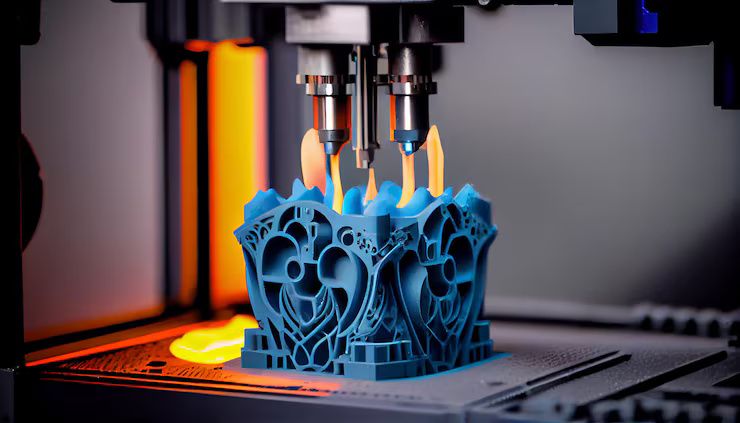
3D printing, also known as additive manufacturing, is a method of creating physical objects by building them layer by layer from a digital design. Unlike traditional manufacturing, which often removes material through cutting or machining, 3D printing adds material only where it is needed.
This technology exists to address limitations in conventional manufacturing. Traditional methods can be time-consuming, require complex tooling, and generate material waste. 3D printing emerged as an alternative that allows rapid prototyping, flexible design changes, and production of complex shapes that are difficult to make using other methods.
At the core of 3D printing is the idea of layers. A digital model is divided into thin horizontal sections, and the printer builds each layer sequentially. Over time, these layers combine to form a complete object. Materials and printing processes vary depending on the application, required strength, and level of detail.
Importance: Why 3D Printing Matters Today
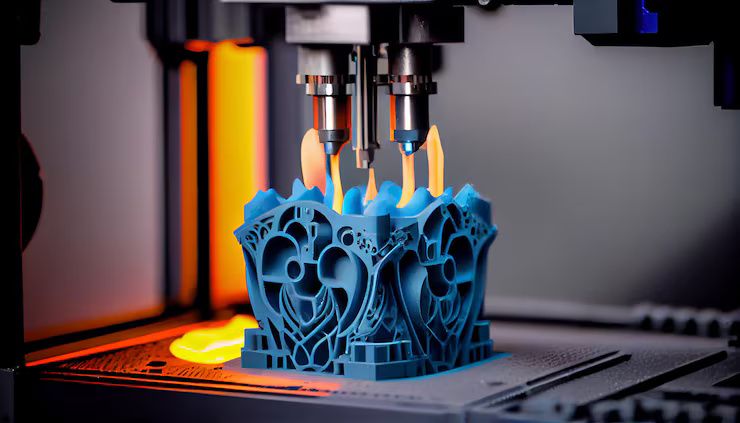
3D printing matters today because it supports innovation across many sectors, from manufacturing and healthcare to education and research. Its ability to produce customized and complex parts has changed how products are designed and tested.
This topic affects:
-
Designers and engineers developing new products
-
Manufacturers exploring flexible production methods
-
Educators and students learning digital fabrication
-
Researchers working with experimental materials
Key problems 3D printing helps solve include:
-
Long development cycles for physical prototypes
-
High material waste in subtractive processes
-
Limited customization in mass production
-
Barriers to producing complex geometries
By building objects layer by layer, 3D printing allows greater design freedom. Changes can be made at the digital level without reworking physical tools. This makes it especially useful in early design stages and low-volume production environments.
Recent Updates: Developments in the Past Year
Over the past year, 3D printing technology has continued to evolve, with improvements in materials, speed, and process reliability.
Notable updates since 2024 include:
-
Expanded material options: In 2024, new composite and recycled material blends became more common in industrial printing.
-
Faster printing systems: Late 2024 saw improvements in layer deposition speed, reducing overall build times.
-
Process automation: Early 2025 introduced better automated calibration and monitoring systems.
-
Quality consistency: Updated software tools released in 2025 improved layer accuracy and repeatability.
-
Industrial adoption: Reports from 2024 showed broader use of additive manufacturing in small-batch production.
These updates reflect a shift from experimental use toward more consistent and repeatable printing processes.
Laws and Policies: How Regulations Affect 3D Printing
3D printing is influenced by regulations related to safety, intellectual property, and product standards. While laws vary by country, many focus on how printed objects are used rather than the printing process itself.
International standards published by the International Organization for Standardization include guidelines for additive manufacturing terminology, testing, and quality assurance. These standards help align expectations across industries.
In workplace environments, safety guidance from the Occupational Safety and Health Administration influences how printers and materials are handled, particularly regarding ventilation and material exposure.
Common regulatory considerations include:
-
Material handling and safety
-
Product performance standards
-
Documentation and traceability
-
Environmental and waste management rules
Policies continue to evolve as 3D printing becomes more widespread in industrial and educational settings.
Tools and Resources: Learning and Working With 3D Printing
Many tools and resources support understanding and using 3D printing technologies. These tools help users move from digital design to physical output.
Useful resource categories include:
-
3D modeling software for creating printable designs
-
Slicing software that converts models into layers
-
Material reference guides explaining filament and resin properties
-
Calibration and testing tools for printer setup
Below is an overview of common materials and their typical uses:
| Material Type | Key Characteristics | Common Applications |
|---|---|---|
| Thermoplastics | Easy to print, versatile | Prototypes, educational models |
| Resins | High detail, smooth surfaces | Visual models, dental parts |
| Metal powders | High strength, durable | Industrial components |
| Composites | Reinforced with fibers | Lightweight structural parts |
These resources help users understand how material choice affects layer behavior and final object performance.
Layers: How Objects Are Built Step by Step
Layers are the foundation of all 3D printing processes. Each layer represents a thin cross-section of the final object, typically measured in fractions of a millimeter.
Layer thickness influences:
-
Surface finish quality
-
Printing time
-
Structural strength
Thinner layers generally produce smoother surfaces but require more time. Thicker layers print faster but may show visible layer lines. Balancing these factors is a key part of print planning.
Layer adhesion is also critical. Each new layer must bond properly to the one below it. Poor adhesion can weaken the object or cause print failure.
Materials: Understanding What Is Printed
Materials determine how a printed object behaves during and after printing. Different processes require specific material forms, such as filaments, liquids, or powders.
Common material categories include:
-
Plastics for general-purpose printing
-
Resins for detailed and smooth prints
-
Metals for high-strength applications
-
Specialty blends for heat or chemical resistance
Material selection affects strength, flexibility, heat resistance, and appearance. Understanding material properties helps users choose appropriate settings and processes.
Printing Processes: How Different Technologies Work
3D printing includes several distinct processes, each using layers in different ways.
Common printing processes include:
-
Fused deposition modeling (FDM): Melts and deposits plastic filament layer by layer.
-
Stereolithography (SLA): Uses light to cure liquid resin into solid layers.
-
Selective laser sintering (SLS): Fuses powdered material using a laser.
Each process offers different advantages in terms of speed, detail, and material compatibility. Process choice depends on the intended application and required performance.
FAQs: Common Questions About 3D Printing Basics
What does layer height mean in 3D printing?
It refers to the thickness of each printed layer and affects surface quality and print time.
Are all 3D printing materials the same?
No. Materials vary widely in strength, flexibility, and printing requirements.
Is 3D printing only for prototyping?
While often used for prototypes, it is also applied in tooling, education, and limited production.
Do all printers use the same process?
No. Different printers use different technologies such as extrusion, resin curing, or powder fusion.
Why is slicing software important?
It converts digital models into printable layers and instructions for the printer.
Conclusion
3D printing is a layer-based manufacturing method that combines digital design, specialized materials, and controlled printing processes. Its ability to create complex shapes with minimal waste has made it an important tool across many fields.
Recent updates show continued progress in materials, automation, and process consistency. At the same time, standards and safety policies help guide responsible use.
By understanding layers, materials, and printing processes, readers gain a clearer view of how 3D printing works and why it plays an increasingly important role in modern manufacturing and design.