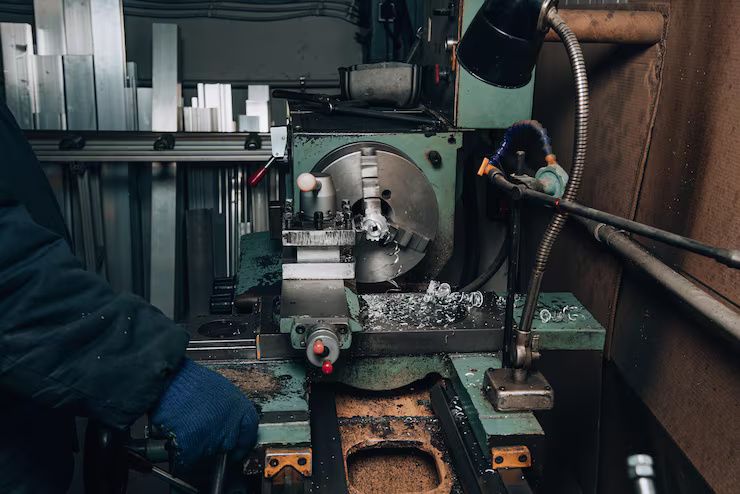
Lathe machines are one of the oldest and most essential tools used in metalworking, woodworking, and manufacturing industries. They exist because many materials need precise shaping, cutting, or finishing to meet engineering requirements. The main function of a lathe is to rotate a workpiece around a central axis while cutting tools shape it into the desired form.
Lathes can perform multiple tasks, including turning, drilling, sanding, knurling, and threading. They range from simple manual machines to advanced CNC (Computer Numerical Control) models used in modern automated production. Their continued evolution reflects the growing demand for accuracy, repeatability, and efficiency in industrial production.
Importance
Lathe machines matter today because they support industries that rely on precision and durable products. Their importance includes:
-
Manufacturing support: Used in automotive, aerospace, energy, and fabrication sectors for producing components such as shafts, bolts, and mechanical parts.
-
Quality improvement: Helps create standardized components that ensure safety and performance in machinery.
-
Versatility: Suitable for metals, plastics, wood, and composite materials.
-
Economic contribution: Plays a major role in machining workshops and small-to-medium industries involved in component production.
Workers most involved with lathe applications include machinists, mechanical engineers, industrial designers, and educational institutions training future professionals.
Without lathe machines, many precision-engineered parts would be difficult to produce efficiently or consistently.
Recent Updates
In 2024–2025, several technological advancements have shaped the development and integration of lathe machines:
-
Industry 4.0 connectivity (2025): CNC lathes now leverage IoT monitoring, allowing predictive maintenance and real-time performance data.
-
Hybrid machining systems (2025): Machines combining traditional turning with additive manufacturing techniques are gaining adoption.
-
Energy-efficient drives (2024): New spindle motors reduce energy consumption in high-duty machining environments.
-
Safety automation improvements (2024): Enhanced enclosure designs and fail-safe shutdown systems help reduce workplace hazards.
-
Software-based training (2025): VR and simulation tools support machinist skills development without material waste.
These updates emphasize sustainable manufacturing, improved operator safety, and smarter production capabilities.
Laws or Policies
Regulations ensure that lathe machines are produced and used according to strict safety and quality standards. Key policy influences include:
-
Machine Safety Standards: Organizations like OSHA (United States) and HSE (United Kingdom) require proper guarding, emergency stop mechanisms, and operator training.
-
ISO Standards:
-
ISO 23125 specifies safety requirements for turning machines
-
ISO 9001 influences quality control in machine manufacturing
-
-
Noise and environmental rules: Industrial workplaces must follow guidelines limiting noise levels and waste materials generated during machining.
-
Apprenticeship & workforce skill programs: Many countries support training in machining and CNC technology to meet manufacturing workforce needs.
These policies help protect workers, ensure equipment reliability, and promote consistent production standards worldwide.
Tools and Resources
A number of resources help workers and learners operate and understand lathe machines effectively:
-
CNC simulation software: Programs like Fusion 360 and Mastercam allow practice without using physical materials.
-
Engineering calculators: Useful for speed, feed rate, and surface finish calculations.
-
Digital measuring tools: Calipers and micrometers with wireless data output for accurate inspection.
-
Manufacturer manuals & training videos: Provide operational guidance and safety instructions.
-
Educational portals: Online technical courses from universities and industrial academies covering machining principles and advanced lathe programming.
Frequently Asked Questions
What is the main purpose of a lathe machine?
A lathe machine rotates a workpiece so tools can shape, cut, or finish it to a precise form. It supports various machining operations used in manufacturing and engineering.
What materials can be machined on a lathe?
Common materials include steel, aluminum, brass, plastics, and wood. The cutting tools and spindle speeds vary depending on material hardness.
What is the difference between a manual lathe and a CNC lathe?
Manual lathes require operator control for every movement, while CNC lathes are automated using coded programming, improving speed and repeatability.
Is safety important when using a lathe?
Yes. Operators must follow strict procedures, including wearing protective gear, avoiding loose clothing, and ensuring guards are properly positioned.
Why is precision important in lathe operations?
Precision ensures that the produced component fits correctly in mechanical systems, improves product reliability, and reduces material waste.
Conclusion
Lathe machines continue to be vital tools in many industries, supporting global manufacturing with accurate and efficient material shaping. Their long history has evolved into modern, digitally connected systems that enhance productivity and safety.
With advancements such as automation, smart monitoring, and hybrid machining, lathe machines are contributing to sustainable and high-precision production worldwide. Understanding their role, following regulations, and using professional tools help both experienced operators and new learners achieve excellent results.