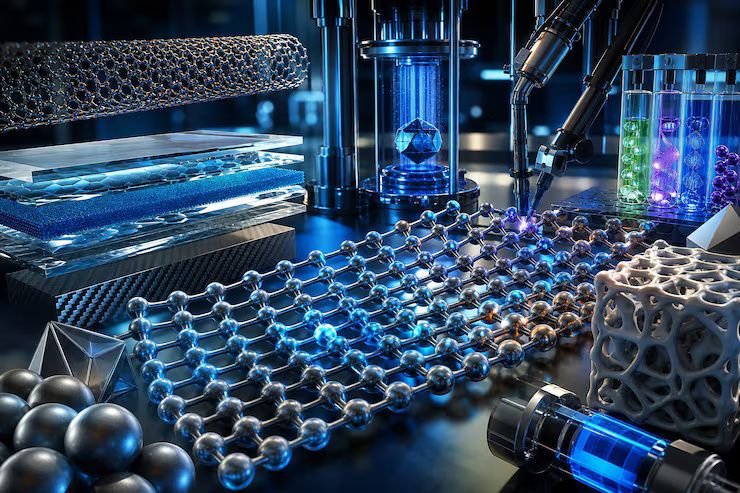
Advanced materials are specially engineered substances designed to provide particular physical, chemical, electrical, thermal, or mechanical properties.
Advanced materials resources help students, researchers, engineers, manufacturers, and general readers understand how these materials are developed and where they are used.
From lightweight composites and nanomaterials to smart materials, ceramics, and advanced polymers, modern technologies continue to expand the capabilities of materials. Learning about these developments provides useful background for understanding innovations in transportation, electronics, energy, construction, healthcare, and many other fields.
Context
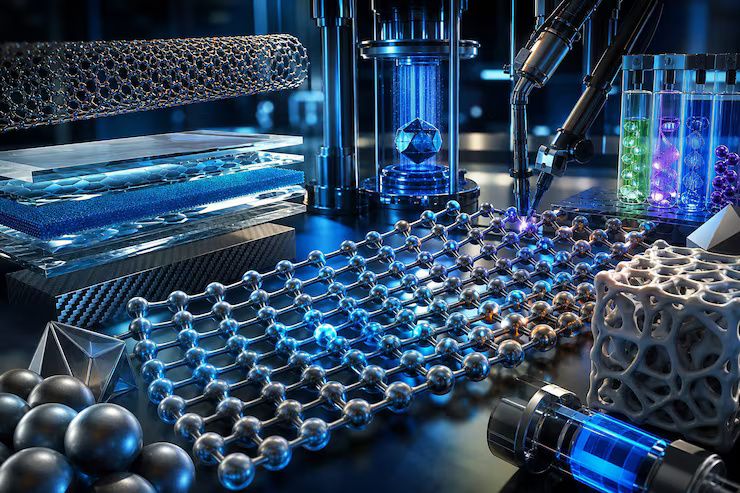
Advanced materials are materials developed or modified to achieve properties that are difficult to obtain from conventional materials. Their characteristics can include high strength, low weight, heat resistance, electrical conductivity, corrosion resistance, flexibility, optical performance, or responsiveness to environmental changes.
The field has roots in traditional materials science, metallurgy, ceramics, polymers, and chemical engineering. Advances in computational modeling, microscopy, manufacturing, and nanotechnology have expanded the ability to design materials at increasingly small scales.
Common categories include:
| Material category | General characteristics | Example applications |
|---|---|---|
| Advanced composites | High strength and reduced weight | Aircraft, vehicles, wind turbines |
| Nanomaterials | Properties influenced by nanoscale structure | Electronics, coatings, sensors |
| Smart materials | Respond to external conditions | Sensors, actuators, medical devices |
| Advanced ceramics | Heat, wear, and chemical resistance | Electronics, aerospace, industrial equipment |
| Advanced polymers | Tunable mechanical and chemical properties | Medical devices, electronics, packaging |
| 2D materials | Very thin structures with unusual properties | Electronics, energy research |
The purpose of advanced materials resources is to make technical knowledge easier to understand and provide reliable information about material characteristics, research methods, standards, and applications.
Importance
Advanced materials matter because the performance of many modern technologies depends on the materials from which they are made. A material that is lighter, stronger, more conductive, or more resistant to heat can influence the design and efficiency of an entire system.
Several industries are affected by developments in advanced materials:
- Aerospace and aviation use composites, high-temperature alloys, and ceramics.
- Automotive engineering uses lightweight metals, composites, polymers, and battery materials.
- Electronics depend on semiconductors, dielectric materials, conductive materials, and nanostructures.
- Energy technologies use materials for batteries, solar cells, fuel cells, turbines, and hydrogen systems.
- Healthcare uses biomaterials, implant materials, coatings, and specialized polymers.
- Construction uses high-performance concrete, engineered composites, insulation materials, and protective coatings.
Advanced materials can also contribute to resource efficiency. For example, reducing the weight of a vehicle can influence energy consumption, while longer-lasting materials can reduce the frequency with which components need replacement.
Understanding material selection is also important. Engineers generally evaluate mechanical performance, thermal behavior, chemical stability, manufacturing requirements, environmental conditions, reliability, and the intended operating life before selecting a material.
Recent Updates
Research in advanced materials continues to move toward materials that combine multiple useful properties. Nanotechnology, artificial intelligence, computational materials science, and advanced manufacturing are increasingly connected.
One important development is the use of computational methods to predict material behavior before extensive laboratory testing. Machine learning can help researchers identify relationships between composition, structure, processing conditions, and performance.
Another area is additive manufacturing. Advanced manufacturing methods can create complex structures and enable researchers to investigate material designs that are difficult to produce through conventional processes.
Battery materials are another major research area. Researchers are studying improved electrode materials, solid electrolytes, silicon-based anodes, sodium-ion systems, and other approaches intended to address energy density, durability, safety, and resource considerations.
Research into 2D materials, including graphene and transition-metal dichalcogenides, continues in electronics, sensors, energy, and other fields. Researchers are also investigating materials that can respond to temperature, pressure, electric fields, magnetic fields, or mechanical deformation.
Sustainability is becoming increasingly important. Current research includes recyclable composites, lower-impact material processing, bio-based polymers, material recovery, and approaches for extending the useful life of products and components.
Laws or Policies
Advanced materials can be subject to different laws and policies depending on the material, application, country, and stage of development. Regulations can address chemical safety, environmental impacts, occupational exposure, transportation, waste management, and product performance.
In the European Union, the Registration, Evaluation, Authorisation and Restriction of Chemicals (REACH) framework regulates many chemicals and substances. The Classification, Labelling and Packaging (CLP) framework addresses the classification and communication of chemical hazards.
In the United States, the Environmental Protection Agency administers important chemical and environmental regulations, including requirements under the Toxic Substances Control Act for certain chemical substances.
Nanomaterials may receive additional regulatory attention because their properties can differ from those of the same substance in larger forms. Researchers and organizations therefore need to consider applicable requirements for exposure assessment, handling, documentation, and environmental management.
Technical standards are also important. Organizations such as ASTM International and ISO publish standards covering material testing, characterization, terminology, manufacturing, and quality-related procedures.
Because requirements vary by jurisdiction and application, current official regulatory sources should be consulted before making decisions involving specific materials.
Tools and Resources
Reliable advanced materials resources can help users move from basic concepts to technical research. Useful sources include:
- Materials science textbooks and university course materials for foundational concepts.
- National laboratories and government research portals for research findings and technical information.
- ASTM International and ISO databases for relevant technical standards.
- Scientific journal databases for peer-reviewed research.
- Materials property databases for comparing physical and chemical characteristics.
- Computational materials platforms for modeling structures and predicting properties.
- Safety data sheets and regulatory databases for information about chemical hazards and handling.
When evaluating a resource, check who produced it, whether its information is independently reviewed, how recently it was updated, and whether references are provided.
For beginners, it is useful to start with basic concepts such as crystal structures, phase diagrams, mechanical properties, thermodynamics, polymers, ceramics, metals, composites, and nanomaterials. These foundations make more specialized advanced materials information easier to understand.
FAQs
What are advanced materials?
Advanced materials are engineered or specially processed materials designed to provide particular properties or performance characteristics beyond those commonly associated with conventional materials.
What are some examples of advanced materials?
Examples include carbon-fiber composites, graphene, advanced ceramics, shape-memory alloys, high-performance polymers, semiconductor materials, nanomaterials, and specialized battery materials.
Why are advanced materials important?
They can enable technologies that require combinations of properties such as low weight, high strength, thermal stability, electrical performance, chemical resistance, or controlled responsiveness.
Where can I learn about advanced materials technologies?
University materials-science resources, government laboratories, scientific journals, standards organizations, and established materials databases are useful starting points for learning.
Are advanced materials regulated?
Some are. Regulatory requirements depend on their chemical composition, physical characteristics, intended use, manufacturing process, environmental effects, and jurisdiction. Chemical and environmental regulations may apply to particular materials.
Conclusion
Advanced materials resources provide a foundation for understanding modern material technologies, their properties, applications, and ongoing developments. Their importance extends across aerospace, electronics, energy, healthcare, transportation, construction, and research.
As computational modeling, nanotechnology, advanced manufacturing, and sustainability research continue to develop, materials science is becoming increasingly interdisciplinary. Reliable educational and technical resources can help readers understand these changes while distinguishing established findings from emerging research.
For anyone beginning to explore the field, learning the fundamentals of materials science is a useful first step. From there, specialized resources can provide deeper information about particular materials, technologies, testing methods, regulations, and applications.