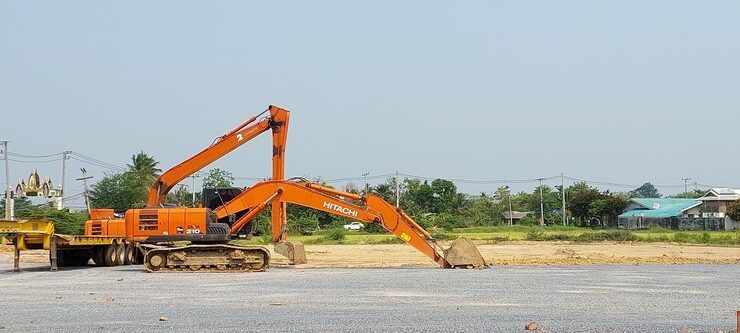
An articulated hauler is a specialized heavy vehicle designed for transporting materials across rough, uneven terrain. It is commonly referred to as an articulated dump truck, featuring a hinge between the cab and the dump body that allows flexible movement. This articulation enables the vehicle to maintain traction and stability even in challenging off-road conditions.
Understanding Articulated Haulers
What is an articulated hauler?
These machines are widely used in industries such as construction, mining, and infrastructure development. Their ability to navigate muddy, rocky, or steep environments makes them essential where standard trucks cannot operate efficiently.
Why articulated haulers exist
The primary reason for the development of the off road articulated dump truck is the need for reliable material transport in areas lacking paved roads. Traditional rigid trucks struggle with limited maneuverability and traction in such conditions.
Articulated haulers solve this problem by offering improved balance, better weight distribution, and enhanced turning capability. This design ensures continuous operation in demanding environments, reducing delays in large-scale projects.
Why Articulated Haulers Matter Today
Growing demand across industries
The importance of the construction articulated hauler has increased due to rapid urbanization and infrastructure expansion. Projects such as highways, dams, and smart cities require efficient movement of materials like soil, gravel, and debris.
In mining operations, the mining articulated dump truck plays a crucial role in transporting extracted materials from excavation sites to processing areas. These vehicles are designed to handle heavy loads while maintaining operational efficiency.
Problems these machines solve
Articulated haulers address several key challenges in modern operations:
- Difficult terrain navigation: They operate effectively in mud, sand, and steep slopes
- Load stability: Their design minimizes tipping risks during transport
- Operational continuity: They function in adverse weather conditions
- Reduced downtime: Improved traction reduces the likelihood of getting stuck
Who is affected
A wide range of stakeholders benefit from the use of heavy duty articulated hauler systems:
- Construction companies managing large infrastructure projects
- Mining operators handling bulk material transport
- Government agencies overseeing public works
- Equipment planners and logistics managers
Types of Articulated Haulers
Common classifications
Articulated haulers are categorized based on size, capacity, and application. Each type serves specific operational needs.
- Standard articulated dump truck: Used for general construction tasks
- Large articulated hauler: Designed for high-capacity hauling in major projects
- Heavy duty articulated hauler: Built for extreme environments and heavy loads
- Mining articulated dump truck: Engineered for continuous use in mining sites
Capacity and specifications
Below is a general comparison of different articulated hauler types based on typical characteristics:
| Type of Hauler | Load Capacity (Tons) | Typical Use Case | Terrain Suitability |
|---|---|---|---|
| Standard articulated dump truck | 20–30 | Small to mid-scale construction | Moderate off-road |
| Large articulated hauler | 30–45 | Infrastructure and large projects | Rough terrain |
| Heavy duty articulated hauler | 40–60 | Extreme conditions and heavy loads | Harsh environments |
| Mining articulated dump truck | 50+ | Mining and excavation operations | Severe off-road conditions |
These categories help operators choose the right equipment based on project requirements and environmental conditions.
Recent Trends and Developments
Technological advancements
In 2025 and early 2026, manufacturers introduced several innovations in the articulated hauler segment. These updates focus on efficiency, safety, and environmental impact.
Key developments include:
- Advanced telematics systems: Real-time monitoring of vehicle performance and fuel usage
- Automation features: Assisted driving and semi-autonomous operations
- Improved fuel efficiency: Engine optimization to reduce emissions
- Enhanced safety systems: Collision detection and stability control
Shift toward sustainability
Environmental concerns have influenced the design of off road articulated dump truck models. Many new machines now incorporate low-emission engines and energy-efficient components.
In 2025, several global equipment manufacturers announced hybrid and electric prototypes for articulated haulers. These developments indicate a gradual shift toward greener construction and mining practices.
Digital integration
Another major trend is the integration of digital platforms for fleet management. Operators can now track multiple construction articulated hauler units through centralized dashboards.
This allows better planning, reduced idle time, and improved resource allocation across projects.
Regulations and Policies
Compliance requirements
The use of articulated dump truck systems is governed by safety and environmental regulations in many countries, including India. These rules ensure that equipment operates within acceptable limits for emissions, noise, and safety.
Key regulatory aspects include:
- Emission standards: Compliance with Bharat Stage (BS) norms
- Operator safety guidelines: Mandatory training and certification
- Load limits: Restrictions to prevent overloading
- Maintenance requirements: Regular inspections for operational safety
Government initiatives
Infrastructure development programs often influence the demand for large articulated hauler equipment. Government-backed projects such as road construction and industrial corridors increase the need for efficient material transport solutions.
Policies promoting sustainable construction practices also encourage the adoption of modern, fuel-efficient machinery.
Workplace safety standards
Authorities emphasize safety in construction and mining environments. The use of heavy duty articulated hauler equipment must align with workplace safety regulations, including:
- Proper operator training
- Use of protective equipment
- Adherence to operational guidelines
- Regular equipment audits
Tools and Resources
Useful tools for operators and planners
Several tools and platforms support the efficient use of articulated hauler equipment. These resources help improve planning, monitoring, and maintenance.
- Fleet management software: Tracks vehicle location, usage, and performance
- Load calculation tools: Helps determine optimal load capacity
- Maintenance scheduling systems: Ensures timely servicing
- Simulation software: Trains operators in virtual environments
Digital platforms and services
Modern operations rely on digital solutions to manage fleets of mining articulated dump truck units. These platforms provide insights into fuel consumption, route optimization, and equipment health.
Training and certification programs
Training programs are essential for safe and efficient operation. These programs cover:
- Vehicle handling techniques
- Safety protocols
- Maintenance basics
- Emergency response procedures
Frequently Asked Questions
What is the difference between an articulated hauler and a rigid dump truck?
An articulated hauler has a pivot joint between the cab and the dump body, allowing better movement on rough terrain. A rigid dump truck has a fixed frame and is more suitable for smooth surfaces.
Where are articulated dump trucks commonly used?
Articulated dump trucks are widely used in construction sites, mining operations, quarrying, and large infrastructure projects where terrain conditions are challenging.
What makes a heavy duty articulated hauler different?
A heavy duty articulated hauler is designed for extreme conditions and can carry larger loads. It features reinforced components and higher engine power compared to standard models.
Are articulated haulers suitable for urban construction?
Yes, construction articulated hauler units are used in urban projects, especially where space is limited and terrain conditions vary. Their maneuverability makes them effective in confined areas.
How do mining articulated dump trucks improve efficiency?
A mining articulated dump truck improves efficiency by enabling continuous material transport in harsh environments. Its design reduces downtime and supports high-volume operations.
Conclusion
Articulated haulers have become a critical component in modern construction and mining operations. Their unique design allows them to perform effectively in environments where traditional vehicles face limitations.
From small-scale construction to large mining projects, these machines provide reliable solutions for material transport. The evolution of the articulated dump truck continues with advancements in technology, sustainability, and safety.
As infrastructure demands grow and environmental considerations become more important, the role of the off road articulated dump truck is expected to expand further. Understanding their types, uses, and benefits helps stakeholders make informed decisions in complex operational environments.