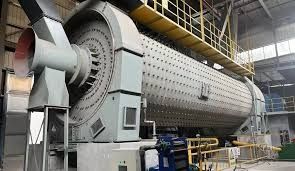
A ball mill machine is an industrial grinding device used to reduce solid materials into fine powders or smaller particles through rotational motion and impact forces. It is widely used in mining, cement production, mineral processing, chemical manufacturing, ceramics, power generation, and material science industries. The machine operates by rotating a cylindrical shell filled with grinding media—typically steel or ceramic balls—that crush and grind materials through impact and friction.
Ball mill machines exist because many industrial processes require controlled particle size reduction, uniform material mixing, and consistent output quality. Their ability to handle hard, abrasive, and brittle materials makes them a core component of heavy-duty manufacturing and processing operations.
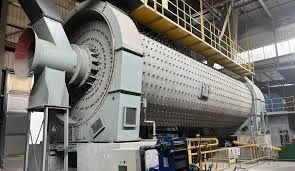
Context: Why Ball Mill Machines Exist and Their Role in Industry
Ball mill machines were developed to meet the growing need for efficient material grinding in large-scale industrial environments. Traditional crushing methods were limited in precision and scalability, especially for fine powder production. Ball mills introduced a reliable solution capable of continuous operation and high throughput.
They play a critical role in:
-
Mineral ore grinding and beneficiation
-
Cement clinker processing
-
Chemical compound preparation
-
Ceramic material manufacturing
-
Pigment and paint production
-
Metallurgical and thermal power applications
By offering controlled grinding and mixing, ball mill machines support consistent product quality across diverse industrial sectors.
Importance: Why Ball Mill Machines Matter Today
Ball mill machines remain essential due to increasing demand for high-efficiency grinding systems, precise particle size control, and scalable industrial processing.
Key Reasons Ball Mill Machines Are Important:
1. Efficient Size Reduction
They convert raw materials into fine powders suitable for downstream processing.
2. Uniform Material Mixing
Simultaneous grinding and blending improve consistency in final products.
3. High Production Capacity
Designed for continuous, large-volume industrial operations.
4. Adaptability Across Industries
Suitable for minerals, chemicals, ceramics, cement, and energy sectors.
5. Durability in Harsh Environments
Built to handle abrasive materials and high operating loads.
Recent Updates: Ball Mill Technology Trends (2024–2025)
Ball mill technology continues to evolve with improvements in efficiency, automation, and sustainability.
Energy-Efficient Grinding Designs
New liner materials and optimized rotation speeds reduce power consumption.
Automation & Digital Monitoring
Sensors monitor vibration, temperature, and load to improve operational control.
High-Performance Grinding Media
Advanced alloy and ceramic balls extend service life and improve grinding efficiency.
Modular Mill Configurations
Manufacturers now offer scalable systems adaptable to different production capacities.
Integration with Process Control Systems
Ball mills increasingly connect to plant-wide automation platforms for real-time performance tracking.
Laws & Safety Standards Affecting Ball Mill Operations
Ball mill machines operate under industrial safety, environmental, and equipment standards to ensure safe and compliant usage.
Key considerations include:
-
Machinery safety regulations and guarding requirements
-
Dust and noise emission controls
-
Electrical and mechanical safety compliance
-
Workplace occupational health standards
-
Environmental regulations for waste handling
Compliance ensures operator safety, machine reliability, and environmental responsibility.
Types of Ball Mill Machines
Ball mills are classified based on design, operation, and application requirements.
Horizontal Ball Mill
The most common design, featuring a horizontally rotating cylindrical shell.
Used in: Cement plants, mineral processing facilities.
Vertical Ball Mill
Uses gravity and pressure for grinding, offering reduced space requirements.
Used in: Cement grinding and energy-efficient applications.
Dry Ball Mill
Operates without liquid, suitable for dry material processing.
Used in: Cement, coal, and mineral industries.
Wet Ball Mill
Uses water or liquid during grinding for finer particle distribution.
Used in: Ore beneficiation, mineral separation.
Batch Ball Mill
Processes materials in fixed quantities.
Used in: Laboratories and small-scale production.
Continuous Ball Mill
Operates continuously for large-volume industrial processing.
Used in: Mining and cement manufacturing.
Planetary Ball Mill
Uses high-energy rotational motion for ultra-fine grinding.
Used in: Research labs, advanced material development.
Working Principle: How a Ball Mill Machine Operates
The working principle of a ball mill is based on impact and attrition.
-
The cylindrical shell rotates around its axis.
-
Grinding media (balls) are lifted by centrifugal force.
-
As rotation continues, the balls fall onto the material.
-
Impact and friction break down material into finer particles.
-
The process repeats until desired fineness is achieved.
Key operating factors include:
-
Rotation speed
-
Ball size and material
-
Mill diameter and length
-
Material hardness
-
Grinding time
Proper optimization ensures efficient and consistent output.
Industrial Applications of Ball Mill Machines
Ball mill machines are used across multiple industries due to their versatility.
Mining & Mineral Processing
Grinding ores such as gold, copper, iron, and lithium.
Cement Industry
Processing clinker into fine cement powder.
Chemical Industry
Mixing and grinding chemicals, pigments, and compounds.
Ceramics & Glass Manufacturing
Producing fine powders for tiles, porcelain, and glass.
Power Generation
Grinding coal for thermal power plants.
Pharmaceuticals
Used in controlled environments for material preparation.
Paint & Coatings
Producing uniform pigments and color compounds.
Table: Types of Ball Mills and Their Uses
| Ball Mill Type | Key Feature | Typical Application |
|---|---|---|
| Horizontal Ball Mill | High capacity | Cement, mining |
| Vertical Ball Mill | Energy efficient | Cement grinding |
| Wet Ball Mill | Fine particle control | Ore processing |
| Dry Ball Mill | No liquid use | Coal, cement |
| Batch Ball Mill | Fixed processing | Labs, small plants |
| Continuous Ball Mill | High throughput | Large industries |
| Planetary Ball Mill | Ultra-fine grinding | Research & materials |
How to Choose the Right Ball Mill Machine
Understand Material Properties
Hardness, abrasiveness, and moisture content affect mill selection.
Determine Required Output Size
Different applications require specific particle fineness.
Evaluate Production Capacity
Continuous mills suit high-volume operations; batch mills suit smaller runs.
Check Energy Efficiency
Modern designs reduce power consumption and operating costs.
Consider Maintenance & Durability
Quality liners, bearings, and grinding media improve uptime.
Ensure Safety Compliance
Machines must meet industrial safety and environmental standards.
Frequently Asked Questions
1. What materials can be processed in a ball mill?
Ores, cement clinker, coal, chemicals, ceramics, pigments, and minerals.
2. What is the difference between wet and dry ball mills?
Wet mills use liquid for finer grinding, while dry mills process materials without liquid.
3. Are ball mills energy-efficient?
Modern designs with optimized liners and automation significantly improve efficiency.
4. How long does grinding take in a ball mill?
Grinding time depends on material hardness, ball size, and desired fineness.
5. Do ball mills require regular maintenance?
Yes, routine inspection of liners, bearings, and grinding media is essential.
Conclusion
Ball mill machines are fundamental to industrial material processing, offering reliable grinding, mixing, and size-reduction capabilities across numerous sectors. Their adaptability, durability, and continuous operation make them indispensable in mining, cement, chemical, ceramic, and power industries.
With ongoing advancements in energy efficiency, automation, and material technology, ball mills continue to evolve, supporting modern industrial demands. Understanding their types, working principles, and applications helps industries select the right solution for efficient, safe, and long-term operation.