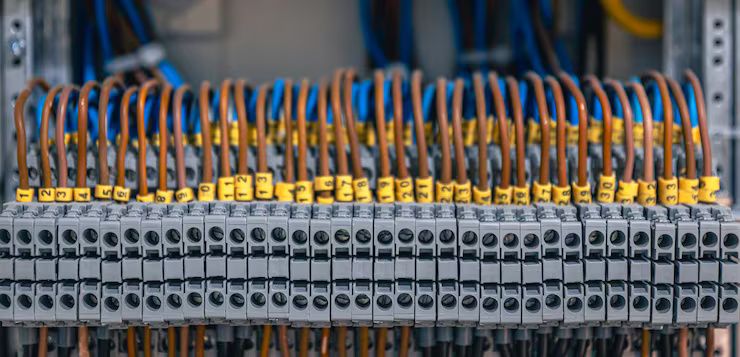
Cable manufacturing machines are specialized industrial systems used to produce electrical, fiber optic, and communication cables at scale. These machines exist because modern energy distribution, data connectivity, and industrial automation rely on cable systems with consistent conductive quality, insulation, and durability. Without precision manufacturing, cables would be unreliable and unsafe for use in homes, infrastructure, vehicles, networks, and industrial facilities.
Early cable production relied heavily on manual processing, including insulation, extrusion, and winding. As global demand increased, machinery evolved into automated and semi-automated systems capable of continuous manufacturing with reduced human involvement. Cable production machines now integrate electrical engineering principles, material science, precision motion control, and automated monitoring systems.
Examples of cable manufacturing machines include copper drawing machines, extruders, stranding machines, armoring systems, fiber optic cable assembly units, and automated coiling equipment. Each machine type performs specific steps in forming conductors, insulating material layers, strengthening cable structures, and preparing cables for storage or distribution.
Cable machines support production for industries such as utilities, automotive, aerospace, consumer electronics, telecommunications, building infrastructure, renewable energy systems, and industrial automation.
Importance
Cable manufacturing machines matter because cables are foundational to power transmission, communication systems, and industrial connectivity. As demand grows for electrification projects, fiber networks, and automated manufacturing systems, cable quality and production efficiency become more vital.
Key reasons why cable manufacturing systems are important:
Support for global infrastructure
Cables power nearly every building, transportation system, industrial plant, and data center. Manufacturing machines ensure high-volume production to meet infrastructure and utility needs.
Precision and safety
Cable machinery improves electrical cable quality by maintaining consistent insulation thickness, conductor spacing, and thermal resistance. This promotes safety, reliability, and compliance with electrical wiring standards.
Support for communication networks
Fiber optic cable manufacturing enables high-speed data transfer, online communication, smart homes, and connected industries. Machines improve the accuracy of fiber alignment and protective coating processes.
Efficiency and scalability
Automation in cable manufacturing allows continuous operation, reduced waste, and predictable production speeds. This is essential for large-scale electrification programs and global supply-chain demands.
Benefits for multiple industries
-
Electrical engineering projects
-
Smart building solutions
-
Automotive wiring harnesses
-
Aerospace communication lines
-
Marine and offshore cabling
-
Solar and wind energy systems
Cable systems solve the critical need for conductive performance, mechanical strength, environmental protection, and high-speed communication while supporting clean energy and digital transformation worldwide.
Recent Updates
Cable machine technology continues evolving with automation, digital control, environmental responsibility, and improved material science.
Some key updates from the past year include:
Growth in specialized EV cable production (2024–2025)
Electric vehicle markets increased demand for high-voltage, heat-resistant cables. New extrusion lines and insulation systems released in 2024 focused on enhanced temperature control and conductor stability for battery systems and charging networks.
Advances in sensor-based production monitoring (2024)
Cable manufacturers adopted inline monitoring technologies using cameras, laser systems, and real-time diagnostics. These tools help detect conductor tension issues, insulation uniformity, and surface defects to minimize waste.
Fiber optic cable scaling
In early 2024, global infrastructure programs increased fiber optic cable production capacity to support smart grid development and rural broadband expansion. Many machines gained modular capability to adapt to multiple fiber formats.
Sustainable cable materials
Material science advancements in 2024 introduced recycled insulation polymers, halogen-free compounds, and environmentally compliant coatings. Manufacturing systems now incorporate temperature control features to improve polymer consistency.
Improved safety and operator interfaces
Cable machines released late in 2024 began integrating touch-screen control centers, automated shutoff functions, and controlled energy management systems to ensure safer operation and reduced downtime.
Below is a simplified trend overview:
| Year | Automation Growth | Fiber Demand | EV Cable Focus | Sustainable Material Use |
|---|---|---|---|---|
| 2022 | Moderate | High | Low | Moderate |
| 2023 | High | High | Moderate | High |
| 2024 | Very High | Very High | High | Very High |
| 2025 | Very High | Very High | Very High | High |
Laws or Policies
Cable manufacturing is influenced by international electrical standards, material regulations, industrial safety rules, and environmental compliance policies designed to protect users and ensure product integrity.
Common regulatory areas include:
Electrical wiring standards
Manufactured cables must comply with safety and performance specifications outlined by standards such as:
-
NEC (National Electrical Code – U.S.)
-
IEC standards (International Electrotechnical Commission)
-
BS and EN standards for cable performance in Europe
These standards cover voltage ratings, fire resistance, insulation thickness, conductivity, and permissible temperature limits.
Material regulations
Manufacturers follow safety rules restricting hazardous substances in cable components. The RoHS regulation restricts lead, cadmium, mercury, and certain flame-retardant agents. Some regions require halogen-free insulation compounds to minimize toxic emissions.
Testing and certification
Cables are evaluated for durability, flexibility, environmental protection, and electrical continuity through testing systems approved by:
-
UL (Underwriters Laboratories)
-
CSA (Canadian Standards Association)
-
TÜV (German Technical Inspection Association)
These certifications assure structural reliability for building wiring, industrial networks, and transportation systems.
Environmental policy
Green manufacturing programs encourage reduced manufacturing waste, energy efficiency, and recycling of metal and insulation materials. Some countries support renewable manufacturing incentives for cable systems used in clean energy infrastructure.
Worker safety
Industrial safety regulations ensure that machine operation adheres to mechanical guarding principles, lockout procedures, and factory air quality standards for manufacturing facilities.
Tools and Resources
The following tools and platforms help users understand cable manufacturing systems, design cable specifications, perform testing, or evaluate machinery.
Cable design software
-
Insulation dimension calculators
-
Electrical current capacity tools
-
CAD templates for cable routing and machine design
Standards and certification databases
-
UL Product IQ database
-
IEC cable specifications library
-
Electrical code portals for compliance research
Machine monitoring and diagnostics
-
Digital condition monitoring software
-
Automated strain measurement systems
-
Inline diameter gauges for conductor and insulation control
Technical learning platforms
-
Engineering tutorials for metal drawing, extrusion, insulation systems, stranding equipment, and fiber optic cable assembly
-
Material performance libraries describing polymer types and conductor behavior
Below is a simple example of key cable machine types:
| Machine Type | Primary Use | Key Function |
|---|---|---|
| Wire Drawing Machine | Conductor shaping | Reduces metal diameter for electrical uniformity |
| Extrusion Line | Insulation application | Applies polymer layers under heat and pressure |
| Stranding Machine | Conductor assembly | Twists multiple wires for flexibility and strength |
| Armoring Unit | Cable protection | Adds metal sheaths for environmental durability |
| Coiling Machine | Product finishing | Prepares cable for transport or distribution |
FAQs
What do cable manufacturing machines do?
They automate cable production steps including conductor shaping, insulation extrusion, fiber alignment, and product finishing to ensure consistent electrical and mechanical performance.
What materials are used in cable production?
Materials include copper or aluminum for conductors, plus insulation compounds such as PVC, polyethylene, XLPE, or halogen-free polymers.
Why are certifications important for manufactured cables?
Certifications ensure cables meet performance, safety, and environmental requirements before being used in construction, networks, or industrial systems.
Can cable machines be adjusted for multiple cable types?
Yes. Many production lines are modular and may adjust diameter, insulation, conductor configuration, fiber count, or surface protection features.
What industries rely most on cable manufacturing?
Utilities, telecommunications, consumer electronics, transportation, aerospace, renewable energy, and industrial automation.
Conclusion
Cable manufacturing machines are essential for producing reliable electrical and communication cables used across modern infrastructure, technology development, and industry. Their continued advancement supports automation, safe wiring systems, energy distribution, fiber connectivity, and smart manufacturing. With evolving material science, standards compliance, and digital production monitoring, cable systems will continue enabling secure and efficient power and data movement worldwide.
Understanding the fundamentals behind cable types, regulations, and manufacturing equipment helps engineers, students, and technical planners make informed decisions in electrical projects. As demand for energy systems and broadband connectivity grows, cable manufacturing machinery will remain a crucial part of global industrial development.