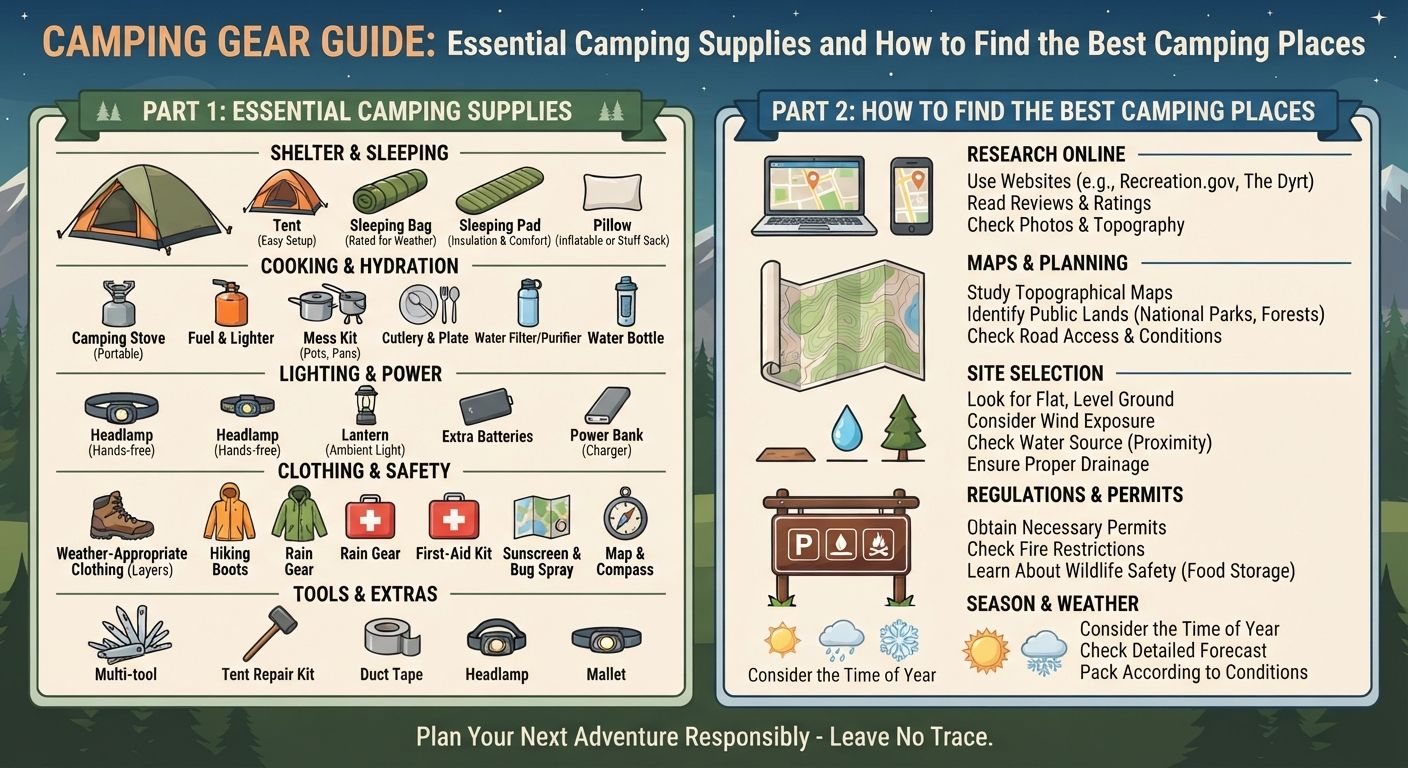
Planning a camping trip? Discover the essential camping gear and supplies you need, how to find quality camping stores near you, and tips for choosing the best camping places.
Getting Started with Camping the Right Way
Camping offers a rare kind of escape — unplugging from daily routines and reconnecting with the outdoors. But a great camping trip depends heavily on preparation. Showing up with the wrong gear, or missing key camping supplies, can turn an otherwise relaxing trip into an uncomfortable one. Whether you're a first-time camper or looking to upgrade your setup, understanding the essentials makes all the difference.
Essential Camping Gear for Any Trip
Shelter
A reliable tent is the foundation of any camping trip. Consider the size relative to your group, the season you'll be camping in, and how easy it is to set up. A slightly larger tent than your group size often provides more comfortable storage space for gear.
Sleeping System
A sleeping bag rated for the expected temperature range, paired with a sleeping pad or air mattress, makes a significant difference in comfort and warmth overnight. Ground insulation matters just as much as the sleeping bag itself, since heat loss to the cold ground is a common cause of poor sleep while camping.
Lighting
Headlamps and lanterns are camping essentials — headlamps free up your hands for tasks like cooking or setting up camp, while lanterns provide ambient light for the campsite in the evening.
Cooking Equipment
A portable camp stove, basic cookware, and a cooler are core camping supplies for most trip styles. Even car camping trips benefit from a simple, reliable stove setup rather than relying entirely on a campfire for cooking.
Navigation and Safety
A physical map or offline GPS app (since cell service is often unreliable at many camping places), a first-aid kit, and a multi-tool are essential safety items that shouldn't be left out of any packing list.
Camping Supplies Checklist
Beyond the major gear items, a well-rounded camping supplies list typically includes:
- Water storage containers or a filtration system
- Fire-starting tools (matches, lighter, fire starters)
- Insect repellent and sunscreen
- Trash bags for pack-in, pack-out waste management
- Camp chairs and a portable table
- Rope or paracord for various campsite needs
- Extra batteries or a portable power bank
- Weather-appropriate clothing layers
Finding Quality Camping Stores Near You
When searching for "camping stores near me," a few factors can help you choose the right retailer for your needs:
- Specialty outdoor retailers often provide knowledgeable staff who can offer advice specific to your trip type and local conditions, which can be especially valuable for first-time buyers.
- Larger sporting goods chains typically offer competitive pricing and a wide selection, though staff expertise can vary by location.
- Local, independent camping shops sometimes carry region-specific gear recommendations and may offer gear rental options, which is useful for trying equipment before committing to a purchase.
- Checking for gear rental programs at local stores can be a cost-effective way to test higher-priced items like tents or sleeping bags before buying your own.
How to Choose the Best Camping Places
Not all camping places suit every type of trip. A few factors to consider when choosing a destination:
- Campground type — Developed campgrounds offer amenities like bathrooms, showers, and designated fire pits, while backcountry or dispersed camping offers more solitude but requires more self-sufficiency.
- Accessibility — Consider how far the campsite is from parking, especially if you're bringing heavier gear or camping with children.
- Reservation requirements — Popular camping places, especially in national and state parks, often require reservations well in advance during peak season.
- Seasonal conditions — Research typical weather patterns, wildlife activity, and any seasonal closures for your chosen location before finalizing your trip.
- Permits and regulations — Some camping places require permits, have fire restrictions, or have specific rules about food storage, particularly in areas with wildlife activity.
Packing Tips for a Smooth Camping Trip
- Make a checklist and review it before departure — It's easy to forget small but essential items like a can opener or extra tent stakes.
- Test new gear before your trip — Set up a new tent at home first to familiarize yourself with the process before you're at the campsite.
- Pack for changing weather — Even summer camping trips can have cold nights, so layering is key.
- Organize gear by category — Grouping cooking supplies, sleeping gear, and clothing separately makes unpacking and repacking at the campsite far more efficient.
Budget-Friendly Camping Tips
Camping gear and supplies can range widely in price, but a few strategies can help manage costs:
- Start with rental gear for expensive items like tents and sleeping bags before investing in your own equipment.
- Buy gear at the end of camping season, when many retailers discount inventory ahead of the off-season.
- Borrow from friends or family who camp regularly, especially for gear you're unsure you'll use frequently.
- Prioritize quality for weather-critical items like your tent and sleeping bag, while saving on accessories that have less impact on comfort and safety.
The Bottom Line
A successful camping trip starts long before you arrive at the campsite — it begins with the right camping gear, a well-stocked camping supplies list, and choosing camping places that match your experience level and trip goals. Whether you're shopping at a specialty outdoor retailer or a big-box sporting goods store, investing in a few quality essentials will make every future trip more comfortable and enjoyable.