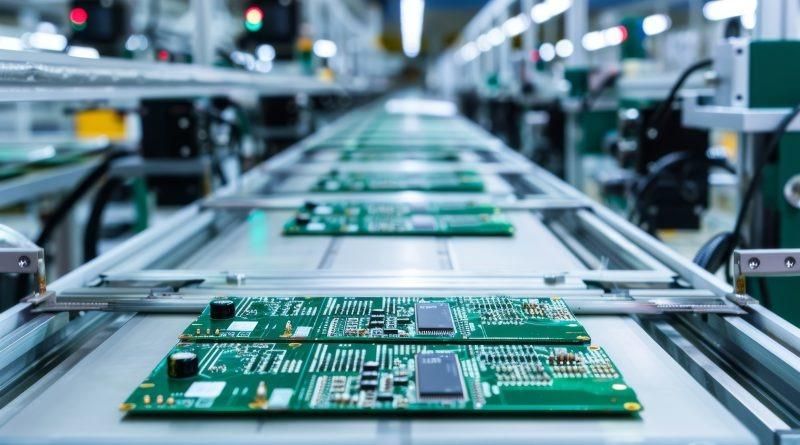
Chip manufacturing is the process of designing and producing semiconductor chips tiny but powerful components that drive nearly all modern electronics. From smartphones and computers to electric vehicles and medical equipment, these chips, also known as integrated circuits (ICs), serve as the "brains" of digital devices.
The industry consists of two primary segments: fabless companies that design chips but outsource manufacturing, and foundries that fabricate chips based on client designs. Some companies, known as IDMs (Integrated Device Manufacturers), do both.
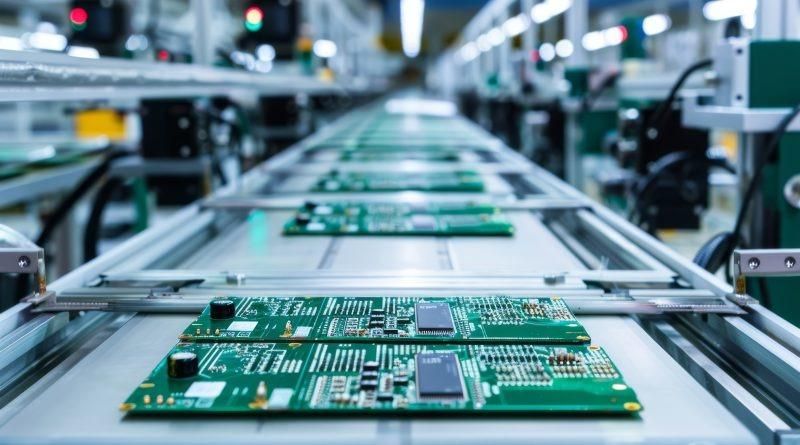
As the demand for faster, smaller, and more energy-efficient devices grows, the chip manufacturing industry plays a critical role in shaping global innovation, economic competitiveness, and digital transformation.
Why Chip Manufacturing Matters Today
The relevance of chip manufacturing has grown significantly in recent years. Here’s why it matters:
-
Global Dependency: Almost every industry automotive, telecom, defense, healthcare relies on semiconductors.
-
Supply Chain Vulnerability: The COVID-19 pandemic and geopolitical tensions exposed how fragile global chip supply chains can be, leading to product delays and rising costs.
-
Technological Advancement: Artificial intelligence (AI), 5G, IoT, and quantum computing are all chip-intensive technologies.
-
Economic Impact: The semiconductor industry supports millions of jobs globally and contributes trillions to the world economy.
-
National Security: Many governments now consider semiconductors to be strategically vital and are investing heavily to build domestic capabilities.
For businesses, understanding chip production cycles, pricing, and capacity constraints is now essential for long-term planning and risk mitigation.
Key Trends and Industry Updates in 2024–2025
Several notable developments have occurred recently in the chip manufacturing sector:
Expansion of Advanced Foundries
-
TSMC (Taiwan Semiconductor Manufacturing Company) and Samsung are investing billions in 3nm and 2nm process nodes to create faster and more efficient chips.
-
In 2024, Intel resumed aggressive expansion with its Intel Foundry Services (IFS), aiming to compete directly with TSMC.
Global Chip Act Programs
-
The U.S. CHIPS and Science Act, signed in 2022, has allocated over $52 billion to incentivize domestic chip manufacturing. In 2024, Intel and Micron received major funding under this initiative.
-
The European Chips Act, approved in 2023, aims to double the EU’s chip production share to 20% by 2030.
AI and Edge Computing Influence
-
The rise of generative AI is boosting demand for GPUs and AI accelerators, with NVIDIA and AMD seeing record growth.
-
Edge computing requires low-power, high-performance chips for smart devices, creating new market segments for niche players.
China’s Accelerated Self-Reliance
-
China is increasing investment in domestic chip technologies through SMIC and other state-supported players, following export controls on advanced chip-making tools imposed by the U.S., Netherlands, and Japan in 2023.
Green Manufacturing Goals
-
Sustainability is now a major concern. In 2024, TSMC pledged to achieve net-zero emissions by 2050, with other companies following suit.
Regulations and Policies Affecting the Industry
Government policies play a large role in shaping chip manufacturing dynamics:
United States
-
CHIPS and Science Act (2022): Offers tax credits and grants to encourage chip R&D and local production.
-
Export Restrictions: Limits sales of advanced chips and manufacturing equipment to China.
European Union
-
European Chips Act (2023): €43 billion package to support semiconductor R&D, supply chain resilience, and workforce development.
India
-
Semicon India Program (launched 2022): Offers financial incentives and aims to establish a robust chip manufacturing ecosystem. In 2024, the government approved projects for fabs in Gujarat and Karnataka.
Japan and South Korea
-
Both nations are investing heavily in semiconductor R&D and offering subsidies to companies like Kioxia, Sony, and Samsung to maintain global competitiveness.
Taiwan
-
Taiwan remains central to global chip production but is increasingly focused on diversifying locations due to geopolitical risks. TSMC is building new plants in Arizona, Japan, and Germany.
Tools and Resources for Learning and Monitoring the Industry
If you want to stay informed or better understand chip manufacturing, here are some valuable tools and resources:
-
SEMI.org – Industry reports, events, and market data
-
IC Insights & Gartner – Semiconductor market analysis
-
TSMC and Intel Investor Relations – Project updates and roadmaps
-
Export.gov – Policy guides and international trade updates
-
IEEE Spectrum – Engineering insights into chip design and trends
-
TechNode, AnandTech, and Tom’s Hardware – Industry news, benchmarks, and product updates
-
Semiconductor Engineering Podcast – Expert interviews and discussion on manufacturing issues
-
Stock Tracking Tools like Yahoo Finance, Seeking Alpha – For following public chip companies
Frequently Asked Questions (FAQs)
What are the main types of chip manufacturers?
There are three main types:
-
Foundries (e.g., TSMC, GlobalFoundries): Manufacture chips based on client designs.
-
Fabless companies (e.g., Qualcomm, NVIDIA): Design chips but outsource manufacturing.
-
IDMs (e.g., Intel, Samsung): Handle both design and manufacturing.
Which countries dominate the chip manufacturing industry?
-
Taiwan (TSMC)
-
South Korea (Samsung)
-
United States (Intel, Micron, GlobalFoundries)
-
China (SMIC – though limited to mature nodes)
-
Japan (Renesas, Sony)
-
EU nations (mainly focused on equipment and R&D)
Why is there a global chip shortage?
Factors include:
-
COVID-19 production delays
-
Surge in demand for electronics and vehicles
-
Supply chain disruptions
-
Limited manufacturing capacity at advanced nodes
-
Geopolitical tensions and export restrictions
What is a “node” in chip manufacturing?
A node refers to the size of the smallest feature on a chip, typically measured in nanometers (nm). Smaller nodes allow more transistors per chip, improving speed and efficiency. For example, 3nm chips are more advanced than 7nm chips.
Can new countries enter chip manufacturing easily?
No. Setting up a state-of-the-art fabrication plant (fab) requires:
-
Billions in capital investment
-
Advanced technical expertise
-
Reliable infrastructure
-
Skilled workforce
-
Access to global supply chains
However, countries like India and Vietnam are actively developing their capabilities.
Final Thoughts
Chip manufacturing is no longer a background industry it’s now front and center in economic, technological, and political discussions worldwide. The complexity and scale of semiconductor production make it both a high-stakes business and a vital part of national security.
For professionals, tech enthusiasts, and policymakers alike, understanding this sector offers valuable insights into the forces shaping our digital future. As governments invest, companies innovate, and demand surges, the world of chip manufacturing continues to evolve fast.