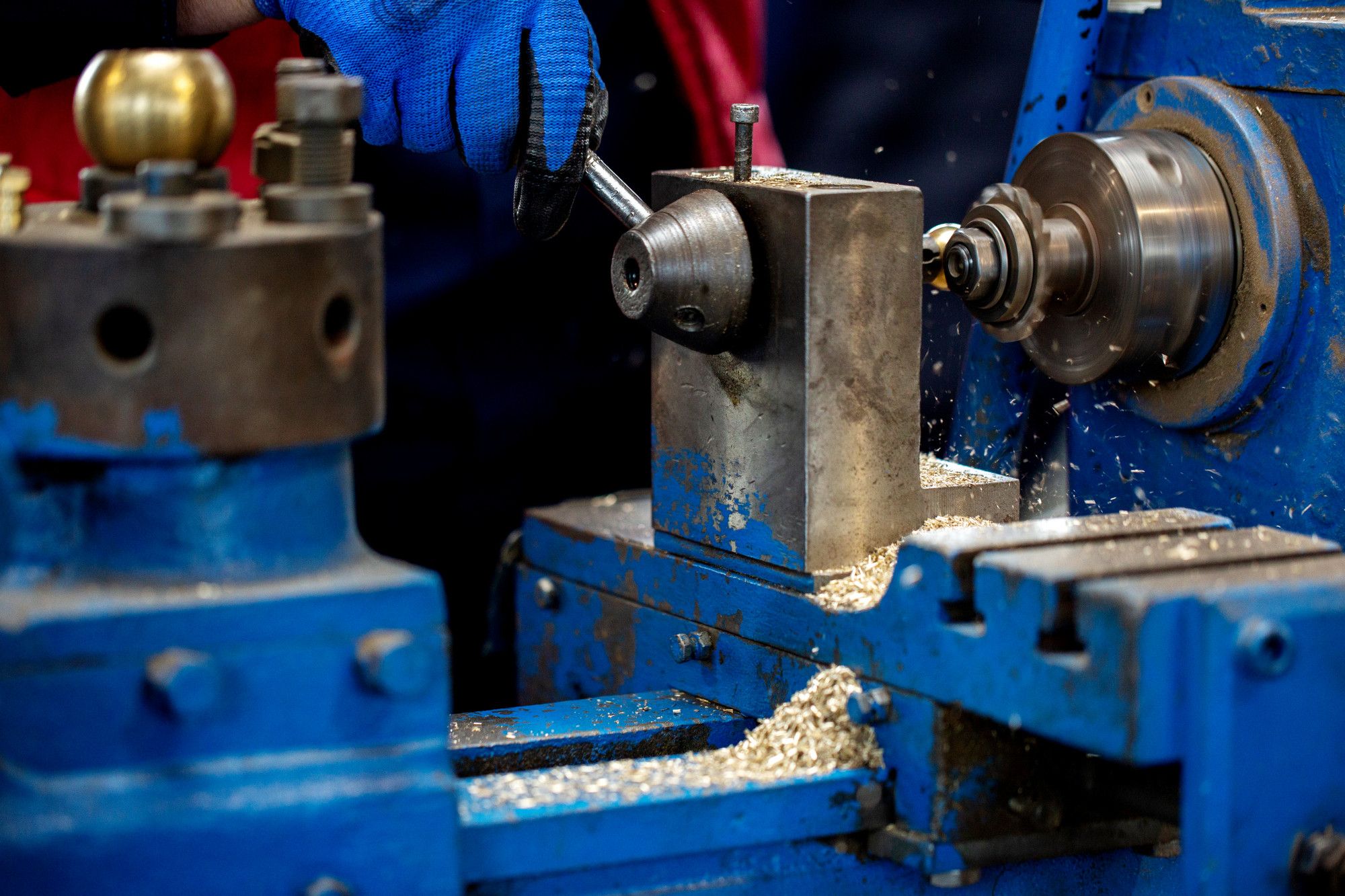
A CNC milling machine is a computer-controlled manufacturing tool used to remove material from a workpiece using rotating cutting tools. It operates based on programmed instructions, allowing precise shaping of metals, plastics, and composites.
This technology exists to improve accuracy, repeatability, and efficiency in manufacturing. Traditional manual machining required skilled operators for every movement, while CNC systems automate the process using digital designs.
CNC milling is widely used across industries where complex geometries and tight tolerances are required. From automotive components to aerospace structures, it enables consistent production with minimal variation.
The system typically includes a control unit, spindle, cutting tools, worktable, and software that interprets design files. Together, these elements create a streamlined workflow from design to finished product.
Key Features of CNC Milling Machines
Precision and accuracy are among the most important characteristics. CNC systems can achieve tolerances within microns, making them suitable for high-performance applications.
Other essential features include:
- Multi-axis capability: Machines can operate on 3, 4, or 5 axes for complex designs
- Automation: Reduces manual intervention and human error
- Repeatability: Ensures identical parts across production batches
- Material versatility: Compatible with metals, plastics, and composites
- Integration with CAD/CAM: Allows seamless digital design and manufacturing
These features make CNC milling machines central to modern manufacturing systems.
Types of CNC Milling Machines
CNC milling machines come in several configurations, each suited for specific tasks.
Vertical milling machines have a vertically oriented spindle and are commonly used for general machining tasks.
Horizontal milling machines feature a horizontal spindle and are ideal for heavy-duty cutting and large workpieces.
3-axis machines operate along X, Y, and Z directions and are widely used for standard parts.
4-axis and 5-axis machines add rotational movement, enabling the production of highly complex shapes used in aerospace CNC machining services.
Swiss type CNC machining services use specialized machines designed for small, high-precision components, often used in medical and electronics industries.
Why CNC Milling Machines Matter Today
CNC milling machines play a critical role in modern manufacturing ecosystems. As industries demand higher precision and faster production cycles, these machines provide a reliable solution.
They are especially important in sectors where accuracy and safety are essential. For example, a medical device CNC milling company relies on CNC systems to produce components that meet strict quality standards.
The technology addresses several key challenges:
- Reducing production errors through automation
- Improving efficiency by minimizing downtime
- Supporting complex designs that are difficult to achieve manually
- Enhancing scalability for both small and large production runs
Industries such as aerospace, healthcare, automotive, and electronics depend heavily on CNC milling. The ability to produce custom titanium machining parts with high strength and precision is particularly valuable in aerospace and medical applications.
Additionally, CNC milling supports innovation by enabling rapid prototyping and iterative design improvements. This allows engineers to test and refine products more efficiently.
Recent Trends and Developments
Over the past year, CNC milling technology has continued to evolve with advancements in automation, software integration, and material processing.
In 2025, there has been increased adoption of AI-assisted machining, where machine learning algorithms optimize tool paths and reduce material waste. This trend is improving efficiency and reducing operational costs.
Another notable development is the integration of Industry 4.0 systems, allowing CNC machines to connect with IoT networks. This enables real-time monitoring, predictive maintenance, and data-driven decision-making.
Sustainability has also become a focus area. Manufacturers are adopting energy-efficient machines and recyclable materials to reduce environmental impact.
The demand for custom titanium machining parts has grown due to their strength-to-weight ratio and corrosion resistance. This is particularly relevant in aerospace CNC machining services and medical applications.
Hybrid manufacturing, which combines CNC milling with additive manufacturing, is gaining attention. This approach allows for more flexible production and reduced material waste.
These trends indicate a shift toward smarter, more connected, and environmentally conscious manufacturing systems.
Regulations and Policy Considerations
CNC milling operations are influenced by various regulations and standards, especially in industries where safety and precision are critical.
In India, manufacturing practices are guided by standards from organizations such as the Bureau of Indian Standards (BIS). These standards ensure product quality and safety across industries.
For aerospace applications, compliance with international standards such as AS9100 is often required. This ensures that aerospace CNC machining services meet strict quality and traceability requirements.
Medical device manufacturing is regulated under frameworks that emphasize precision and safety. A medical device CNC milling company must adhere to quality management systems such as ISO 13485.
Environmental regulations also play a role. Manufacturers must manage waste, emissions, and energy consumption in accordance with government guidelines.
Key regulatory considerations include:
- Quality assurance standards for precision components
- Material compliance requirements for safety-critical applications
- Environmental policies related to waste and emissions
- Workplace safety regulations for machine operation
These policies help maintain consistency, safety, and sustainability in CNC milling operations.
Tools and Resources for CNC Milling
Several tools and resources support the effective use of CNC milling machines. These tools help in design, programming, simulation, and quality control.
CAD (Computer-Aided Design) software is used to create digital models of parts.
CAM (Computer-Aided Manufacturing) software converts designs into machine instructions.
Simulation tools allow users to test machining processes before actual production.
Tool path optimization software improves efficiency and reduces material waste.
Measurement and inspection tools ensure that finished parts meet required specifications.
Below is a simple comparison of commonly used tools:
| Tool Type | Purpose | Key Benefit |
|---|---|---|
| CAD Software | Design creation | Accurate digital models |
| CAM Software | Machine programming | Automated tool paths |
| Simulation Tools | Process testing | Error reduction |
| Inspection Systems | Quality control | Precision verification |
| CNC Controllers | Machine operation | Real-time control |
These tools work together to create a cohesive manufacturing workflow, from concept to final product.
Common Questions About CNC Milling Machines
What materials can a CNC milling machine process?
CNC milling machines can process a wide range of materials, including metals like aluminum, steel, and titanium, as well as plastics and composites. The choice of material depends on the application and required properties.
How is CNC milling different from CNC turning?
CNC milling uses rotating cutting tools to remove material from a stationary workpiece, while CNC turning rotates the workpiece against a stationary cutting tool. Each method is suited for different types of parts.
What industries use CNC milling machines the most?
Industries such as aerospace, healthcare, automotive, and electronics rely heavily on CNC milling. These sectors require high precision and consistent quality in their components.
Why are multi-axis machines important?
Multi-axis machines allow for more complex geometries and reduce the need for multiple setups. This improves efficiency and accuracy, especially in advanced applications like aerospace CNC machining services.
What is the role of software in CNC milling?
Software plays a crucial role in designing parts, generating machine instructions, and optimizing machining processes. It ensures accuracy, efficiency, and repeatability in production.
Conclusion
CNC milling machines are a fundamental part of modern manufacturing, enabling precise and efficient production across various industries. Their ability to handle complex designs and maintain consistent quality makes them indispensable.
With advancements in automation, AI integration, and sustainability, CNC milling continues to evolve. Industries such as aerospace and healthcare benefit significantly from innovations like custom titanium machining parts and Swiss type CNC machining services.
Understanding the features, types, and applications of CNC milling machines helps individuals and organizations make informed decisions in manufacturing processes.
As technology progresses, CNC milling is expected to become even more integrated with digital systems, further enhancing productivity and precision in manufacturing environments.