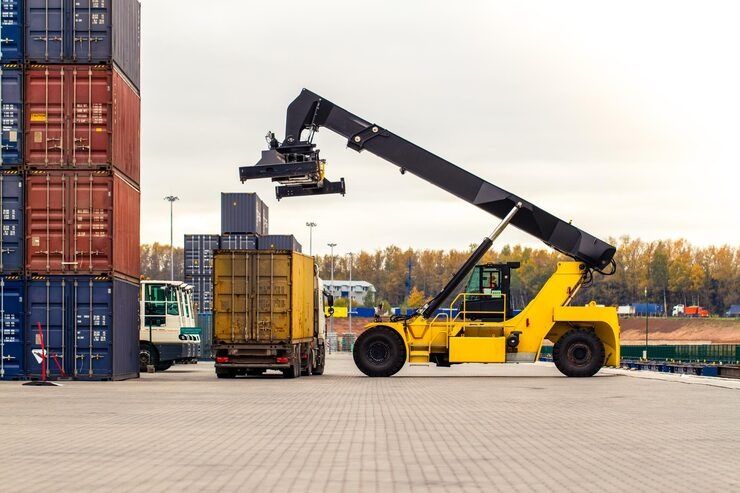
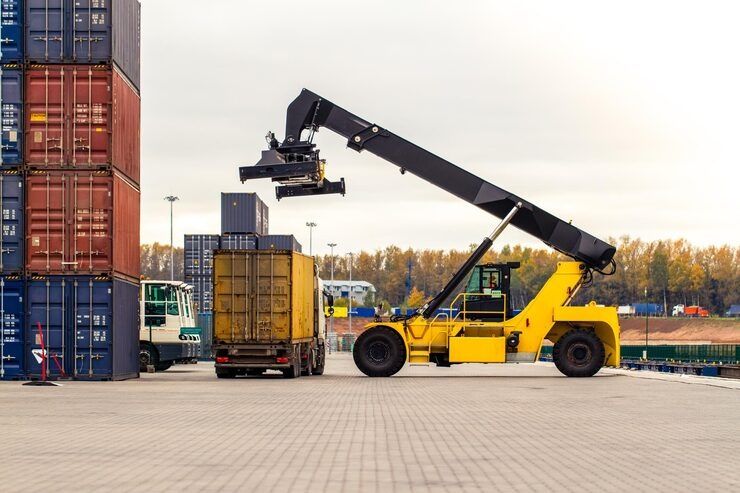
Container handler machines are specialized heavy equipment used to lift, transport, stack, and manage shipping containers in ports, container terminals, logistics hubs, rail yards, and industrial storage facilities. These machines are designed to handle standard ISO containers efficiently and safely, supporting global trade, cargo movement, and supply chain operations.
Container handler machines exist to improve port productivity, reduce manual labor, and optimize container yard space. As international shipping and containerized cargo transport continue to expand, container handling solutions have become essential for modern port infrastructure and logistics management.
Context: What Container Handler Machines Are and Why They Exist
The growth of global trade and containerized shipping created the need for specialized equipment capable of moving heavy steel containers quickly and safely. Traditional forklifts were insufficient for handling large shipping containers, leading to the development of dedicated container handling machines.
Container handler machines exist to:
-
Lift and stack heavy shipping containers
-
Improve port and terminal efficiency
-
Reduce cargo handling time
-
Maximize container yard storage space
-
Support intermodal transport systems
Modern container handling equipment integrates advanced hydraulics, high-capacity engines, and safety control systems to manage loads weighing up to 40 tons or more.
Importance: Why Container Handler Machines Matter Today
Container handler machines play a critical role in international trade and logistics.
Key Reasons Container Handling Equipment Is Important
1. Port Productivity Enhancement
Accelerates container loading and unloading.
2. Supply Chain Efficiency
Reduces delays in cargo movement.
3. Improved Yard Space Utilization
Enables high stacking capability.
4. Enhanced Safety Standards
Designed for heavy load stability.
5. Support for Intermodal Transport
Seamless transfer between ships, trucks, and trains.
This topic is relevant to port authorities, shipping companies, logistics operators, freight terminals, supply chain managers, and heavy equipment buyers.
Recent Updates: Container Handling Technology Trends (2024–2025)
Container handling solutions continue to evolve with smart port technologies.
Electric and Hybrid Container Handlers
Reduced fuel consumption and emissions.
Automated Container Handling Systems
Integration with smart port infrastructure.
Advanced Telematics Systems
Fleet tracking and remote diagnostics.
Improved Safety Sensors and Cameras
Enhanced operator visibility.
Higher Lift Capacity Models
Handling ultra-large containers.
Digital Port Integration
Synchronization with port management software.
Laws & Policies Affecting Container Handler Operations
Container handling operations must comply with industrial and maritime regulations.
Key regulatory considerations include:
-
Port authority safety standards
-
Occupational health and safety regulations
-
Load capacity and lifting certification rules
-
Emission and environmental compliance standards
-
Maritime cargo handling regulations
Compliance ensures safe and efficient terminal operations.
Types of Container Handler Machines
Container handler machines are categorized based on lifting method and operational use.
Reach Stackers
Mobile machines with telescopic arms for stacking containers.
Empty Container Handlers
Designed for lighter, empty container stacking.
Heavy-Duty Forklift Container Handlers
High-capacity forklifts for container lifting.
Straddle Carriers
Machines that carry containers between their legs.
Rubber-Tired Gantry (RTG) Cranes
Used in container yards for stacking rows.
Rail-Mounted Gantry (RMG) Cranes
Fixed cranes for large terminals.
How Container Handler Machines Work
Container handler machines operate using hydraulic lifting systems and precision control mechanisms.
-
Engine or electric motor powers hydraulic pumps
-
Lifting arm or spreader locks onto container
-
Hydraulic cylinders lift the container vertically
-
Steering system allows movement within yard
-
Container is transported and stacked
-
Sensors monitor load balance and stability
This process ensures safe lifting and placement.
Core Components of Container Handler Machines
Engine or Electric Drive System
Provides lifting and travel power.
Hydraulic System
Controls lifting and tilting.
Spreader Mechanism
Locks onto container corners.
Boom or Lift Mast
Supports vertical movement.
Chassis and Frame
Heavy-duty structural support.
Cabin and Control Interface
Operator visibility and control.
Stability and Load Sensors
Prevent tipping and overload.
Materials Used in Container Handler Construction
Durability is critical in port environments.
High-Strength Structural Steel
Frame and lifting arms.
Alloy Steel Components
Critical stress points.
Industrial Hydraulic Components
High-pressure systems.
Heavy-Duty Tires
Support high loads.
Corrosion-Resistant Coatings
Protection against saltwater exposure.
Container Handler Types and Applications
| Machine Type | Primary Function | Common Application |
|---|---|---|
| Reach Stacker | Stack and transport containers | Container terminals |
| Empty Container Handler | Handle empty units | Storage yards |
| Heavy Forklift Handler | Lift loaded containers | Ports & logistics |
| Straddle Carrier | Carry containers internally | Large ports |
| RTG Crane | Stack containers in rows | Container yards |
Applications of Container Handler Machines
Container handler machines are essential across multiple logistics environments.
Seaports and Container Terminals
Loading and unloading vessels.
Inland Container Depots
Container storage and transfer.
Rail Freight Yards
Intermodal cargo handling.
Logistics Distribution Centers
Bulk container movement.
Industrial Export Facilities
Shipping preparation and dispatch.
Benefits of Container Handler Machines
High Load Capacity
Handles heavy ISO containers.
Operational Speed
Improves terminal throughput.
Enhanced Safety
Designed for stability and control.
Space Optimization
Supports vertical stacking.
Versatility
Suitable for multiple transport modes.
Challenges & Considerations
-
High capital investment
-
Fuel and maintenance costs
-
Skilled operator requirement
-
Exposure to harsh port environments
-
Compliance with strict maritime regulations
Proper training and maintenance reduce operational risks.
How to Choose the Right Container Handler Machine
Assess Load Capacity Requirements
Loaded or empty containers.
Evaluate Yard Layout
Space and stacking height.
Consider Fuel or Electric Options
Operational efficiency goals.
Review Safety Features
Stability systems and sensors.
Check Service Network Availability
Maintenance and spare parts support.
Maintenance & Best Practices
-
Regular hydraulic inspections
-
Structural integrity checks
-
Tire and wheel condition monitoring
-
Lubrication of lifting components
-
Sensor calibration
-
Preventive maintenance scheduling
Routine inspections ensure long-term reliability.
Frequently Asked Questions
1. What is a container handler machine used for?
It is used to lift, stack, and transport shipping containers.
2. What is the difference between a reach stacker and a container forklift?
A reach stacker uses a telescopic boom, while a container forklift uses a vertical mast.
3. Are electric container handlers available?
Yes, electric and hybrid models are increasingly used.
4. How much weight can container handlers lift?
Typically up to 40–45 tons, depending on model.
5. How long do container handler machines last?
Approximately 15–25 years with proper maintenance.
Conclusion
Container handler machines are essential heavy equipment in modern ports and logistics operations. By enabling safe and efficient container lifting, stacking, and transport, these machines support global trade, supply chain management, and intermodal cargo movement.
Understanding machine types, components, applications, regulations, and maintenance practices helps port operators and logistics managers select suitable container handling solutions. As global shipping volumes increase and smart port technologies expand, container handler machines will remain a vital component of efficient cargo handling infrastructure.