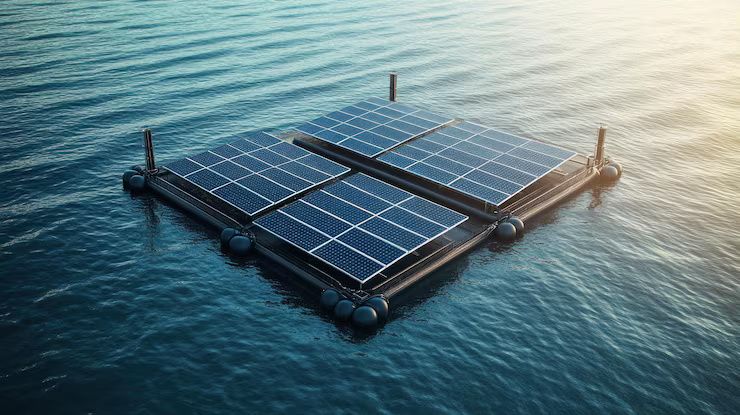
Floating solar platforms, also known as floating photovoltaic (FPV) systems, are solar power installations mounted on water bodies such as reservoirs, lakes, ponds, and even coastal areas. Unlike traditional land-based solar farms, these systems utilize unused water surfaces to generate renewable energy. Over the past decade, floating solar has gained increasing attention due to land scarcity, rising energy demand, and the need for sustainable infrastructure.
This topic is particularly relevant in recent years as countries seek to balance energy expansion with environmental conservation. Rapid urbanization and industrial growth have intensified competition for land, making water-based solar solutions an attractive alternative. Floating solar projects are being deployed in regions across Asia, Europe, and the Middle East, often integrated with existing hydropower facilities.
Emerging trends include hybrid renewable systems, improved floatation technology, and enhanced energy efficiency due to the cooling effect of water. These developments contribute to higher energy output compared to conventional solar setups. As governments and industries aim to meet climate targets, floating solar platforms are becoming a strategic component in clean energy transitions, offering both environmental and economic benefits.
Who It Affects and What Problems It Solves
Floating solar platforms impact a wide range of stakeholders, including governments, energy providers, industries, agricultural sectors, and local communities. For policymakers, these systems offer a way to expand renewable energy capacity without requiring large land acquisitions. Energy companies benefit from improved efficiency and the ability to utilize underused water infrastructure such as reservoirs and wastewater treatment plants.
Industries with high energy consumption, such as manufacturing and water utilities, can integrate floating solar to reduce operational costs and carbon emissions. In agricultural regions, floating solar installations on irrigation ponds can provide dual benefits—energy generation and reduced water evaporation. Local communities may also benefit indirectly through improved energy access and reduced environmental impact.
Problems It Solves
- Land Scarcity: Reduces dependence on large land areas required for traditional solar farms.
- Water Evaporation: Covers water surfaces, lowering evaporation rates in reservoirs and irrigation systems.
- Energy Efficiency: Water cooling improves panel performance, increasing energy output.
- Environmental Pressure: Minimizes deforestation and land-use conflicts.
- Infrastructure Utilization: Makes use of idle or underutilized water bodies.
By addressing these challenges, floating solar platforms provide a practical solution for sustainable energy expansion in densely populated or land-constrained regions.
Recent Updates and Industry Trends
Over the past year, the floating solar sector has seen notable advancements in scale, technology, and policy support. Several countries have announced or completed large-scale floating solar projects, particularly in Asia, where demand for renewable energy continues to grow rapidly.
One key trend is the integration of floating solar with hydropower plants. This hybrid approach allows for better grid stability and optimized energy production, as solar generation complements hydropower output during peak sunlight hours. Additionally, advancements in materials—such as high-density polyethylene floats and corrosion-resistant components—have improved system durability and lifespan.
Digital monitoring systems and AI-based performance analytics are also being introduced to enhance operational efficiency. These tools help track energy generation, detect faults, and optimize maintenance schedules.
Environmental considerations have gained more attention, with studies focusing on the ecological impact of floating solar installations. While benefits such as reduced algae growth and improved water conservation are observed, ongoing research aims to ensure minimal disruption to aquatic ecosystems.
Governments are increasingly including floating solar in renewable energy targets, offering incentives, pilot programs, and regulatory frameworks to encourage adoption. This growing institutional support indicates a strong future outlook for the technology.
Floating Solar vs Traditional Solar Systems
| Feature | Floating Solar Platforms | Land-Based Solar Systems |
|---|---|---|
| Installation Location | Water bodies (lakes, reservoirs) | Land (fields, deserts, rooftops) |
| Land Requirement | Minimal | High |
| Efficiency | Higher due to cooling effect | Standard efficiency |
| Environmental Impact | Lower land disruption | May affect land ecosystems |
| Installation Cost | Moderate to high | Moderate |
| Maintenance Complexity | Higher (water-based logistics) | Easier |
| Water Conservation | Reduces evaporation | No impact |
| Scalability | Limited by water availability | Easier expansion on land |
Laws and Policies
Floating solar development is influenced by national energy policies, environmental regulations, and water resource management laws. Governments typically regulate the use of public water bodies, requiring permits and environmental impact assessments before project approval.
In countries like India, floating solar is supported under renewable energy initiatives and solar mission programs. Authorities encourage the use of reservoirs managed by public utilities, particularly for hybrid solar-hydro projects. Developers must comply with guidelines related to water usage rights, biodiversity protection, and safety standards.
Environmental regulations often require monitoring of aquatic ecosystems to ensure that installations do not negatively affect water quality or marine life. In some regions, restrictions are placed on the percentage of water surface that can be covered.
Practical Guidance
- Use floating solar in land-scarce urban or industrial regions
- Prefer deployment on existing reservoirs or dams to simplify approvals
- Conduct environmental assessments before installation
- Align projects with government renewable energy schemes for incentives
Understanding and complying with these policies is essential for successful project planning and long-term sustainability.
Tools and Resources
Several tools and resources can assist in planning, designing, and managing floating solar platforms:
- Solar Design Software: Tools like PV simulation platforms help estimate energy output and system performance
- GIS Mapping Tools: Identify suitable water bodies and analyze environmental conditions
- Energy Calculators: Estimate return on investment and energy savings
- Monitoring Systems: Real-time tracking of solar generation and system health
- Government Portals: Provide policy guidelines, incentives, and application processes
- Engineering Standards: Technical documentation for floatation systems and anchoring methods
These resources support informed decision-making and improve the efficiency of floating solar projects.
Frequently Asked Questions (FAQ)
What are floating solar platforms?
Floating solar platforms are solar power systems installed on water bodies using buoyant structures to support photovoltaic panels.
Are floating solar systems more efficient than land-based systems?
Yes, in many cases. The cooling effect of water can improve panel efficiency and increase energy output compared to land-based systems.
Where can floating solar be installed?
They are typically installed on reservoirs, lakes, irrigation ponds, and sometimes coastal areas, depending on environmental conditions.
Do floating solar systems affect aquatic life?
Research suggests minimal impact when properly designed, but environmental assessments are necessary to ensure ecosystem protection.
Is floating solar expensive to install?
Initial costs can be higher due to specialized equipment and installation methods, but long-term benefits often balance the investment.
Conclusion
Floating solar platforms represent a data-supported solution to some of the most pressing challenges in renewable energy deployment. By utilizing underused water surfaces, they reduce land pressure while delivering efficient power generation. Studies and real-world projects indicate that these systems can achieve higher efficiency levels due to natural cooling, while also contributing to water conservation.
Recent developments highlight increased adoption, technological improvements, and stronger policy backing, particularly in regions with high population density and limited land availability. While challenges such as installation complexity and environmental considerations remain, ongoing innovation continues to address these issues.
In practical terms, floating solar platforms are most suitable for regions with accessible water bodies and strong renewable energy goals. As part of a diversified energy strategy, they offer a balanced approach to sustainability, efficiency, and infrastructure optimization—making them a valuable component of the global transition to clean energy.