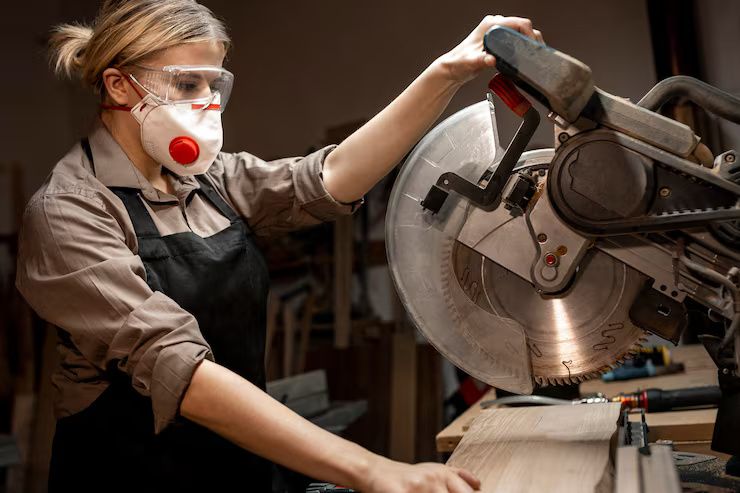
Grinding machines are essential industrial tools designed to remove material from a workpiece using abrasive wheels. They exist because many industries require high-precision surface finishing, shaping, and enhancement of metal, ceramics, composites, and other materials.
These machines help achieve accurate dimensions, smooth surfaces, and consistent quality. Common grinding machine types include surface grinders, cylindrical grinders, centerless grinders, tool and cutter grinders, and special-purpose grinders for sectors like automotive and aerospace.
Grinding is one of the oldest machining processes and remains vital in modern manufacturing, especially where exact tolerance and surface integrity are required.
Importance
Grinding machines matter because they contribute to quality, safety, and performance in finished products. Their key roles include:
-
Precision manufacturing
Producing components with tight tolerances for machinery, engines, and tools. -
Surface finishing
Achieving smooth and polished surfaces for friction reduction and enhanced durability. -
Material versatility
Supporting metals, plastics, ceramics, semiconductor materials, and hardened alloys. -
Component safety
Creating reliable machine parts that operate under high stress and speed.
Industries most affected include:
-
Automotive
-
Aerospace and defense
-
Metal fabrication
-
Medical equipment
-
Energy and power generation
-
Electronics and semiconductor tooling
Grinding solves challenges like material hardness, shape uniformity, and micro-accuracy that other machining processes cannot always achieve.
Recent Updates
Over 2024–2025, grinding machines have seen modernization driven by automation, sustainability, and digital manufacturing:
-
CNC advancement (2024):
Smart controllers and automated precision systems are improving repeatability. -
Energy-efficient grinding (2025):
Innovations in coolant delivery and wheel composition help reduce power usage. -
Robotics integration (2024):
Robot-assisted loading enhances speed and workplace safety. -
New abrasive materials (2025):
Diamond and cubic boron nitride (CBN) abrasives provide longer lasting wheels. -
IoT-enabled condition monitoring (2025):
Sensors track vibration, heat, and wheel wear for predictive maintenance. -
Additive-manufactured grinding wheels (2024):
Customized wheel geometries support performance improvements.
These developments align grinding operations with Industry 4.0 transformation trends.
Laws or Policies
Manufacturing and use of grinding machines are influenced by workplace safety and environmental compliance. Some key regulatory frameworks include:
-
Machine guarding requirements
Safety agencies such as OSHA, European Machinery Directive, and global equivalents mandate proper wheel guards and emergency cutoffs. -
Laser marking and component traceability
Certain industries require labeled and trackable machine parts for quality assurance. -
Noise and dust control rules
Grinding environments must manage particulate exposure and excessive noise levels. -
Abrasive wheel certification
Standards like ANSI B7.1 and ISO 16089 govern wheel safety and operation procedures. -
Environmental manufacturing compliance
Coolant disposal, emissions, and energy efficiency are monitored by regulatory bodies.
Policies ensure that grinding machines operate safely while supporting sustainable production practices.
Tools and Resources
A variety of tools, applications, and learning materials support grinding operations and knowledge:
-
Grinding force and wheel selection calculators
Used to choose the correct abrasive type, speed, and wheel size. -
Operator training platforms
Engineering educational portals offering technical courses on machining and precision grinding. -
CAD/CAM software
Helps program grinding paths and simulate accuracy before operation. -
Equipment manuals and inspection checklists
Support safe setup and ongoing maintenance routines. -
Manufacturing standards and handbooks
Such as Machinery’s Handbook for power, speed, and material references.
These tools help engineers and students make informed decisions about grinding processes.
Example Table: Types of Grinding Machines and Common Uses
| Grinding Machine Type | Primary Function | Typical Applications |
|---|---|---|
| Surface Grinder | Flat surface finishing | Precision plates, tools |
| Cylindrical Grinder | External round grinding | Shafts, bearings |
| Centerless Grinder | Round parts without center support | Automotive, fasteners |
| Tool & Cutter Grinder | Sharpening cutting tools | Drill bits, milling tools |
| Internal Grinder | Interior diameter finishing | Bushings, cylinders |
FAQs
What materials can grinding machines work with?
Grinding machines work with metals, ceramics, hardened steel, glass, composites, and various high-strength industrial materials.
How is grinding different from machining?
Grinding removes small amounts of material using abrasive grains, achieving finer tolerances and surface finishes than traditional cutting tools like mills or lathes.
Why are coolant and lubrication important in grinding?
They help control heat, reduce friction, extend wheel life, and maintain precision during the grinding process.
What safety measures are important?
Operators must use protective eyewear, wheel guards, balanced wheels, and follow proper wheel mounting procedures.
How does automation improve grinding?
Automation enhances consistency, reduces handling risks, and increases speed in high-volume manufacturing environments.
Conclusion
Grinding machines are essential to modern industrial production, enabling high-precision finishing and shaping across many materials and sectors. Their importance continues to grow as industries demand improved accuracy, durability, and efficiency.
Recent advances such as CNC automation, innovative abrasive materials, and real-time monitoring demonstrate how grinding technology supports smarter and more sustainable manufacturing.