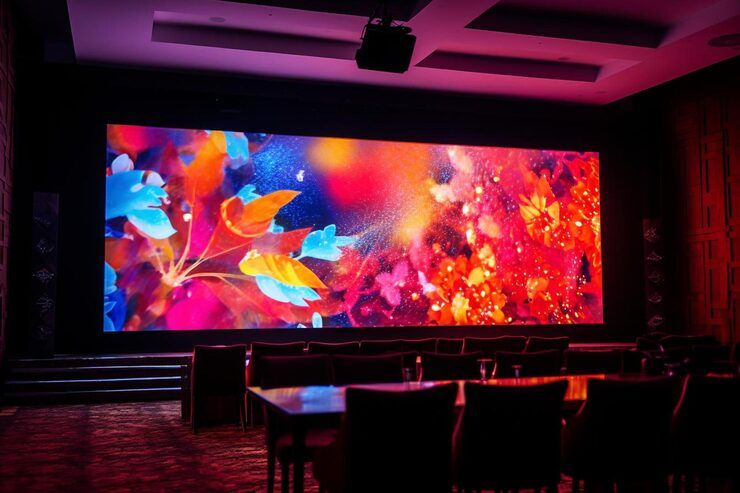
LED screen rentals involve the temporary use of light-emitting diode displays for events, exhibitions, conferences, entertainment venues, retail environments, and outdoor presentations. These displays can show videos, graphics, presentations, live camera feeds, and real-time information on large digital surfaces.
Unlike conventional projectors, LED screens generate their own light, which can make content easier to see in bright environments when the display has suitable brightness and viewing characteristics. Rental arrangements allow event organizers to use display equipment for a specific period without maintaining a permanent installation.
LED display technology includes indoor video walls, outdoor LED panels, transparent displays, curved screens, and mobile digital displays. The appropriate configuration depends on the venue, viewing distance, content type, audience size, and technical requirements.
Understanding LED Display Technology
An LED screen is generally assembled from multiple display modules or cabinets containing light-emitting diodes. These components work together to create a continuous image across a larger surface.
A complete rental setup may include:
LED panels or cabinets that form the display.
A video processor that manages image scaling and signal distribution.
Control software for configuring content and display settings.
Media players or computers that supply video and graphics.
Signal cables, power distribution equipment, and mounting structures.
Technicians responsible for installation, testing, operation, and dismantling.
The equipment must be selected as a complete system because image quality depends on more than the screen itself. Signal compatibility, processor capability, power requirements, and structural stability also influence performance.
Common Types of LED Screens
Different display formats serve different purposes.
Display type | Typical application | Important consideration |
|---|---|---|
Indoor LED video wall | Conferences, exhibitions, presentations | Pixel pitch and viewing distance |
Outdoor LED display | Festivals, public gatherings, outdoor events | Brightness, weather protection, and wind loading |
Fine-pitch LED screen | Control rooms, studios, premium presentations | Close viewing and image detail |
Curved LED display | Stage backgrounds and immersive environments | Screen geometry and content mapping |
Transparent LED display | Glass-fronted spaces and creative installations | Transparency, ambient light, and contrast |
Mobile LED screen | Temporary outdoor events | Transport, stabilization, and power supply |
The choice should reflect the intended viewing conditions rather than screen size alone.
Why LED Screen Rentals Matter Today
LED screen rentals are important because events increasingly depend on clear visual communication. A well-planned display can help audiences follow presentations, understand complex information, view live performances, and engage with digital content.
Applications Across Different Industries
LED displays are used in many environments:
Corporate events: Presentations, conferences, product demonstrations, and hybrid meetings.
Entertainment: Concert backdrops, music festivals, theatrical productions, and live performances.
Exhibitions: Digital demonstrations, information panels, and interactive displays.
Retail environments: Product information, promotional graphics, and digital signage.
Sports venues: Live scores, replays, schedules, and event announcements.
Education: Lecture presentations, workshops, and large-scale learning events.
Public gatherings: Community announcements, cultural programs, and outdoor screenings.
Temporary LED installations are particularly useful when an event needs a display for a limited period or requires a configuration that may change between venues.
Factors That Influence Display Performance
Several technical factors determine whether an LED screen meets an event's requirements.
Pixel pitch: This is the distance, measured in millimeters, between the centers of adjacent pixels. A smaller pixel pitch generally provides greater image detail at close viewing distances.
Brightness: Measured in nits, brightness indicates how much light the display produces. Indoor environments generally require different brightness levels from outdoor environments exposed to daylight.
Refresh rate: Measured in hertz, refresh rate describes how frequently the displayed image is refreshed. Higher refresh rates can help reduce visible flicker or scanning artifacts in camera recordings, although camera shutter settings and other system characteristics also matter.
Resolution: The number of pixels across the display's width and height determines how much detail can be shown. Content resolution should be compatible with the screen processor and display layout.
Viewing distance: A display designed for a distant audience may not appear as detailed when viewed from close range.
The relationship between these factors matters more than selecting the largest available screen. For example, a conference with detailed charts may need a finer pixel pitch than a large outdoor performance viewed from far away.
Comparing Display Specifications
The following table provides illustrative examples, not universal equipment standards.
Requirement | Indoor conference | Outdoor event |
|---|---|---|
Brightness | Moderate, adjustable | Higher, suitable for daylight |
Pixel pitch | Often finer | Depends on viewing distance |
Weather protection | Depends on venue conditions | Appropriate outdoor-rated equipment |
Structural planning | Rigging and floor loading | Wind, anchoring, and weather exposure |
Content priority | Text, charts, presentations | Video, graphics, live feeds |
Power planning | Venue electrical capacity | Outdoor distribution and protection |
Event organizers should request actual equipment specifications rather than relying on broad labels such as high-definition or professional-grade.
Recent Developments in LED Display Technology
LED display technology continues to evolve through improvements in image quality, cabinet design, power management, and content control. Developments reported during 2025 and 2026 show how these changes influence temporary event displays.
Fine-Pitch LED and Micro-LED Developments
On June 16, 2025, market research firm Omdia reported that global LED video display shipments reached 408,000 square meters in the first quarter of 2025, with fine-pitch displays accounting for 55.4% of market revenue. The report identified growing demand for detailed displays in corporate, cinema, retail, and educational environments.
Fine-pitch LED technology supports presentations viewed at shorter distances, where small text and detailed graphics need to remain legible. Micro-LED development also continues to explore improvements in brightness, color reproduction, and display performance, although availability and suitability vary by product.
Lightweight Modular Cabinets
In 2026, industry discussions increasingly highlighted lightweight LED cabinets, quick-lock mechanisms, and designs intended for repeated assembly and dismantling.
These developments are relevant to touring productions, exhibitions, and events with short setup windows. Lighter components can simplify handling, but installers must still verify lifting limits, rigging requirements, connection security, and structural capacity.
Camera-Friendly Displays and Hybrid Events
Events are often recorded for online audiences, creating additional requirements for LED display performance. Camera-facing screens may need appropriate refresh rates, grayscale handling, brightness adjustment, and processor configuration to reduce flicker, banding, and uneven exposure.
Hybrid conferences and virtual production environments also require careful synchronization between display content, cameras, computers, and live video systems.
Energy Efficiency and Content Management
Power consumption has become an important planning consideration, especially for large LED walls operating over extended periods. Newer display systems may incorporate improved power supplies, brightness controls, and energy management features.
Content management tools are also making it easier to schedule graphics, coordinate multiple screens, and update information remotely. These capabilities depend on the particular hardware, software, and network configuration.
Industry trends do not guarantee that every rental inventory includes the latest features. Organizers should verify specifications and test the actual display system before an event.
Laws, Safety Standards, and Local Policies
The rules affecting LED screen rentals depend on the country, venue, installation type, and whether the screen is used indoors, outdoors, or as an advertising structure. Temporary event equipment still needs appropriate electrical, structural, and operational safety planning.
Building and Structural Safety in India
India's National Building Code 2016, published by the Bureau of Indian Standards (BIS), provides guidance covering building safety, fire protection, structural design, electrical installations, and signs and outdoor display structures. Its application depends on the relevant local regulations and adopting authorities.
For temporary LED screen installations, organizers should consider:
The load capacity of floors, stages, trusses, and support structures.
Wind loading and anchoring for outdoor displays.
Safe access to electrical connections and equipment.
Fire exits, emergency routes, and access for emergency personnel.
Appropriate barriers around equipment and restricted technical areas.
Electrical Safety and Equipment Compliance
Large LED walls can draw substantial electrical power, particularly when combined with lighting, audio equipment, processors, and other event systems.
Before installation, the technical team should confirm the expected electrical load, available circuit capacity, grounding arrangements, cable protection, and suitable distribution equipment. Applicable Indian electrical standards and mandatory product-compliance requirements should be checked for the equipment concerned.
Exposed conductors, overloaded circuits, poorly secured cables, and unsuitable outdoor connections can create serious hazards. Electrical work should be performed by appropriately qualified personnel.
Outdoor Advertising and Event Permissions
A temporary screen used for a private presentation may be treated differently from a screen installed as an outdoor advertising structure or placed in a public area.
Depending on the location, organizers may need to verify:
Municipal permissions for outdoor signs or digital displays.
Venue approvals for stage structures and suspended equipment.
Road-safety requirements and restrictions on distracting displays.
Event permissions and applicable fire-safety conditions.
Restrictions on brightness, operating hours, or content in particular areas.
Local rules differ between Indian cities and other countries. A building code or model regulation does not automatically replace local permits. Confirm requirements with the relevant municipal authority, venue management, and event safety professionals before installation.
Tools and Resources for LED Screen Planning
Digital planning tools help event teams estimate display dimensions, prepare visual content, check equipment compatibility, and coordinate technical requirements.
LED Screen Size and Pixel Pitch Calculators
LED screen calculators can help determine the approximate pixel resolution of a display based on its physical dimensions and pixel pitch.
For example, a screen measuring 6 metres wide with a pixel pitch of 3 millimetres has an approximate horizontal pixel count of:
This calculation assumes a continuous display with the stated pitch. The actual resolution depends on the available panel configuration.
Content Design and Video Processing Software
Useful software categories include:
Presentation software: Microsoft PowerPoint and similar tools for slides, charts, and event information.
Graphic design tools: Applications such as Adobe Photoshop and Illustrator for preparing high-resolution visual assets.
Video editing software: Tools such as Adobe Premiere Pro and DaVinci Resolve for preparing video content.
LED control software: Manufacturer-specific applications for display mapping, calibration, signal monitoring, and screen configuration.
Media servers: Systems used to coordinate complex visuals, multiple screens, and live performance content.
Compatibility should be checked before an event because supported input formats, resolutions, frame rates, and control protocols vary between systems.
Technical Planning Checklist
A planning spreadsheet can help teams record the specifications needed for each event.
Planning item | Information to record |
|---|---|
Display dimensions | Width, height, and aspect ratio |
Pixel pitch | Distance between adjacent pixels |
Viewing conditions | Audience distance and ambient light |
Content format | Resolution, frame rate, and file type |
Electrical requirements | Load estimate and available supply |
Installation method | Ground support, truss, or wall mounting |
Environmental conditions | Rain exposure, wind, and temperature |
Operating plan | Testing, monitoring, and backup arrangements |
Useful reference materials include the BIS National Building Code, equipment manufacturer manuals, venue technical specifications, electrical safety guidance, and local municipal regulations.
Frequently Asked Questions About LED Screen Rentals
What is an LED screen rental?
An LED screen rental is a temporary arrangement in which LED display equipment is used for a specific event or period. The setup may include display panels, video processors, mounting structures, cables, control systems, and technical support, depending on the project requirements.
How do I choose the right LED screen size?
Consider the venue dimensions, audience size, viewing distance, content type, and available installation space. Presentations containing detailed text may require a higher-resolution display, while large outdoor events may prioritize visibility across greater distances.
What is the difference between indoor and outdoor LED screens?
Indoor screens are designed primarily for controlled environments, while outdoor screens typically require higher brightness and suitable protection against environmental conditions. Outdoor installations also need careful assessment of wind exposure, electrical protection, and structural stability.
What does pixel pitch mean when selecting an LED display?
Pixel pitch is the distance between the centers of adjacent pixels, measured in millimeters. A smaller pixel pitch generally produces a more detailed image at close viewing distances. The appropriate specification depends on the audience's position and the content being displayed.
What should be checked before an LED screen installation?
Confirm the display dimensions, pixel pitch, signal compatibility, power requirements, structural support, and content format. For outdoor installations, also assess weather protection, wind loading, and applicable local permissions. Test the complete system before the audience arrives.
Conclusion
LED screen rentals are an important part of modern event production, digital communication, exhibitions, and entertainment. Modular displays allow organizers to configure visual systems for different venues and audience requirements without committing to a permanent installation.
Selecting the right LED display involves more than comparing screen dimensions. Pixel pitch, brightness, resolution, viewing distance, processor compatibility, power distribution, and mounting arrangements all affect the final result.
Developments reported during 2025 and 2026 highlight continued interest in fine-pitch displays, lightweight cabinets, camera-friendly performance, and energy-efficient technology. However, the suitability of each feature depends on the actual equipment and the needs of the event.
Careful technical planning, reliable content preparation, electrical and structural safety checks, and compliance with local regulations help ensure that an LED display performs as intended. By evaluating these factors together, event organizers can make informed decisions about temporary digital display technology for conferences, concerts, exhibitions, and outdoor gatherings.