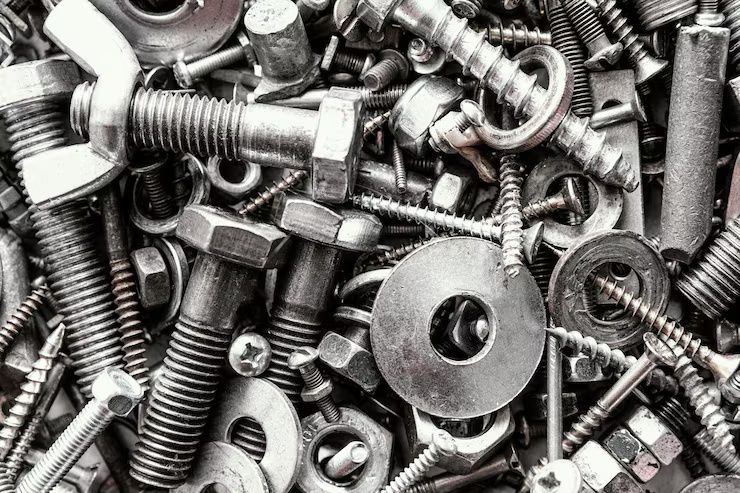
Industrial fasteners are mechanical components used to join, secure, or assemble two or more parts together. They exist to provide stability, alignment, and strength in structures, machines, and systems. Common examples include bolts, screws, nuts, washers, rivets, and anchors. While often small in size, fasteners play a critical role in ensuring that larger components remain connected under stress, vibration, or load.
Industrial fasteners developed as engineering systems became more complex and required reliable joining methods. Unlike welding or adhesives, fasteners allow components to be assembled, adjusted, and disassembled when needed. This flexibility makes them essential across construction, manufacturing, transportation, and many other industries.
From an educational perspective, industrial fasteners represent a practical application of materials science, physics, and mechanical design. They show how small components contribute to the stability and functionality of large systems.
Importance: Why Industrial Fasteners Matter Today
Industrial fasteners are critical because they support the safety, reliability, and efficiency of modern infrastructure and machinery. Without standardized fastening methods, assembling complex systems would be inconsistent and risky.
Key Reasons This Topic Matters
Industrial fasteners matter because they:
- Maintain structural integrity by distributing loads
- Improve safety by reducing risk of component failure
- Enable maintenance through adjustable and replaceable joints
- Support standardization across industries
They are used by engineers, technicians, manufacturers, and construction professionals. Their role extends from small devices to large infrastructure projects.
Fasteners also solve practical challenges such as handling vibration, thermal expansion, and environmental exposure.
Recent Developments and Trends
Industrial fasteners have evolved during 2024 and 2025 due to advancements in materials, manufacturing, and digital systems.
Advanced Materials
In early 2024, there was increased use of high-strength and corrosion-resistant alloys. These materials improve durability in demanding environments.
Digital Quality Tracking
Mid to late 2024 saw adoption of digital systems to monitor torque, specifications, and installation records. This improves traceability and reduces errors.
Precision Manufacturing
Improved automation has enabled tighter tolerances and more consistent fastener production.
Sustainability Focus
There is growing attention on recyclability and efficient material use in fastener production.
Trends Overview
| Trend Area | Description | Timeframe |
|---|---|---|
| Advanced materials | Stronger, corrosion-resistant alloys | 2024 |
| Digital tracking | Monitoring torque and installation data | 2023–2024 |
| Precision production | Automated manufacturing with tighter tolerances | 2024 |
| Sustainability | Focus on recyclability and material efficiency | 2024 |
Laws and Standards: Regulatory Framework
Industrial fasteners are governed by standards because they directly impact safety and performance. These standards ensure consistency in materials, dimensions, and testing.
Key Standards Organizations
- ASTM International defines material and testing specifications
- American Society of Mechanical Engineers provides engineering and design standards
- International Organization for Standardization offers global standardization
Key Regulatory Areas
- Material strength and classification
- Dimensional accuracy and compatibility
- Testing and certification requirements
- Marking and documentation for traceability
Tools and Resources for Understanding Fasteners
Various tools help engineers and learners understand fastener selection, installation, and performance. These resources simplify complex technical information.
Useful Tools and References
- Fastener size charts for dimensions and threads
- Torque calculation tools for proper tightening
- Material property databases
- Engineering handbooks
- Standards organization documentation
Common Fastener Types and Functions
| Fastener Type | Common Use | Key Property |
|---|---|---|
| Bolt and nut | Structural connections | High tensile strength |
| Screw | Component assembly | Self-threading capability |
| Rivet | Permanent joints | Shear resistance |
| Washer | Load distribution | Surface protection |
Frequently Asked Questions
What is the difference between a bolt and a screw?
A bolt is typically used with a nut and requires a pre-drilled hole, while a screw can thread directly into material.
Why are fastener grades important?
Grades indicate strength and material properties, helping select appropriate fasteners for specific conditions.
Can fasteners fail over time?
Yes, due to factors such as corrosion, vibration, or improper installation.
What is torque in fastening?
Torque controls the clamping force that holds components together.
Are fasteners standardized globally?
Many are standardized internationally, though regional differences may still exist.
Conclusion: Small Components, Big Impact
Industrial fasteners are fundamental to modern engineering systems. They ensure that structures and machines remain secure, functional, and maintainable over time.
Recent advancements in materials, digital tracking, and sustainability show how even small components continue to evolve. Understanding fasteners provides valuable insight into how complex systems are assembled and maintained in a safe and reliable manner.