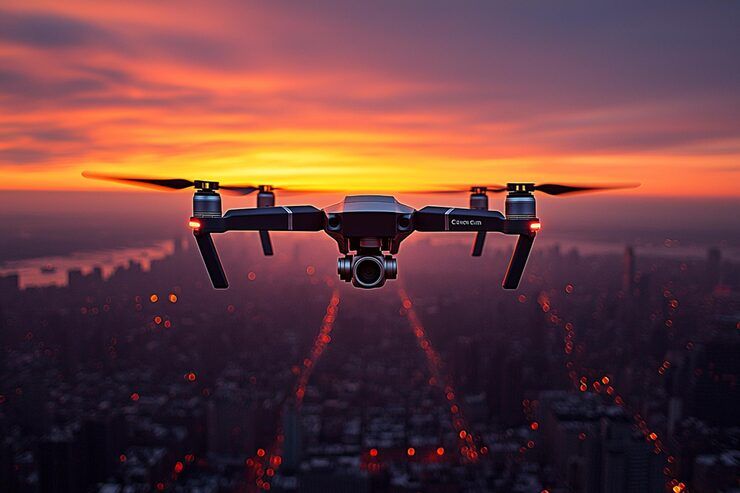
Drones, also known as unmanned aerial vehicles, are aircraft that operate without a human pilot onboard. They exist to perform aerial tasks that are difficult, time-consuming, or risky for manned aircraft. Early drones were developed mainly for military observation, but advancements in electronics, sensors, and navigation systems have expanded their use into many civilian and commercial fields.
Modern drones combine lightweight materials, compact motors, flight controllers, and communication systems. These components work together to allow stable flight, precise movement, and data collection from the air. The purpose of drone technology is to extend human capability by enabling remote aerial access, accurate monitoring, and efficient data gathering across varied environments.
Importance: Why Drone Technology Matters Today
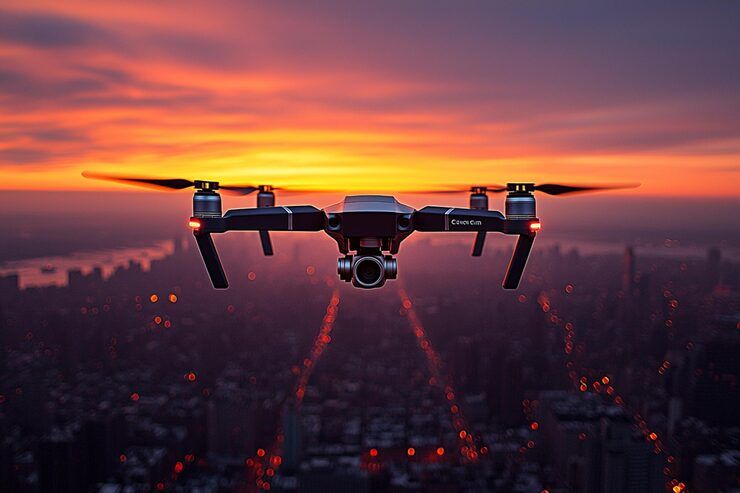
Drone knowledge matters today because aerial data and automation play a growing role in decision-making and safety. Drones affect industries such as agriculture, infrastructure monitoring, logistics research, environmental observation, and emergency response. They help address challenges where ground-based access is limited or slow.
Key reasons drones are important include:
-
Improved aerial visibility for large or hard-to-reach areas
-
Reduced human exposure to hazardous environments
-
Faster data collection compared to traditional methods
-
Support for precision-based operations and analysis
Understanding drone technologies and features helps users interpret drone data correctly and operate systems within safety and regulatory limits. This knowledge supports informed adoption and responsible usage in both public and private sectors.
Recent Updates: Technology and Trends from the Past Year
In 2024 and early 2025, drone technology continued to advance in autonomy, sensing, and communication. One notable trend is the increased use of artificial intelligence–based flight assistance. AI-enabled obstacle avoidance and automated path planning became more common in updated drone platforms released in late 2024.
Another important development is improved battery management systems. Manufacturers introduced smarter power monitoring features that help extend flight stability and reduce mid-air power loss. At the same time, multi-sensor payloads combining visual, thermal, and multispectral cameras gained wider adoption, particularly in mapping and inspection applications.
Connectivity also improved. Newer drones increasingly support enhanced GPS, RTK positioning, and more reliable transmission protocols. These updates reflect a broader trend toward precision, safety, and data accuracy in unmanned aviation systems.
Laws and Policies: How Regulations Shape Drone Use
Drone operation is closely regulated due to airspace safety and privacy concerns. In many countries, aviation authorities classify drones based on weight, altitude capability, and operational purpose. These rules determine where and how drones may be flown.
Common regulatory areas include:
-
Registration requirements for unmanned aircraft
-
Altitude and distance limits to avoid manned aircraft conflict
-
Restrictions near airports, government buildings, and sensitive zones
-
Mandatory operator awareness or certification programs
Governments also promote responsible drone usage through digital airspace management platforms and awareness campaigns. These policies aim to balance innovation with public safety and ensure drones integrate smoothly into existing aviation systems.
Tools and Resources: Useful References for Drone Knowledge
Several tools and resources support understanding drone technologies and features. These resources focus on planning, learning, and compliance rather than commercial promotion.
Helpful tools and references include:
-
Flight planning applications with airspace awareness
-
Battery health and flight time calculators
-
Open-source drone simulation software for practice
-
Technical documentation on sensors, controllers, and navigation
-
National aviation authority portals for rule updates
Example Table: Core Drone Technologies and Their Roles
| Technology | Primary Function | Practical Benefit |
|---|---|---|
| Flight Controller | Stabilizes and manages flight | Smooth and controlled movement |
| GPS / GNSS Module | Determines position and altitude | Accurate navigation |
| Sensors (IMU, Gyro) | Measures motion and orientation | Stable hovering |
| Communication Link | Transmits control and data | Reliable remote operation |
These tools and references help users understand how individual components contribute to overall drone performance.
Key Technologies and Features Explained
Modern drones rely on several interconnected technologies. Each feature plays a role in flight efficiency, data quality, and operational safety.
Propulsion and Power Systems
Electric motors and propellers generate lift and movement. Power systems include rechargeable batteries, power distribution boards, and monitoring circuits. Efficient power management improves flight endurance and reduces mechanical stress.
Navigation and Control Systems
Navigation systems combine GPS data with onboard sensors to maintain stability. Advanced drones use redundant sensors to improve reliability, especially in challenging conditions such as wind or low visibility.
Imaging and Data Collection
Cameras and sensors enable drones to capture visual, thermal, or spectral data. These features support mapping, inspection, and analysis tasks by providing detailed aerial perspectives.
Safety and Redundancy Features
Failsafe mechanisms such as return-to-home functions, geofencing, and automatic landing help prevent loss or accidents. These features are increasingly emphasized in updated drone designs.
Illustrative Table: Feature Adoption Trends
| Feature Category | Earlier Adoption | Recent Adoption |
|---|---|---|
| Manual Flight Control | High | Moderate |
| Assisted Navigation | Moderate | High |
| Obstacle Avoidance | Limited | Increasing |
| Data Encryption | Low | Moderate |
These trends show how drone systems are becoming more autonomous and secure.
FAQs: Common Questions About Drones
What are drones mainly used for today?
Drones are used for aerial observation, mapping, monitoring, research, and emergency support. Their applications continue to expand with improvements in sensors and autonomy.
How do drones stay stable in the air?
Stability is achieved through a combination of gyroscopes, accelerometers, and flight controllers that adjust motor speed in real time.
What limits drone flight time?
Flight time is mainly limited by battery capacity, payload weight, and environmental conditions such as wind.
Are all drones required to follow aviation rules?
Yes, most countries apply aviation regulations to drones, with requirements varying based on drone size and usage category.
How accurate is drone positioning?
Accuracy depends on the navigation system used. Standard GPS offers meter-level accuracy, while RTK-enabled drones provide much higher precision.
Conclusion
Drones represent a significant advancement in aerial technology, combining navigation systems, sensors, power management, and safety features into compact platforms. Understanding key drone technologies and features is essential for safe, effective, and compliant operation. Recent updates highlight a shift toward greater autonomy, smarter power systems, and improved data accuracy.
As regulations evolve and technology advances, informed drone knowledge helps users adapt responsibly. Clear understanding supports reliable aerial operations across research, infrastructure, and environmental applications.