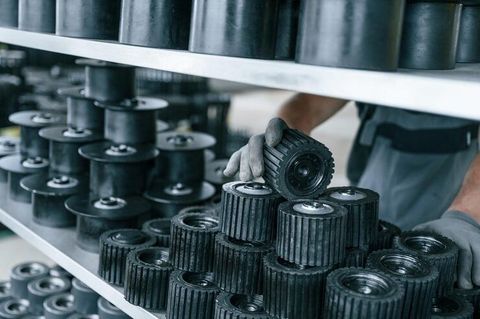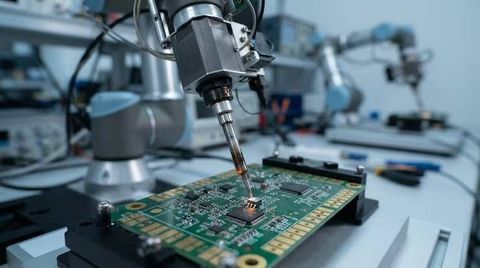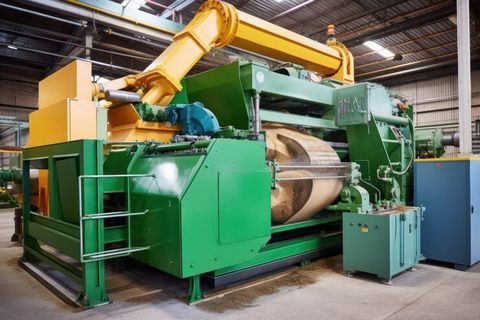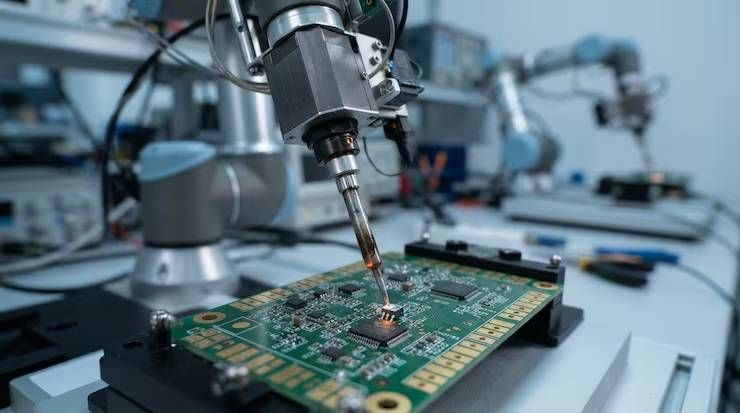
Electronics machinery refers to the equipment used to manufacture, assemble, inspect, test, and package electronic components and devices. These machines support the production of printed circuit boards (PCBs), semiconductors, sensors, connectors, power supplies, communication equipment, and consumer electronics. They are essential to industries that depend on reliable electronic systems, from automotive manufacturing and telecommunications to medical equipment and industrial automation.
Electronic products often contain many small components that must be positioned accurately and connected through carefully controlled processes. Electronics manufacturing machinery helps perform these tasks with consistent precision, repeatable production steps, and documented quality checks.
The equipment used in an electronics factory varies according to the product being manufactured. A facility producing semiconductor chips requires specialized wafer-processing equipment, while a factory assembling circuit boards may use solder paste printers, pick-and-place machines, reflow ovens, and automated optical inspection systems.
Main categories of electronics machinery
Electronics manufacturing equipment can be grouped into several broad categories:
PCB assembly machinery: Places and solders electronic components onto printed circuit boards.
Semiconductor manufacturing equipment: Processes silicon wafers and forms microscopic electronic structures.
Electronic component manufacturing machinery: Produces components such as resistors, capacitors, connectors, and inductors.
Inspection and testing equipment: Checks electrical performance, component placement, solder joints, and product reliability.
Cable and wire processing machinery: Cuts, strips, crimps, and prepares wires and cable assemblies.
Electronics packaging equipment: Protects finished components and devices during handling, storage, and transportation.
Industrial automation equipment: Coordinates machines, material movement, sensors, and production monitoring systems.
These categories often overlap within a modern electronics production facility. The equipment selection depends on the manufacturing process, product complexity, production volume, component dimensions, and required quality standards.
Types of Electronics Manufacturing Equipment
Electronics machinery includes equipment for component fabrication, circuit board assembly, testing, and final product preparation. Each machine performs a specific operation within the wider production workflow.
Printed circuit board assembly machines
Printed circuit boards provide electrical connections and physical support for electronic components. PCB assembly equipment places components onto the board and connects them through soldering or other approved joining methods.
Common machines include:
Solder paste printers: Apply solder paste to selected areas of a PCB through a stencil.
Pick-and-place machines: Position surface-mount components accurately on the board.
Reflow ovens: Heat solder paste according to a controlled temperature profile to form electrical and mechanical connections.
Wave soldering machines: Apply molten solder to suitable through-hole assemblies.
Selective soldering machines: Apply solder to specified areas of a circuit board.
PCB handling systems: Transfer boards between production stages and help maintain workflow continuity.
The process depends on the board design and component types. Some assemblies use surface-mount technology (SMT), while others use through-hole components or a combination of both.
Semiconductor manufacturing equipment
Semiconductor production involves highly controlled processes that create microscopic structures on semiconductor wafers. The equipment is specialized because even small variations in contamination, temperature, alignment, or process conditions can affect device performance.
Important equipment types include:
Photolithography systems: Transfer circuit patterns onto a wafer using light-sensitive materials and controlled exposure.
Deposition equipment: Forms thin films of conducting, insulating, or semiconductor materials.
Etching systems: Remove selected material to create specific patterns and structures.
Ion implantation systems: Introduce controlled amounts of selected elements into semiconductor materials.
Wafer cleaning equipment: Removes contaminants and unwanted residues between process steps.
Wafer inspection and metrology systems: Measure dimensions, detect defects, and evaluate process results.
Semiconductor manufacturing may also include wafer dicing, chip packaging, bonding, and electrical testing. Different semiconductor technologies require different combinations of equipment.
Electronic component manufacturing machinery
Electronic components are produced using processes such as precision forming, material deposition, winding, molding, cutting, and electrical testing.
Examples include winding machines for inductors and transformers, automated assembly equipment for connectors, ceramic processing systems for certain capacitors, and precision cutting machinery for electronic substrates.
The manufacturing process varies with the component's construction. For example, a transformer may require winding conductive wire around a magnetic core, while a connector may require metal stamping, plating, molding, and final assembly.
Inspection and testing equipment
Testing equipment helps determine whether components and finished products meet defined technical requirements.
Common examples include automated optical inspection (AOI) systems, X-ray inspection machines, in-circuit testers, functional test systems, oscilloscopes, spectrum analyzers, and electrical measurement instruments.
AOI systems examine visible features such as component placement and soldering defects. X-ray inspection can reveal certain hidden connections, while functional testers evaluate whether a product performs its intended electrical operations. No single inspection method detects every type of defect, so manufacturers often combine several approaches.
Importance of Electronics Machinery
Electronics machinery plays a major role in modern manufacturing because electronic components are becoming increasingly common in vehicles, household appliances, communication networks, medical instruments, and industrial control systems. Producing these products requires accurate assembly, dependable electrical connections, and repeated quality checks.
Automated manufacturing equipment can handle small components and repetitive operations that are difficult to perform consistently by hand. It can also collect production data, identify process variations, and help manufacturers investigate defects. However, automation requires appropriate setup, maintenance, trained operators, and reliable production controls.
Key benefits in industrial production
Electronics machinery supports manufacturing in several important ways:
Precision: Automated placement and processing equipment positions components according to defined specifications.
Repeatability: Controlled production sequences help maintain consistency between units and batches.
Production monitoring: Sensors and inspection systems provide information about machine operation and product quality.
Traceability: Digital records can associate components, production batches, and inspection results.
Process integration: Connected machines coordinate board handling, assembly, inspection, and testing.
Worker safety: Suitable automation can reduce exposure to certain repetitive tasks, high temperatures, and hazardous process materials.
These benefits depend on equipment suitability and operating conditions. A poorly configured production line may still generate defects, delays, or material waste.
Industries that use electronics machinery
Electronics manufacturing equipment serves a wide range of sectors.
Automotive: Production lines manufacture electronic control units, sensors, wiring harnesses, battery management systems, and vehicle communication modules.
Telecommunications: Equipment supports the production of network hardware, radio-frequency components, optical communication devices, and data transmission systems.
Consumer electronics: Assembly machinery produces circuit boards and devices used in computers, televisions, smartphones, and household appliances.
Medical equipment: Electronics production systems manufacture control boards, monitoring equipment, diagnostic instruments, and other electronic assemblies subject to relevant quality requirements.
Industrial automation: Manufacturers produce programmable logic controllers, motor drives, sensors, control panels, and industrial communication devices.
Aerospace and defense: Specialized production and testing equipment supports electronic assemblies used in navigation, communication, monitoring, and control systems. Requirements depend on the specific application and applicable regulations.
Recent Developments in Electronics Manufacturing
Electronics manufacturing continues to evolve through smaller components, more complex semiconductor designs, connected production equipment, and increasing use of automated inspection. Developments across 2024–2026 reflect the industry's focus on precision, manufacturing flexibility, production traceability, and efficient use of materials.
Artificial intelligence and automated inspection
Artificial intelligence and machine vision are increasingly used to analyze images from circuit board inspection systems. These technologies can help identify unusual solder joints, component misalignment, surface defects, and other visible irregularities.
AI-based inspection depends on representative training data, suitable imaging conditions, and appropriate validation. Human review may still be needed for ambiguous results, unusual defects, or high-consequence applications.
Machine learning is also used in some production environments to examine equipment data and identify patterns associated with machine deterioration or process variation. Such systems support investigation and planning rather than eliminating the need for engineering oversight.
Advanced semiconductor manufacturing
Semiconductor manufacturing continues to develop around smaller process features, advanced packaging, and greater integration of multiple chip components. These developments increase the importance of precise lithography, deposition, etching, metrology, and contamination control.
Advanced packaging techniques can connect multiple semiconductor dies within a single package, allowing different functions to be integrated into one system. Manufacturing these packages requires specialized bonding, inspection, thermal management, and electrical testing equipment.
Not every semiconductor facility uses the same technology. Equipment requirements depend on the chip architecture, process node, materials, production volume, and intended application.
Smart factories and connected production lines
Modern electronics factories increasingly connect manufacturing machines with production planning, quality management, and equipment monitoring systems. These arrangements can provide visibility into machine status, material movement, output, and production interruptions.
Industrial IoT sensors can monitor parameters such as temperature, vibration, humidity, and energy consumption. Manufacturing execution systems can associate production records with specific boards or batches, while automated material-handling systems help transfer components between production stages.
Flexible and energy-conscious manufacturing
Manufacturers are also exploring flexible production lines that can accommodate different board designs, component sizes, and product configurations. Automated changeover features, programmable equipment, and digital production instructions can support these transitions.
Energy monitoring and process optimization are becoming more relevant as factories assess electricity use, compressed air demand, and equipment operating patterns. Actual improvements depend on production scheduling, machine efficiency, maintenance practices, and facility conditions.
Laws, Standards, and Regulatory Requirements
Electronics machinery and the products manufactured with it may be affected by rules covering electrical safety, electromagnetic compatibility, workplace safety, environmental protection, and product quality. Requirements depend on the equipment type, product category, destination market, and intended application.
Regulatory considerations in India
India's electronics manufacturing sector operates within a framework of product regulations, industrial safety requirements, and environmental rules. The specific obligations depend on the equipment and products involved.
Relevant considerations include:
Bureau of Indian Standards (BIS): Applicable standards and conformity requirements may govern particular electronic products and components.
Electromagnetic compatibility: Certain products must meet applicable requirements concerning electromagnetic emissions and immunity.
Factory and occupational safety: Applicable workplace rules address machinery operation, electrical hazards, hazardous materials, and employee protection.
Environmental requirements: Rules concerning electronic waste, batteries, hazardous substances, and industrial waste may apply to particular manufacturing activities.
Import and export requirements: Equipment and electronic products may be subject to customs procedures, technical requirements, and market-specific conformity rules.
India's Electronics Component Manufacturing Scheme and other government initiatives support aspects of domestic electronics manufacturing. Eligibility and compliance requirements depend on the specific program and its current terms.
International technical standards
Several standards are commonly relevant to electronics manufacturing and testing:
IPC standards: Provide technical guidance for printed circuit board design, assembly, workmanship, and related manufacturing practices.
IEC 61010 series: Addresses safety requirements for certain electrical measurement, control, and laboratory equipment.
IEC 61340 series: Covers aspects of electrostatics, including controls relevant to electrostatic-sensitive electronic components.
ISO 9001: Establishes requirements for quality management systems.
ISO/IEC 17025: Addresses the competence of testing and calibration laboratories.
IEC 62368-1: Covers safety requirements for certain audio, video, information, and communication technology equipment.
A standard's existence does not mean it is mandatory for every manufacturer. Applicable editions, product classifications, certification obligations, and local regulations must be evaluated for the particular application.
Manufacturing Processes and Production Workflow
Electronics manufacturing typically follows a sequence of material preparation, component fabrication or assembly, inspection, testing, and packaging. The exact workflow depends on whether the facility produces semiconductor devices, circuit boards, electronic components, or complete electronic products.
Typical PCB assembly process
A surface-mount PCB assembly line may follow these stages:
Board preparation: Bare printed circuit boards are checked for visible damage and manufacturing defects.
Solder paste printing: A stencil applies solder paste to the designated component pads.
Component placement: Pick-and-place machinery positions components according to the board design.
Reflow soldering: A controlled heating process melts the solder paste and forms electrical connections.
Inspection: AOI, X-ray inspection, or other suitable methods examine the assembly.
Electrical testing: In-circuit or functional tests assess specified electrical characteristics.
Final handling: Approved boards move to further assembly, protective coating, or packaging as required.
Not every product requires every stage. Through-hole components, selective soldering, manual inspection, and additional cleaning processes may be included when the design or production specification requires them.
Semiconductor manufacturing workflow
Semiconductor production involves more specialized processing. A simplified sequence includes wafer preparation, thin-film deposition, photolithography, etching, doping, cleaning, inspection, and electrical testing. Many of these steps are repeated to create the required structures on the wafer.
After wafer fabrication, the wafer may be separated into individual dies. The dies are then packaged, connected to external terminals, and tested. Advanced products may require additional packaging processes to connect multiple dies or improve thermal and electrical performance.
Semiconductor fabrication requires strict environmental controls because microscopic contamination or small process variations can affect yield and device reliability.
Quality control throughout production
Quality checks are not limited to the end of the manufacturing line. Incoming components, solder paste, circuit boards, process settings, and finished assemblies may all require inspection.
Manufacturers use documented procedures to record defects, identify their causes, and verify corrective actions. Common measurements include component placement accuracy, solder joint quality, electrical continuity, insulation resistance, signal behavior, and thermal performance.
Statistical process control can help identify production variation before it results in a larger number of defective units. Reliable results depend on appropriate measurement equipment, sampling plans, and correctly interpreted data.
Global Electronics Machinery Manufacturers and Suppliers
The electronics machinery market includes companies that manufacture semiconductor fabrication equipment, PCB assembly systems, inspection instruments, industrial automation products, and specialized component production machinery. Their product ranges and technical capabilities vary considerably.
Major equipment manufacturers
Examples of established manufacturers in this sector include:
ASMPT: Manufactures semiconductor assembly and surface-mount technology equipment.
Fuji Corporation: Produces electronics assembly machinery, including component placement systems.
Yamaha Robotics: Supplies surface-mount technology equipment and related electronics manufacturing systems.
Mycronic: Develops equipment for electronics manufacturing, including selected dispensing, printing, and assembly applications.
KLA Corporation: Produces process control and inspection equipment used in semiconductor manufacturing.
Applied Materials: Manufactures equipment used in semiconductor processing and related materials engineering.
Tokyo Electron: Produces semiconductor manufacturing equipment for several wafer-processing stages.
Teradyne: Provides automated test equipment used for semiconductor and electronic system testing.
Keysight Technologies: Produces electronic measurement and testing instruments used in design, validation, and manufacturing environments.
These companies operate in different segments of the industry. A semiconductor wafer-processing supplier does not necessarily provide the same machinery as a PCB assembly manufacturer.
How equipment suppliers differ
Electronics machinery suppliers may provide complete production lines, individual machines, test instruments, process software, replacement components, installation support, or technical training. Some specialize in a single process, while others supply integrated equipment for several manufacturing stages.
When evaluating equipment, manufacturers generally examine process compatibility, throughput requirements, supported component sizes, measurement accuracy, software integration, maintenance arrangements, and the availability of technical documentation.
Compatibility is particularly important when connecting equipment from different manufacturers. Machine interfaces, data formats, board handling specifications, and control systems may need to be aligned before a production line can operate as an integrated system.
Tools and Resources for Electronics Manufacturing
Electronics manufacturers use engineering software, inspection instruments, technical documentation, and production data systems to plan manufacturing operations and maintain product quality.
Common engineering and production tools
PCB design software: Used to design circuit boards, arrange components, and prepare manufacturing data. Design files help guide board fabrication, component placement, and electrical verification.
Electronic design automation (EDA) tools: Support the design and simulation of integrated circuits, electronic circuits, and semiconductor systems.
Manufacturing execution systems (MES): Track production orders, machine status, work progress, and quality records across manufacturing operations.
Machine vision systems: Use cameras and image-processing software to examine components, printed markings, solder joints, and assembly features.
Electrical test instruments: Oscilloscopes, multimeters, spectrum analyzers, and automated test systems measure electrical signals and evaluate product behavior.
Calibration and measurement equipment: Reference instruments and documented calibration procedures help verify the reliability of inspection and testing results.
Factors to consider when selecting electronics machinery
Factor | Purpose |
|---|---|
Product specifications | Establishes the required manufacturing capabilities |
Component dimensions | Determines compatible placement and handling equipment |
Production volume | Helps define throughput and automation requirements |
Inspection capability | Determines which defects and characteristics can be measured |
Software compatibility | Supports communication between machines and production systems |
Maintenance requirements | Influences equipment availability and operational planning |
Safety and compliance | Helps address applicable technical and regulatory requirements |
Equipment selection should account for the complete production process, not only the specifications of an individual machine. Layout, material flow, operator training, environmental controls, and future product changes can also influence manufacturing performance.
Frequently Asked Questions
What is electronics machinery used for?
Electronics machinery is used to manufacture, assemble, inspect, and test electronic components and products. Applications include semiconductor fabrication, PCB assembly, cable processing, electrical testing, and electronic product packaging.
What machines are used in PCB manufacturing?
PCB production and assembly may involve drilling machines, imaging and etching equipment, solder paste printers, pick-and-place machines, reflow ovens, automated optical inspection systems, and electrical test equipment. The required machines depend on whether the process involves bare board fabrication or component assembly.
What is the difference between semiconductor equipment and SMT machinery?
Semiconductor equipment creates and processes structures on semiconductor wafers and supports chip packaging and testing. SMT machinery places surface-mount electronic components onto printed circuit boards and connects them through controlled soldering processes.
How is AI used in electronics manufacturing?
AI can support visual defect detection, production data analysis, equipment monitoring, and process optimization. Its effectiveness depends on data quality, system configuration, validation, and appropriate human oversight.
Which standards are relevant to electronics manufacturing?
Relevant standards may include IPC guidance for PCB assembly, IEC requirements for electrical safety and electrostatic control, and ISO 9001 for quality management. The applicable requirements depend on the product, manufacturing process, and destination market.
Conclusion
Electronics machinery supports the production of semiconductor devices, circuit boards, electronic components, and finished electronic products. Different machines perform specialized tasks, including component placement, wafer processing, soldering, inspection, and electrical testing. Automation, machine vision, and connected production systems continue to influence manufacturing methods and quality control. Equipment selection and operation depend on product requirements, process compatibility, measurement reliability, and applicable technical standards.