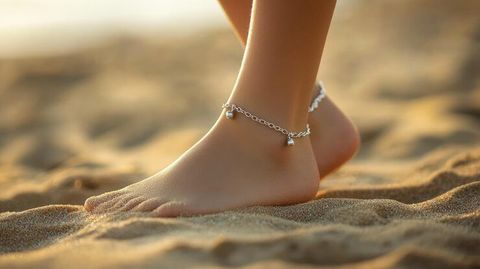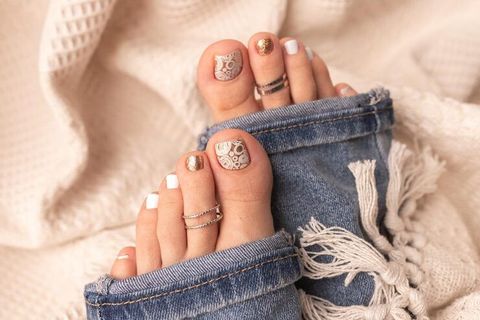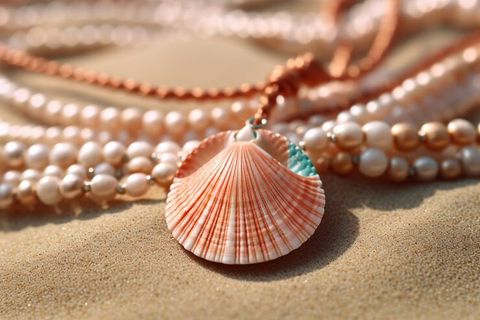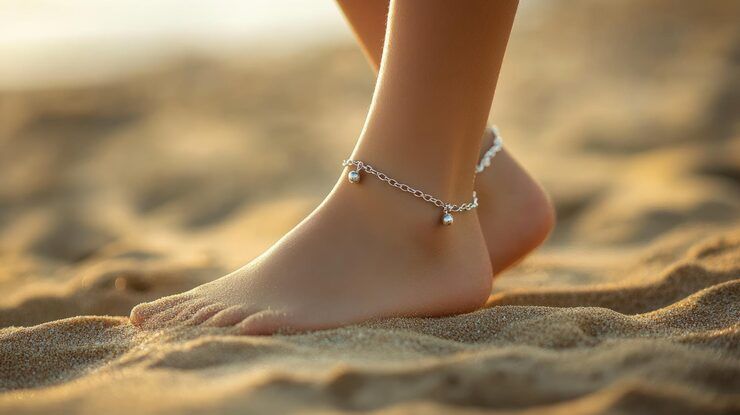
Adjustable anklets jewellery refers to ankle-worn jewellery designed with a flexible fastening system that allows the wearer to modify its length. Instead of depending on one fixed measurement, an adjustable anklet may use an extension chain, sliding bead, clasp system, cord mechanism, or another length-adjustment feature.
This design is useful because ankle dimensions vary between individuals, and the fit can also change depending on footwear, styling preferences, and how closely the anklet is intended to sit around the ankle.
Adjustable anklets are produced in many materials and styles. Common choices include sterling silver, gold, gold-plated metal, stainless steel, beads, pearls, gemstones, enamel elements, and textile cords.
Common Adjustable Designs
Several construction methods are widely used:
Extension-chain anklets: A clasp connects to different points along an additional chain.
Sliding-bead designs: A movable bead changes the usable circumference.
Lobster-clasp designs: A conventional clasp works with multiple chain links.
Cord-adjustable anklets: Sliding knots or cord mechanisms allow flexible sizing.
Layered anklets: Multiple decorative strands are connected through an adjustable fastening system.
Charm anklets: Small decorative elements are attached to a chain or cord.
The adjustment mechanism can influence comfort, appearance, durability, and ease of use. A well-designed anklet should remain secure while allowing enough movement for normal walking.
Why Adjustable Anklets Matter Today
Adjustable jewellery has become relevant to modern fashion because consumers increasingly look for accessories that can accommodate different sizes and styling preferences.
For jewellery designers, an adjustable structure can also simplify sizing across a broader audience. Instead of producing many fixed lengths, one design can accommodate a range of ankle measurements.
Flexible Sizing
One of the main advantages is adaptability. A wearer can position an anklet more closely around the ankle or leave additional space according to personal preference.
This can be particularly useful when the same accessory is worn with different footwear or clothing styles.
Everyday Styling
Anklets can complement casual clothing, resort wear, summer outfits, dresses, skirts, and contemporary layered jewellery.
Designs range from minimalist chains to decorative pieces featuring charms, beads, pearls, and gemstones.
Materials and Their Characteristics
Material selection has a direct effect on appearance, durability, maintenance, and skin compatibility.
| Material | Typical Characteristics | Common Design Direction |
|---|---|---|
| Sterling silver | Bright appearance, widely used | Minimalist and classic |
| Gold | Warm appearance and high perceived value | Fine jewellery |
| Gold-plated metal | Decorative surface layer | Fashion jewellery |
| Stainless steel | Durable and resistant to many forms of wear | Everyday styles |
| Beads | Wide range of colours and shapes | Casual and bohemian |
| Pearls | Smooth, classic appearance | Elegant designs |
| Gemstones | Colour and visual variation | Decorative statement pieces |
| Textile cord | Lightweight and flexible | Casual adjustable styles |
Material descriptions should be accurate because metal composition, plating, treatments, and gemstone characteristics can influence how an anklet should be maintained.
Comfort and Movement
Anklets experience repeated movement during walking. The fastening system therefore needs to remain secure without creating excessive pressure.
Important design considerations include:
Smooth edges
Appropriate chain thickness
Secure clasp construction
Suitable extension length
Comfortable weight
Resistance to twisting
Compatibility with normal movement
Recent Adjustable Anklet and Jewellery Developments
Jewellery design continued evolving during 2025 and 2026, with greater attention to responsible sourcing, product transparency, digital information, and flexible designs.
Greater Attention to Product Transparency
In September 2025, CIBJO published a special report focused on business integrity in the jewellery and watch industries. It highlighted areas including consumer disclosure, marketing ethics, greenwashing risks, product integrity, and technology-based transparency.
This trend is relevant to adjustable anklets because product descriptions increasingly need to communicate accurate information about materials, treatments, metal composition, and design characteristics.
Responsible Sourcing Developments
CIBJO updated its Responsible Sourcing Toolkit in 2026. The revised toolkit includes practical guidance, checklists, and templates for supply-chain due diligence and responsible sourcing.
For jewellery manufacturers and designers, this reflects a broader movement toward documenting the origin and handling of precious metals and gemstones.
ESG Measurement
In February 2025, CIBJO released guidelines for measuring environmental, social, and governance performance across parts of the jewellery distribution chain. The guidelines are designed to help businesses measure areas such as environmental impact and resource use.
Although an adjustable anklet may be a relatively small jewellery item, the same principles can influence material selection, packaging, manufacturing records, and supply-chain documentation.
Personalisation and Flexible Jewellery
Adjustability also fits into a wider movement toward personalisation. Jewellery designs that can be modified in length or worn in different configurations can provide greater styling flexibility.
This has encouraged interest in:
Layered anklets
Minimal chain anklets
Charm-based designs
Beaded adjustable anklets
Mixed-metal styling
Personalised pendants and charms
Stackable ankle jewellery
Global Laws, Standards and Policies
Jewellery rules differ between countries and regions. Requirements can concern precious-metal descriptions, chemical composition, consumer information, hallmarking, gemstone terminology, and environmental responsibilities.
United States
In the United States, the Federal Trade Commission's Jewelry Guides provide guidance on truthful descriptions of precious metals, gemstones, pearls, laboratory-created materials, and related jewellery characteristics.
The FTC states that jewellery descriptions should accurately represent relevant qualities such as metallic content, size, weight, treatment, durability, origin, and other material characteristics.
For adjustable anklets, this means descriptions of materials and construction should not create a misleading impression about the composition or characteristics of the item.
European Union
The European Union has specific restrictions on certain chemicals used in jewellery. EU trade guidance updated in June 2026 identifies restrictions covering substances including cadmium and nickel in jewellery articles. Anklets are specifically included within the listed nickel-restricted articles.
Under REACH restrictions, nickel release from jewellery intended for direct and prolonged skin contact is subject to defined limits. The rules specifically identify anklets alongside earrings, necklaces, bracelets, chains, and rings.
This makes material testing particularly important for anklets intended for the European market.
United Kingdom
The UK has its own hallmarking framework for qualifying precious-metal articles. GOV.UK explains that precious-metal articles above specified weight thresholds generally require legally recognised hallmarks when described as gold, silver, platinum, or palladium.
The framework also provides rules covering descriptions of precious metals and combinations involving non-precious metals.
International Industry Standards
CIBJO publishes Blue Books covering diamonds, gemstones, pearls, precious metals, and other jewellery categories. Its guidance supports consistent terminology and accurate product representation throughout the jewellery supply chain.
These industry references are not substitutes for national laws, but they can help businesses develop consistent terminology and documentation.
Tools and Resources for Adjustable Anklets
Several tools can help consumers, designers, manufacturers, and jewellery professionals evaluate adjustable anklet designs.
Useful Resources
Jewellery sizing guides: Help estimate appropriate ankle circumference and extension length.
Digital measuring tools: Smartphone-based measurement applications can provide approximate dimensions, although physical measurement is preferable for greater accuracy.
CAD software: Useful for designing clasps, chain components, charms, and custom jewellery structures.
Material databases: Help compare metal properties and composition.
Gemstone references: Useful when anklets incorporate diamonds, coloured gemstones, pearls, or other decorative materials.
Metal-testing equipment: Can help verify composition where appropriate.
CIBJO Blue Books: Provide internationally recognised industry terminology and reference material.
CIBJO Responsible Sourcing Toolkit: Provides checklists and templates for supply-chain due diligence.
FTC Jewelry Guides: Useful for understanding accurate jewellery descriptions in the United States.
ECHA and EU chemical guidance: Useful for checking restrictions affecting jewellery materials in European markets.
Measuring an Anklet
A basic measurement process can involve:
Wrap a flexible measuring tape around the ankle.
Record the circumference without excessive tightening.
Consider the preferred amount of movement.
Check the usable range of the adjustable mechanism.
Confirm that the clasp and extension system remain comfortable during movement.
The required adjustment range depends on the construction and intended fit.
Frequently Asked Questions
What is an adjustable anklet?
An adjustable anklet is ankle jewellery designed with a fastening or adjustment mechanism that allows its usable length to be changed. Common mechanisms include extension chains, sliding beads, adjustable cords, and multi-position clasps.
Are adjustable anklets suitable for everyday wear?
They can be suitable for everyday wear when the material, fastening mechanism, and construction are appropriate for regular movement. Care requirements vary according to whether the piece is made from precious metal, plated metal, stainless steel, beads, gemstones, or other materials.
How should an adjustable anklet be measured?
Measure the ankle circumference with a flexible tape while keeping it comfortable rather than tightly compressed. The adjustment range should then be checked to determine whether the anklet can provide the desired fit.
Are anklets affected by jewellery regulations?
Yes. Requirements vary by market. Rules may concern precious-metal descriptions, hallmarking, chemical restrictions, consumer information, and responsible sourcing. For example, EU REACH restrictions specifically address nickel release from anklets intended for prolonged skin contact.
Which materials are commonly used for adjustable anklets?
Common materials include sterling silver, gold, gold-plated metals, stainless steel, beads, pearls, gemstones, and textile cords. The appropriate material depends on the desired appearance, durability, maintenance requirements, and skin-contact considerations.
Conclusion
Adjustable anklets jewellery combines decorative design with flexible sizing. Extension chains, sliding mechanisms, adjustable cords, and multi-position clasps allow one design to accommodate different ankle measurements and styling preferences.
The category includes a wide range of materials, from sterling silver and gold to stainless steel, beads, pearls, gemstones, and textile elements. Each material has different characteristics that influence durability, appearance, maintenance, and skin-contact considerations.
Developments during 2025 and 2026 show increasing attention to transparency, responsible sourcing, ESG measurement, and accurate jewellery terminology. CIBJO's updated resources demonstrate the industry's continuing focus on supply-chain due diligence and product integrity.
Regulatory requirements also vary internationally. The United States emphasizes truthful jewellery descriptions through FTC guidance, the European Union regulates certain chemicals in jewellery under REACH, and the United Kingdom maintains statutory hallmarking requirements for qualifying precious-metal articles.
For anyone researching adjustable anklets jewellery, anklet designs, custom jewellery, precious metal jewellery, or fine jewellery accessories, the main considerations are fit, materials, fastening design, durability, accurate product information, and applicable market requirements.
As jewellery design continues to evolve, adjustable construction is likely to remain relevant because it combines personalisation, flexible sizing, and adaptable styling within a relatively simple accessory format.