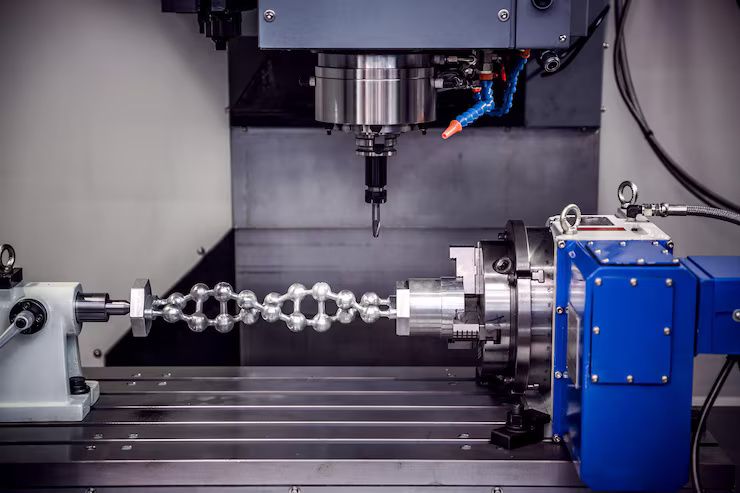
CNC milling machines are advanced tools used in manufacturing to precisely cut, drill, and shape solid materials such as metal, plastic, or wood. CNC stands for Computer Numerical Control, meaning these machines operate based on digital instructions rather than manual control.
CNC milling machines exist to enhance precision, productivity, and repeatability in creating components for industries such as automotive, aerospace, electronics, and medical equipment. Instead of manually adjusting cutters and positioning materials, operators use programmed software to automate the entire process.
These machines can perform:
-
Face milling
-
End milling
-
Slotting
-
Complex 3D surface shaping
Their ability to create detailed, precise components has reshaped how modern products are designed and manufactured.
Importance
CNC milling machines matter today because they support industrial production at a high accuracy level that manual machining cannot achieve. Their impact is seen through several benefits:
-
Precision in manufacturing ensures consistent and accurate parts, essential for mechanical components.
-
Automation improves productivity, enabling manufacturers to produce larger quantities in a shorter time.
-
Complex shapes become achievable, especially in sectors requiring innovative designs.
-
Reduced human error, which increases safety and reliability.
-
Better resource usage, as software-controlled cuts reduce material waste.
This technology is crucial for:
-
Manufacturers producing aircraft components and turbine blades
-
Electronics companies creating heat sinks and casings
-
Hospitals and medical companies developing implants and devices
-
Automotive factories machining engines, wheels, and gear parts
By solving challenges related to precision and efficiency, CNC milling machines support rapid industrial growth and technological advancement.
Recent Updates
Between 2024 and 2025, significant developments have emerged in CNC milling:
-
AI-assisted machining (2024): Intelligent algorithms optimize cutting paths and monitor tool conditions for improved performance.
-
Hybrid additive-subtractive systems (2025): New machines combine traditional milling with 3D printing, allowing more flexible production.
-
Energy-efficient motors (2024): Improved hardware reduces power usage and supports sustainability goals.
-
Digital twins (2025): Virtual replicas of machines simulate machining processes before production, reducing trial-and-error time.
-
Faster tool-changing systems (2025): Innovations increase uptime by minimizing machine stops.
-
Improved safety software (2024): Real-time sensing helps avoid collisions and protects equipment.
These updates reflect a shift toward smarter, greener, and more automated machining environments.
Laws or Policies
CNC milling is influenced by manufacturing regulations that promote workplace safety, product standards, and environmental protection. Examples include:
-
OSHA guidelines (United States): Ensure machine guarding, proper operator training, and accident prevention.
-
ISO Quality Standards (Globally): Standards like ISO 9001 and ISO 2768 ensure consistent production quality in machined components.
-
CE Marking (Europe): Machines must meet strict safety and environmental requirements before entering the market.
-
Environmental compliance policies: Promote reduced waste and energy consumption during manufacturing.
Government programs in some countries also encourage industrial modernization through technologies like automation, smart factories, and advanced CNC equipment.
These policies maintain safety, quality, and global trade compatibility in the machining sector.
Tools and Resources
Various tools and digital resources support learning, operating, and optimizing CNC milling machines:
-
CAM Software: Programs like Fusion 360, Mastercam, and SolidCAM convert digital models into machining instructions.
-
Simulation platforms: Tools allow testing of toolpaths virtually to prevent costly errors.
-
CNC training websites: Online knowledge portals teach programming basics, G-code instructions, and safety practices.
-
Material property databases: Online engineering platforms help choose proper cutting speeds based on material type.
-
Tool life calculators: Digital tools support efficient planning by estimating how long cutting tools can operate before replacement.
These resources make CNC milling more accessible to students, engineers, and manufacturing professionals.
Example Table: Types of CNC Milling Machines and Common Uses
| CNC Milling Machine Type | Key Feature | Common Applications |
|---|---|---|
| Vertical Milling Machine | Vertical spindle | Automotive parts, molds |
| Horizontal Milling Machine | Side-mounted spindle | Heavy components, mass production |
| 5-Axis Milling Machine | Multi-angle cutting | Aerospace, medical implants |
| Gantry Milling Machine | Large structural design | Shipbuilding, construction equipment |
| Mini CNC Mill | Compact for small parts | Education, electronics |
FAQs
What materials can CNC milling machines work with?
CNC milling can shape metals like aluminum, steel, and titanium, as well as plastics, composites, and wood, depending on the tool used.
How is CNC milling different from CNC turning?
In milling, the cutting tool rotates while the material stays still. In turning, the material rotates while the cutting tool stays in place. These methods create different shapes and applications.
Is CNC milling accurate?
Yes. Many machines achieve precision within microns, making them suitable for highly sensitive industries like aerospace and medical manufacturing.
What skills are needed to operate a CNC milling machine?
Operators benefit from understanding basic programming (G-code), machine setup, material selection, quality inspection, and safety procedures.
How does automation improve CNC milling?
Automation uses robotics, AI, and monitoring systems to reduce manual handling, enhance reliability, and maintain consistent quality across high-volume production runs.
Conclusion
CNC milling machines play a vital role in shaping everyday products and advanced technologies alike. Their ability to automate precise cutting operations enables industries to create complex components with high accuracy and efficiency.
Recent innovations such as AI-driven optimization, hybrid manufacturing, and digital simulation highlight how CNC milling continues to evolve. Regulations maintain safe workplaces and high production standards, while digital tools and training make the technology more accessible.