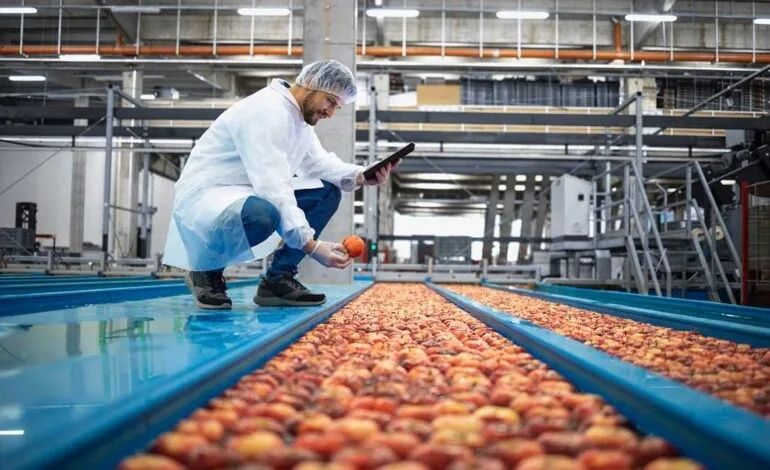
Food manufacturing is the process of transforming raw agricultural ingredients into packaged food products suitable for consumption. It includes cleaning, processing, preserving, packaging, and quality control activities carried out in controlled environments. This field exists to ensure food availability at scale, maintain consistency in taste and safety, and extend shelf life while meeting nutritional and regulatory standards.
As populations grew and urbanized, reliance on locally prepared food became insufficient. Food manufacturing emerged to bridge the gap between farms and consumers, allowing food to be produced in large quantities, stored safely, and distributed efficiently. Over time, it has evolved into a highly regulated, technology-driven industry focused on hygiene, traceability, and efficiency.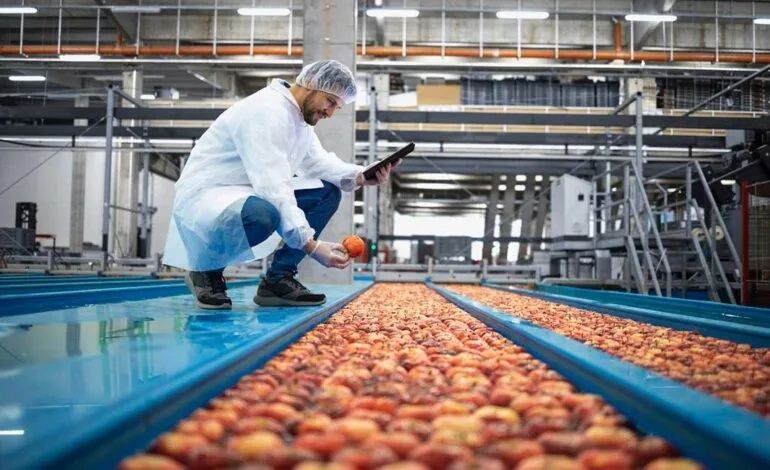
Modern food manufacturing integrates mechanical systems, automation, digital monitoring, and scientific testing. These elements work together to produce food that is safe, standardized, and accessible across regions.
Why Food Manufacturing Matters in the Modern World
Food manufacturing plays a critical role in everyday life. Nearly all packaged foods consumed globally pass through some form of manufacturing or processing stage. The sector directly affects consumers, farmers, distributors, regulators, and public health systems.
Its importance can be understood through several key contributions:
-
Ensures consistent food supply across seasons and regions
-
Reduces food spoilage through preservation and controlled processing
-
Supports food safety by limiting contamination risks
-
Enables nutritional fortification and dietary consistency
-
Helps manage large-scale food demand in urban areas
-
Creates traceability from raw material to final product
Food manufacturing also addresses challenges such as post-harvest losses, inconsistent quality, and food-borne illness risks. By applying standardized procedures and testing, manufacturers help reduce uncertainty in what people consume daily.
Recent Developments and Industry Trends
Over the past year, food manufacturing has continued to adapt to technological, environmental, and consumer-driven changes. Several notable developments observed during 2024–2025 include:
-
Increased adoption of automation and robotics in processing lines to improve hygiene and efficiency
-
Expansion of digital quality monitoring systems using sensors and data analytics
-
Greater focus on sustainable packaging materials and waste reduction practices
-
Growth of plant-based and alternative protein processing facilities
-
Improved cold-chain integration to maintain freshness across long-distance distribution
-
Rising use of AI-based inspection tools for defect and contamination detection
These updates reflect a broader shift toward smarter, more transparent manufacturing environments. The emphasis is on precision, safety, and adaptability rather than volume alone.
Regulations, Standards, and Policy Influence
Food manufacturing operates under strict regulatory oversight to protect public health. Rules vary by country, but most systems focus on hygiene, labeling, quality assurance, and traceability.
In India, for example, food manufacturing is guided by national frameworks that define:
-
Licensing and registration requirements for food processing units
-
Standards for ingredient usage, additives, and preservatives
-
Mandatory hygiene practices for facilities and personnel
-
Labeling rules covering nutritional information and allergen disclosure
-
Periodic inspection and compliance documentation
Similar regulatory structures exist globally, often aligned with international food safety standards. These policies aim to ensure that manufactured food meets safety benchmarks before reaching consumers.
Compliance is not only a legal obligation but also a foundational aspect of consumer trust in packaged food.
Tools, Systems, and Learning Resources
Food manufacturing relies on a combination of physical equipment and digital tools to maintain consistency and safety. Professionals and learners often reference the following resources:
-
Food processing machinery such as mixers, conveyors, dryers, and packaging units
-
Quality control instruments for moisture, pH, temperature, and microbial testing
-
Digital production tracking dashboards for batch monitoring
-
Hazard analysis and critical control point (HACCP) templates
-
Food safety management system documentation guides
-
Shelf-life calculation models for packaged products
-
Traceability and inventory management platforms
-
Government and academic portals publishing food safety guidelines
These tools support planning, monitoring, and continuous improvement within manufacturing environments.
Practical Insights and Operational Knowledge
Understanding food manufacturing requires attention to both process flow and control mechanisms. Some practical observations help clarify how facilities maintain efficiency and safety:
-
Raw material inspection is critical before processing begins
-
Segregation of clean and non-clean zones reduces contamination risk
-
Temperature and humidity control affect both quality and shelf life
-
Equipment sanitation schedules are as important as production speed
-
Batch records support accountability and traceability
-
Packaging integrity plays a key role in preserving finished products
Manufacturers balance productivity with precision. Even small deviations in processing conditions can affect taste, texture, or safety.
Table: Key Stages in Food Manufacturing
| Stage | Description | Purpose |
|---|---|---|
| Raw Material Handling | Cleaning and sorting ingredients | Removes contaminants |
| Processing | Cooking, mixing, fermenting, or drying | Transforms raw inputs |
| Quality Control | Sampling and testing | Ensures safety and consistency |
| Packaging | Sealing and labeling | Protects and identifies product |
| Storage & Distribution | Controlled storage and transport | Maintains product stability |
Frequently Asked Questions
What is food manufacturing in simple terms?
It is the process of converting raw ingredients into packaged food products through controlled processing, testing, and packaging.
Why is food manufacturing highly regulated?
Because manufactured food affects public health. Regulations help prevent contamination, mislabeling, and unsafe consumption.
How does technology improve food manufacturing?
Technology enables automation, real-time monitoring, quality testing, and traceability, leading to safer and more consistent output.
What is the role of quality control in food production?
Quality control verifies that food meets safety, hygiene, and composition standards before distribution.
Does food manufacturing affect nutrition?
Yes. Processing methods can preserve, enhance, or reduce certain nutrients, which is why formulation and testing are important.
Conclusion
Food manufacturing is a foundational pillar of modern society, enabling large populations to access safe, consistent, and reliable food products. From basic processing steps to advanced digital monitoring, the industry combines science, engineering, and regulation to maintain quality and safety.
Recent advancements show a clear move toward automation, sustainability, and data-driven decision-making. At the same time, regulatory frameworks ensure accountability and public protection. Understanding how food manufacturing works provides valuable insight into everyday food consumption and the systems that support it.
As global demand and expectations continue to evolve, food manufacturing remains essential in connecting agriculture with consumers through structured, controlled, and continuously improving processes.