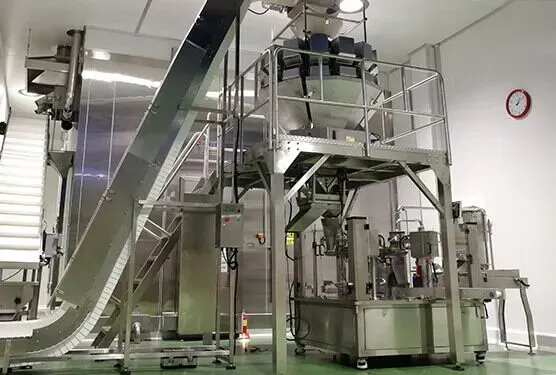
Form Fill Seal (FFS) machines are automated packaging systems that form packaging material into pouches or sachets, fill them with product, and seal them all within a continuous integrated cycle. They were developed to reduce manual handling and increase speed, efficiency, and sanitation in the packaging process.
These machines are widely used in food, pharmaceutical, personal care, agricultural commodities, powdered materials, chemicals, beverages, granules, and pastes. The system can run using flexible films such as laminated rolls, polyethylene sheets, heat-seal materials, or barrier films designed for specific product protection. The primary reason these machines exist is to streamline packaging flow while maintaining consistency, hygiene, and precision.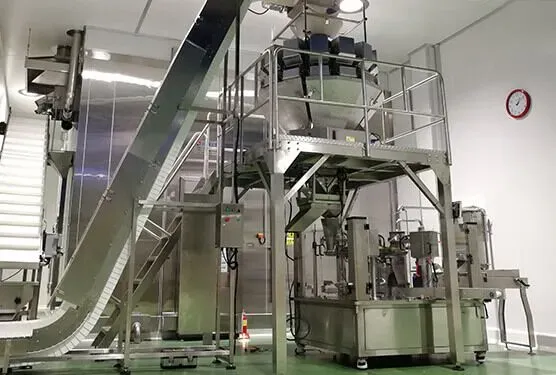
Importance – Why This Topic Matters Today
Automated packaging has become increasingly relevant due to rising demand in retail and industrial distribution. Form Fill Seal machines support consistent sealing quality, uniform filling accuracy, and scalable output capabilities that manual packaging methods cannot achieve.
Why they matter today:
-
They maintain hygiene and reduce contamination during packaging.
-
They provide consistent pouch size and sealing strength.
-
They support high-speed production and continuous batch flow.
-
They reduce product spillage and material wastage.
-
They enhance brand presentation through uniform packaging appearance.
Industries directly impacted include processing units, contract packaging operators, agricultural product manufacturers, beverage fillers, chemical producers, and consumer goods environments. These machines solve problems related to slow output, inconsistent packaging density, and storage inefficiencies. They help ensure product safety and quality from factory floor to distribution endpoint.
Recent Updates – Trends and Developments
Over the past year, several advancements have influenced how FFS systems operate:
| Trend | Insight |
|---|---|
| Shift toward fully automatic servo-driven FFS lines | Improves motion accuracy, reduces mechanical friction, enhances long-term stability |
| Growth of vertical form fill seal (VFFS) technology | Ideal for powders, granules, snacks, spices, seeds, sugar, detergent |
| Rising use of horizontal FFS systems | Helps with larger items such as medical products and consumer goods |
| Demand for smart HMI-based touch panel operation | Better control settings, simpler calibration, user-friendly interface |
| Increasing integration with Weighing & Coding units | Enhances traceability, batch identification, and uniform output |
| Adoption of eco-friendly recyclable film materials | Responding to environmental packaging expectations globally |
| IoT-enabled FFS machines for predictive tracking | Supports downtime prevention and sensor-based maintenance planning |
Automation and digital packaging analytics continue to expand, making modern machines more precise, efficient, and adaptable across industries.
Laws or Policies – Regulatory Considerations
Form Fill Seal machine usage is influenced by packaging, sanitation, industrial safety, and material compliance regulations depending on region and industry type.
Key compliance areas often include:
-
Packaging material safety and food-grade certification for edible products.
-
Labeling requirements for ingredients, batch code, expiry, and allergen information.
-
Electrical safety and mechanical standards for automated equipment.
-
Workplace safety frameworks for operator handling and machine enclosure.
-
Waste-management rules regulating plastic film and packaging material recovery.
-
Temperature and seal-strength specifications for pharmaceutical packaging.
-
Compliance inspections for product measurement and calibrated net-weight filling.
Companies using FFS machines maintain documentation, cleaning logs, calibration reports, and batch packaging records for quality tracking and regulatory audits.
Tools and Resources – Useful Guides, Calculators, and Learning Material
Professionals, plant operators, and students can improve understanding through technical tools and digital learning resources.
Helpful references include:
-
Packaging film thickness calculators
-
Sealing temperature reference charts
-
Material compatibility selection guides
-
Weighing and dosing calibration sheets
-
FFS cycle-time calculation tools
-
Digital dashboards for machine runtime logs
-
Maintenance scheduling templates
-
Technical videos demonstrating VFFS and HFFS flow
-
Packaging material testing labs for tensile, burst, and barrier properties
-
Software platforms for OEE (Overall Equipment Efficiency) tracking
These tools help in diagnosing issues, optimizing output, and improving material-handling performance.
Key Insights and Practical Tips for Efficient Use
Smoother operation depends on planned settings, routine monitoring, and material awareness. The following insights enhance machine reliability:
-
Select film thickness matching product flow characteristics.
-
Keep rollers, forming collars, and sealing jaws free from material buildup.
-
Maintain proper tension during unwinding to prevent film wrinkling.
-
Adjust sealing pressure when switching between foil and laminated films.
-
Use controlled humidity storage to avoid moisture-affected packaging material.
-
Validate filling dosage before full-scale batch activation.
-
Monitor jaw temperature continuously to reduce seal burns or under-seal.
-
Conduct regular bearing lubrication, belt alignment, and pneumatic airflow checks.
-
Run test strips during product changeovers to verify sealing profile.
With consistent observation, downtime reduces and sealing stability improves.
Table – Vertical vs Horizontal Form Fill Seal Machines
| Type | Ideal Applications | Strength |
|---|---|---|
| Vertical FFS | Powders, grains, coffee, seeds, snack food | Compact footprint, fast pouch production |
| Horizontal FFS | Medical items, large sachets, solid products | Better product orientation, strong side-seal format |
FAQs
What is a Form Fill Seal machine used for?
It is used to form packaging film into pouches, fill product, and seal it automatically in a continuous cycle.
What materials work best for FFS packaging?
Laminates, polyethylene film, aluminum-based barrier films, and multilayer flexible rolls depending on product sensitivity.
What industries commonly use these machines?
Food, beverages, pharmaceuticals, agriculture, household goods, chemicals, powders, liquid-fill environments, and packaged consumables.
How does sealing temperature affect output?
Low temperature may cause weak seals, while excessive temperature may burn film. Calibration ensures optimal bonding strength.
Can FFS machines be integrated with print coding and weighing?
Yes, integration with batch coding, weighing modules, and inspection units enhances traceability and visual quality.
Conclusion
Form Fill Seal machines represent a central part of automated packaging technology. Their ability to form, fill, and seal continuously provides efficiency, accuracy, and hygiene for large-volume production environments. With modern upgrades, FFS units now support advanced sensor feedback, improved sealing precision, and smart analytic dashboards.
Understanding how these machines work along with correct film selection, sealing calibration, and dosage balance helps operators maintain steady throughput and consistent packaging quality. With growing digital trends, predictive diagnostics, and environmentally conscious packaging, FFS technology continues to develop as a key asset in industrial automation.
A well-managed Form Fill Seal line offers a dependable way to package materials smoothly, cleanly, and consistently. As packaging expectations evolve, these machines remain essential to reliable product handling and distribution.