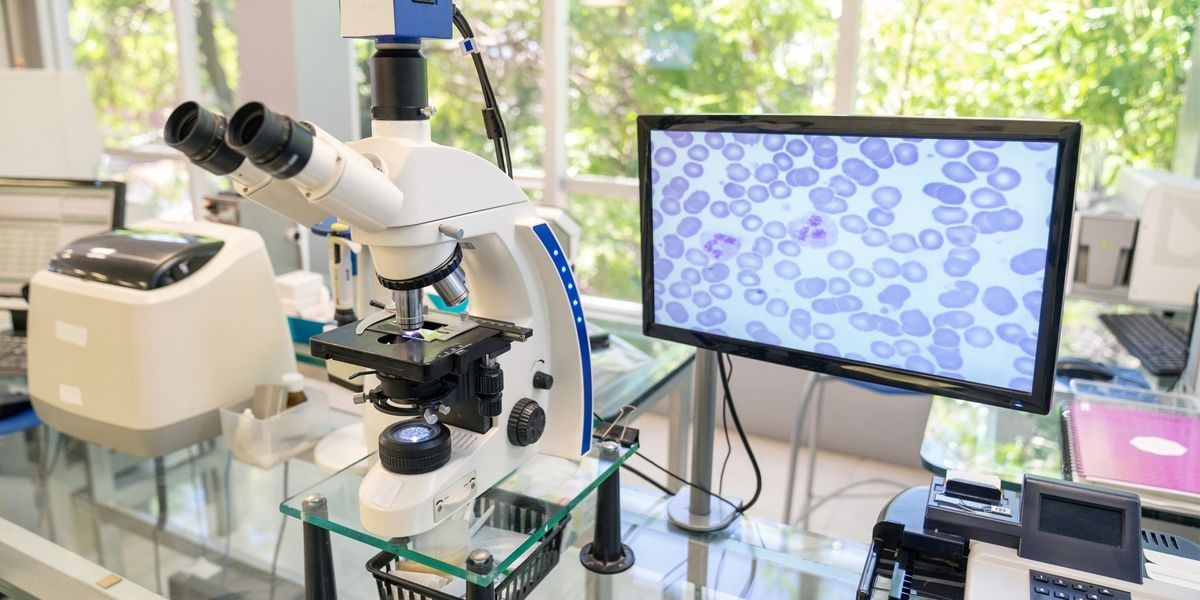
Modern microscopes are scientific imaging tools designed to observe objects that are too small to be seen with the naked eye. These devices have evolved significantly from early optical instruments into advanced systems capable of high resolution imaging. The development of modern microscopes is closely linked to progress in science, medicine, and technology.
The concept of microscopy began with simple lenses, but today it includes a wide range of advanced imaging methods that allow scientists and researchers to study cells, materials, and microscopic structures in detail. Modern microscopes combine optics, electronics, and digital processing to produce clearer and more precise images.
Understanding types of microscopes and microscopy techniques helps explain how these tools are used across different fields. From classrooms to research laboratories, modern microscopes play a central role in exploring the microscopic world.
Importance
Modern microscopes are important because they enable detailed observation and analysis of structures that are otherwise invisible. This capability supports research, education, and practical applications in everyday life.
They are widely used in areas such as healthcare, environmental studies, and material science. For example, microscope applications in medical laboratories help in examining samples, while in education, they help students understand biological structures.
Advanced imaging methods also contribute to problem-solving. They assist in identifying material defects, studying microorganisms, and understanding complex systems. High resolution imaging allows for more accurate observations, which is essential for scientific progress.
The importance of scientific imaging tools can also be seen in quality control processes, where detailed inspection is required to maintain standards.
Types of Microscopes
There are several types of microscopes, each designed for specific imaging purposes.
Optical Microscopes
Optical microscopes use visible light and lenses to magnify objects. They are commonly used in schools and laboratories.
- Suitable for basic observation
- Easy to operate
- Widely used in biology
Electron Microscopes
Electron microscopes use electron beams instead of light to achieve much higher magnification.
- Provide very high resolution imaging
- Used in advanced research
- Suitable for studying ultrastructures
Digital Microscopes
Digital microscopes use cameras and software to display images on screens.
- Allow image capture and storage
- Useful for documentation and analysis
- Common in modern microscopy techniques
Stereo Microscopes
Stereo microscopes provide a three-dimensional view of objects.
- Used for surface observation
- Helpful in inspection and assembly tasks
Advanced Imaging Methods
Advanced imaging methods are techniques that improve the clarity, depth, and detail of microscopic images.
Fluorescence Imaging
This method uses special lighting to highlight specific parts of a sample. It is commonly used in biological studies.
Confocal Microscopy
Confocal microscopy improves image sharpness by focusing on a single plane within a sample. This reduces background noise.
Scanning Electron Imaging
This technique scans a surface with electrons to produce detailed images of structures.
Phase Contrast Imaging
Phase contrast enhances visibility of transparent samples without the need for staining.
These microscopy techniques allow researchers to observe structures in greater detail and with improved accuracy.
Comparison of Microscope Types
| Type | Imaging Method | Magnification Level | Common Use |
|---|---|---|---|
| Optical Microscopes | Light-based | Moderate | Education, biology |
| Electron Microscopes | Electron beam | Very high | Research, material study |
| Digital Microscopes | Camera-based | Variable | Documentation, inspection |
| Stereo Microscopes | Dual optical paths | Low to moderate | Surface observation |
Recent Updates
Modern microscopes have seen significant improvements in recent years, especially in digital integration and automation. Many systems now include software that allows image processing, measurement, and analysis.
Artificial intelligence is increasingly being used in microscopy techniques to assist in identifying patterns and analyzing data. This helps improve accuracy and reduces manual effort.
Another trend is the development of portable digital microscopes, which make advanced imaging methods more accessible in fieldwork and educational settings. High resolution imaging continues to improve as new technologies are introduced.
Laws or Policies
The use of modern microscopes is influenced by safety and research guidelines, especially in laboratory environments.
Laboratory Standards
Microscopy work often follows safety protocols related to handling samples and equipment. These standards ensure safe and controlled usage.
Research Regulations
Scientific imaging tools used in research must comply with ethical guidelines and documentation requirements. This ensures accuracy and reliability of results.
Equipment Compliance
Certain advanced systems may need to meet technical standards related to electrical safety and performance.
These policies help maintain consistency and safety in the use of microscopy techniques.
Tools and Resources
Various tools support the effective use of modern microscopes and advanced imaging methods.
Imaging Software
Software platforms help process and analyze microscopic images. They allow measurement, enhancement, and data recording.
Calibration Tools
Calibration systems ensure accurate magnification and measurement in high resolution imaging.
Educational Resources
Learning materials explain types of microscopes and their applications in simple terms.
Data Management Systems
These systems help store and organize images and research data for future reference.
FAQs
What are modern microscopes used for?
Modern microscopes are used for observing small structures in fields such as biology, medicine, and material science.
What are the main types of microscopes?
The main types of microscopes include optical microscopes, electron microscopes, digital microscopes, and stereo microscopes.
How do advanced imaging methods improve microscopy?
Advanced imaging methods improve clarity, detail, and accuracy, allowing better analysis of microscopic structures.
What are common microscope applications?
Microscope applications include medical analysis, education, research, and quality inspection processes.
What is high resolution imaging in microscopy?
High resolution imaging refers to the ability to observe very fine details within a sample, which is essential for detailed study.
Conclusion
Modern microscopes are essential tools that enable detailed observation of microscopic structures. Different types of microscopes and advanced imaging methods support a wide range of applications across science and education. These tools continue to evolve with improvements in digital technology and imaging techniques. Understanding their functions and uses helps explain their importance in studying the microscopic world.