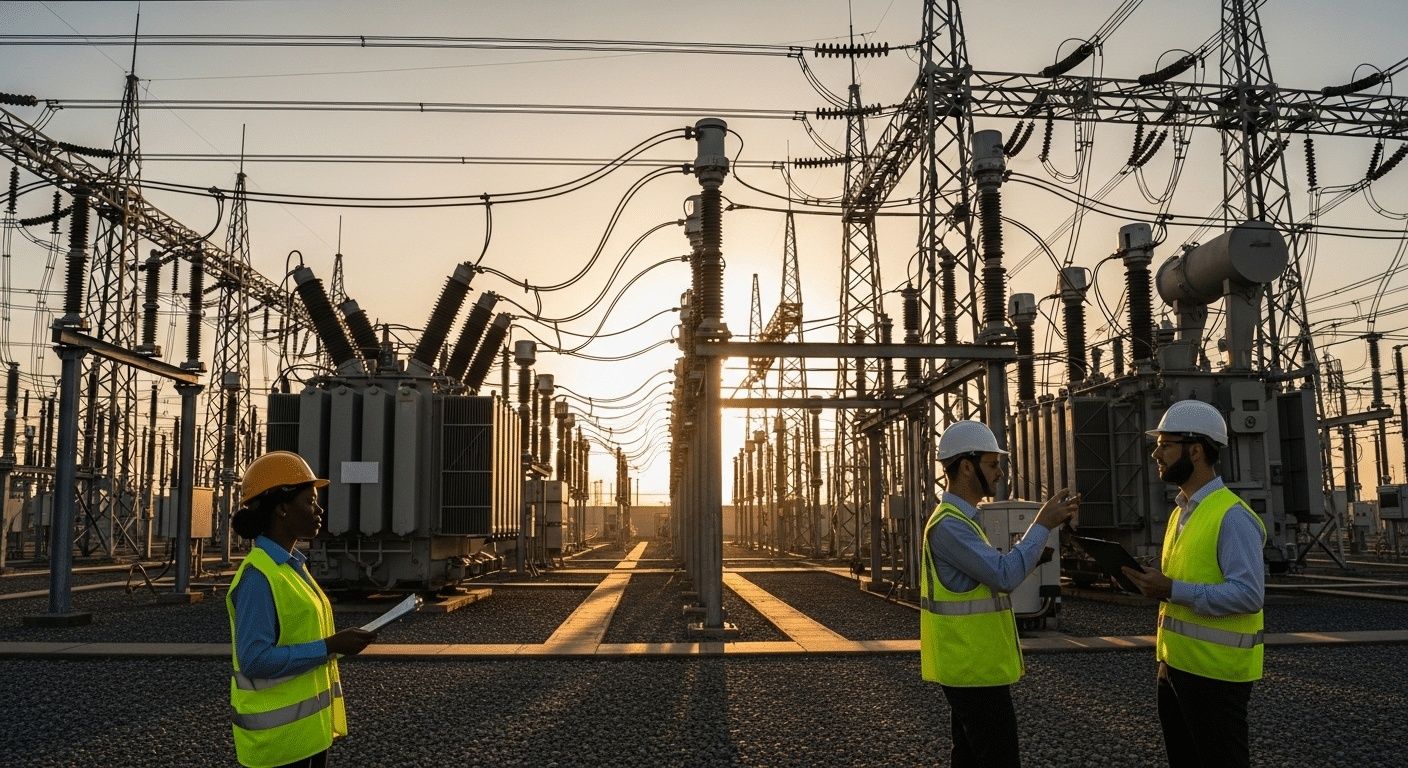
Power substation equipment forms a critical part of the electrical transmission and distribution network. Substations are facilities where electrical energy is controlled, transformed, protected, and distributed to ensure safe and reliable power flow from generation sources to end users. Without substations and their associated equipment, electricity generated at power plants could not be efficiently transmitted over long distances or delivered at usable voltage levels.
The concept of power substations emerged with the expansion of electricity networks. Power generated at plants is typically produced at high voltage levels. However, different stages of transmission and consumption require controlled voltage adjustment. Substation equipment exists to manage this transition, stabilize electrical parameters, isolate faults, and protect infrastructure.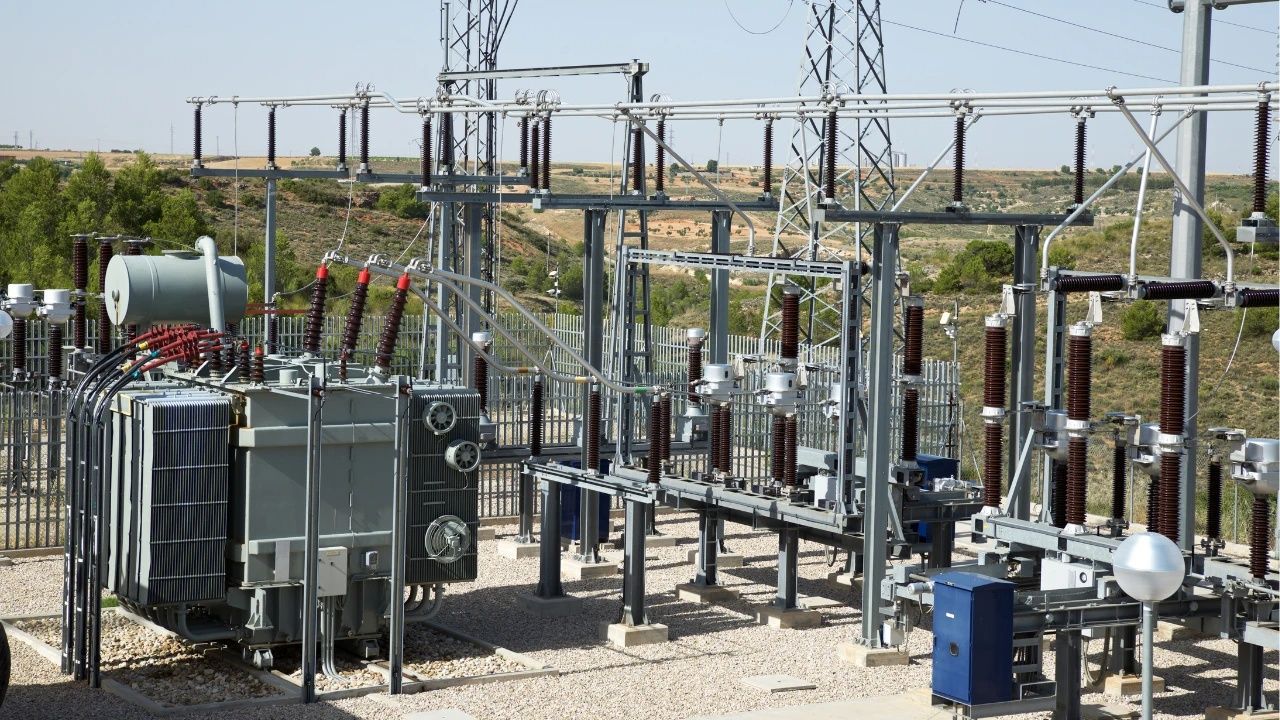
At its core, power substation equipment enables voltage transformation, switching operations, monitoring, and protection. It acts as an intermediary between generation stations, transmission lines, and distribution networks.
Why Power Substation Equipment Matters Today
Modern societies depend heavily on uninterrupted electricity for residential, commercial, industrial, and public infrastructure activities. Power substation equipment directly affects how reliably electricity reaches cities, factories, hospitals, data centers, and transport systems.
This equipment matters today because it:
-
Maintains voltage stability across long-distance transmission
-
Prevents large-scale power outages by isolating faults
-
Protects transformers and transmission lines from overloads
-
Enables integration of renewable energy sources into the grid
-
Supports expanding urban and industrial electricity demand
-
Improves safety for personnel and surrounding infrastructure
As energy consumption increases and grids become more complex, substations must handle higher loads, fluctuating power input, and bidirectional energy flow. Power substation equipment helps manage these challenges by ensuring controlled energy transfer, reliable protection mechanisms, and continuous monitoring.
It affects utility operators, grid engineers, policymakers, industrial users, and everyday electricity consumers. Efficient substation equipment reduces technical losses, improves power quality, and supports national energy reliability goals.
Key Types of Power Substation Equipment and Their Functions
Power substations consist of multiple interconnected components, each designed to perform a specific function within the electrical system.
Common equipment includes:
-
Power transformers for stepping voltage up or down
-
Circuit breakers to interrupt current during faults
-
Disconnect switches to isolate equipment for maintenance
-
Busbars to distribute electrical power within the substation
-
Current transformers (CTs) for current measurement and protection
-
Voltage transformers (VTs or PTs) for voltage measurement
-
Protection relays to detect abnormal conditions
-
Lightning arresters to protect against surge voltages
-
Capacitor banks to improve power factor
-
Control panels and monitoring systems for operational oversight
Each component works together to maintain system stability, safety, and efficiency.
Table: Common Substation Equipment and Purpose
| Equipment Type | Primary Role | Key Benefit |
|---|---|---|
| Power Transformer | Voltage transformation | Efficient power transmission |
| Circuit Breaker | Fault interruption | Grid safety and damage prevention |
| Busbar | Power distribution | Organized energy flow |
| Protection Relay | Fault detection | Fast response to abnormalities |
| Lightning Arrester | Surge protection | Equipment longevity |
| Instrument Transformer | Measurement and monitoring | Accurate system data |
Recent Developments and Industry Trends
The power sector has experienced noticeable technological advancement over the past year. Power substation equipment is evolving to meet new grid demands, digital transformation goals, and renewable integration requirements.
Key trends observed during 2024–2025 include:
-
Increased deployment of digital substations using intelligent electronic devices (IEDs)
-
Adoption of IEC 61850 communication standards for faster data exchange
• Expansion of condition monitoring systems for transformers and breakers -
Use of gas-insulated substations (GIS) in space-constrained urban areas
-
Integration of renewable energy substations supporting solar and wind power
-
Improved cybersecurity frameworks for substation automation systems
-
Growth of predictive maintenance using sensor-based analytics
These developments aim to enhance reliability, reduce downtime, and support future-ready power grids.
Laws, Policies, and Regulatory Considerations
Power substation equipment operates under strict regulatory oversight to ensure safety, reliability, and environmental responsibility. Regulations vary by country, but common principles apply globally.
Typical regulatory influences include:
-
Electrical safety standards for high-voltage installations
-
Grid codes governing voltage limits, frequency control, and protection schemes
-
Environmental guidelines for insulation materials and noise levels
-
Occupational safety regulations for substation personnel
-
Government programs supporting grid modernization and smart infrastructure
-
Mandatory testing and inspection intervals for critical equipment
In many regions, national electricity authorities and energy regulators define compliance requirements. These policies ensure substations operate safely, protect public infrastructure, and align with national energy strategies.
Tools, Resources, and Knowledge Aids
Understanding and managing power substation equipment requires access to technical tools and reference materials. Engineers, students, and planners often rely on specialized resources.
Helpful tools and resources include:
-
Substation design calculation software for load and short-circuit analysis
-
Protection coordination charts and relay-setting guides
-
Power system simulation platforms for fault studies
-
Equipment maintenance checklists and inspection templates
-
SCADA and monitoring dashboards for real-time supervision
-
Electrical standards documentation (IEC, IEEE, IS standards)
-
Grid performance and reliability reporting frameworks
These tools support informed decision-making, accurate system design, and long-term operational reliability.
Practical Insights and Operational Knowledge
Effective use of power substation equipment depends on planning, monitoring, and periodic evaluation. Some key operational insights include:
-
Maintaining clear separation between high-voltage and control areas
-
Ensuring regular calibration of protection and measurement devices
-
Monitoring transformer temperature and oil parameters
-
Keeping clearances free from vegetation and physical obstructions
-
Recording switching operations for audit and analysis
-
Using condition-based monitoring rather than fixed schedules alone
-
Ensuring proper grounding systems to manage fault currents
Such practices contribute to improved system uptime and safety.
FAQs
What is the main purpose of a power substation?
A power substation controls, transforms, and distributes electrical energy while protecting the grid from faults and instability.
What voltage levels are handled in substations?
Substations may operate at transmission, sub-transmission, or distribution voltage levels depending on their role in the grid.
Why are circuit breakers important in substations?
They interrupt electrical current during abnormal conditions, preventing damage to equipment and reducing outage impact.
How does digital substation technology help?
It improves communication, monitoring accuracy, fault detection speed, and reduces manual intervention.
What risks are associated with substation equipment?
Potential risks include electrical faults, overheating, insulation failure, and surge events, which are managed through protection systems and maintenance.
Conclusion
Power substation equipment is a foundational element of modern electrical infrastructure. It enables the safe and efficient transfer of electricity from generation sources to end users by managing voltage levels, protecting systems, and ensuring operational stability.
As power demand increases and renewable energy integration accelerates, substations must adapt through digitalization, advanced monitoring, and improved protection mechanisms. Understanding how substation equipment works, why it matters, and how it is regulated helps stakeholders appreciate its critical role in everyday life.
Through continuous innovation, adherence to safety standards, and informed operational practices, power substation equipment will remain central to reliable and resilient energy systems for years to come.