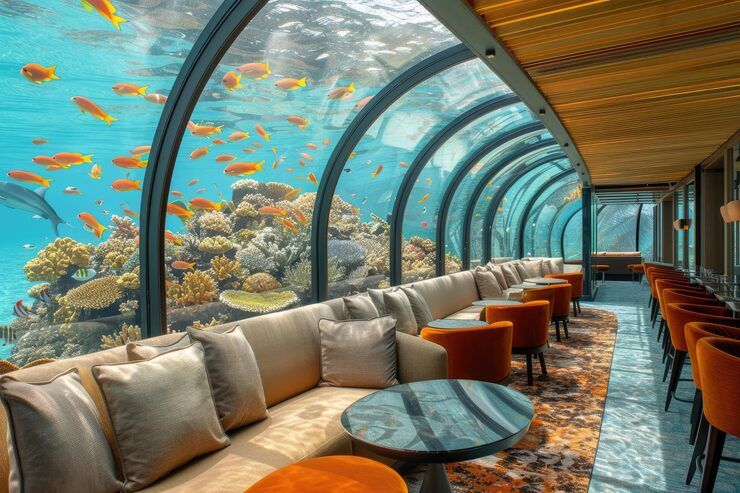
Underwater hotels are a specialized form of hospitality that places guest rooms, suites, restaurants, or observation spaces below the surface of the sea. Instead of looking toward a city skyline, mountain range, or beach, guests experience marine environments through reinforced windows and carefully engineered structures
Underwater Hotels: Exploring Hospitality Beneath the Ocean
These properties combine hotel architecture with marine engineering, environmental planning, underwater lighting, climate control, and specialized construction methods. Some designs are fully submerged, while others combine underwater rooms with above-water villas, restaurants, reception areas, or recreational facilities.
The concept has developed alongside luxury travel, experiential tourism, marine research, and destination hospitality. The Maldives is particularly associated with underwater accommodation because its shallow lagoons, coral ecosystems, and resort-based tourism create suitable conditions for this type of architectural concept.
The engineering challenge is significant. Structures must withstand water pressure, corrosion, storms, humidity, and long-term exposure to the marine environment. At the same time, designers must consider emergency evacuation, ventilation, electricity, wastewater management, and environmental protection.
How an Underwater Hotel Works
A typical underwater accommodation concept may contain several integrated systems:
Pressure-resistant structural walls and windows
Water-resistant electrical infrastructure
Mechanical ventilation and climate control
Emergency communication systems
Fire detection and suppression equipment
Backup electricity
Access corridors or connecting structures
Water and wastewater management systems
Marine monitoring equipment
The result is closer to a specialized marine building than a conventional hotel room.
Why Underwater Hotels Matter Today
Underwater hotels demonstrate how hospitality is increasingly connected with architecture, technology, environmental science, and destination planning. They create a way for visitors to experience marine ecosystems without spending the entire visit in diving equipment.
For the hospitality industry, underwater accommodation also represents a form of experiential travel. Guests may be interested in observing reef fish, coral formations, changing underwater light, and marine activity directly from an enclosed room.
A Different Form of Tourism
Traditional beach tourism generally focuses on landscapes above the water. Underwater accommodation adds another layer by making the marine environment part of the guest experience.
This can be particularly relevant to:
Luxury hotel research
Marine tourism
Sustainable travel planning
Ocean-focused architecture
Destination development
Honeymoon and special-occasion travel
Adventure tourism
High-end accommodation research
However, an underwater hotel should not automatically be considered environmentally beneficial. Construction in marine areas can affect coral, seabed habitats, water movement, and local ecosystems. Environmental assessment therefore plays an important role.
Engineering and Guest Safety
The underwater environment creates unusual safety requirements. Designers must consider structural integrity, water pressure, emergency access, fire protection, communications, and evacuation procedures.
A useful planning framework is to evaluate the major operational areas before considering the accommodation itself.
| Area | Main consideration |
|---|---|
| Structure | Water pressure, corrosion, weather and structural loads |
| Windows | Pressure resistance, visibility and long-term durability |
| Electricity | Waterproof systems and backup power |
| Ventilation | Air quality, humidity and temperature control |
| Emergency planning | Evacuation, communication and emergency access |
| Environment | Coral, seabed, water quality and marine habitats |
| Guest experience | Visibility, lighting, privacy and comfort |
These factors make underwater accommodation a multidisciplinary field rather than simply an unusual hotel design.
Recent Developments in Underwater Hospitality
The broader hospitality industry has continued moving toward nature-based and experience-focused accommodation. Recent hotel development has increasingly emphasized distinctive architecture, sustainability, wellness, and stronger connections with local environments.
In the Maldives, official tourism statistics published during 2025 showed a large accommodation sector dominated by resorts, alongside hotels, guesthouses, and safari vessels. The country's tourism infrastructure therefore provides an established environment for specialized accommodation concepts.
2025 Maldives Tourism Changes
A significant regulatory development occurred in March 2025, when the Maldives ratified the 15th Amendment to its Tourism Act. The amendment revised parts of the framework governing tourism development on islands, land, and lagoons and introduced changes relating to redevelopment, lease arrangements, and tourism planning.
In December 2025, the Maldives ratified the 16th Amendment to the Tourism Act. The amendment established a framework for leasing areas for tourist resort development and Tourism Training Resorts and included provisions concerning resort construction periods and lagoon boundaries.
These developments matter to underwater hospitality because marine accommodation is closely connected to lagoon boundaries, resort development, coastal modification, environmental assessment, and construction approvals.
Sustainability Is Becoming More Important
Modern underwater accommodation increasingly needs to consider more than energy efficiency. Designers also need to examine marine habitat disturbance, wastewater, construction methods, artificial lighting, waste management, and long-term effects on coral ecosystems.
This is particularly relevant in island destinations where tourism, coastal protection, and marine ecosystems are closely connected.
Laws, Regulations and Policies
The Maldives provides a useful regulatory example because tourism development and marine environments are closely linked.
The country's Ministry of Tourism maintains regulations covering tourist establishments, diving, environmental protection, fire safety, resort development, and other tourism activities.
Environmental Assessment
Environmental assessment is an important consideration for major tourism developments. Maldives government documentation identifies environmental impact assessment requirements for tourism development and highlights controls related to vegetation, coastal modification, built-area limits, waste management, and recreational diving.
For an underwater hotel, this means developers may need to evaluate how construction could affect:
Coral reefs
Marine organisms
Seabed conditions
Water circulation
Coastal processes
Wastewater management
Construction disturbance
Long-term environmental conditions
Coastal Modification
The Maldives' current government guidance specifically identifies coastal modification approval for activities involving over-water structures, jetties, harbour construction, dredging, beach nourishment, coastal protection, and related modifications.
An underwater accommodation project would therefore need careful coordination between tourism planning, environmental assessment, structural design, and coastal regulations.
Hotel and Construction Approvals
Government guidance also covers hotel registration and construction permits for tourism developments. Detailed drawings and construction approvals are part of the regulatory process for relevant tourism projects.
Regulations can differ substantially between countries. Anyone researching underwater hotel development should therefore consult the relevant tourism authority, environmental authority, building regulator, and maritime or coastal authority for the specific destination.
Tools and Resources for Underwater Hotel Research
Travelers, researchers, architects, and hospitality professionals can use several categories of resources when evaluating underwater accommodation.
Destination and Hotel Research
Useful resources include:
National tourism authority websites
Official hotel websites
Destination accommodation databases
Travel planning platforms
Marine tourism publications
Hotel review platforms
Local environmental information portals
These sources can help verify location, accommodation type, accessibility, seasonal conditions, and available facilities.
Weather and Marine Conditions
Marine-focused planning should consider:
Weather forecasts
Sea conditions
Tide information
Water temperature
Visibility reports
Coral and marine ecosystem information
Conditions can influence diving activities, boat transfers, visibility through underwater windows, and the overall experience.
Sustainability Resources
For research into environmentally responsible accommodation, useful resources include:
Environmental impact assessment guidance
Sustainable tourism frameworks
Marine conservation organizations
Coral reef monitoring programs
Green building frameworks
Destination environmental policies
The Maldives Ministry of Tourism also publishes tourism guidelines and development documents, including its Resort Development Handbook and guidance concerning lagoon and coastal development.
Travel Planning Checklist
Before selecting underwater accommodation, travelers can review:
Room location and underwater depth
Emergency access arrangements
Medical and emergency facilities
Transfer arrangements
Weather conditions
Accessibility information
Diving requirements
Cancellation rules
Travel insurance coverage
Environmental policies
This approach helps distinguish the architectural concept from the practical requirements of staying in a specialized marine environment.
Frequently Asked Questions
Are underwater hotels completely beneath the sea?
Not always. Some properties contain fully submerged rooms, while other concepts combine underwater bedrooms with above-water structures such as restaurants, reception areas, villas, or lounges.
How are underwater hotel rooms protected from water pressure?
They use engineered structural systems designed to withstand the surrounding water pressure. Reinforced materials and specially designed viewing windows are important components of the structure.
Are underwater hotels environmentally sustainable?
Not automatically. Their environmental impact depends on location, construction methods, energy use, wastewater management, lighting, marine disturbance, and ongoing environmental monitoring.
Are underwater hotels suitable for everyone?
Not necessarily. Travelers should consider accessibility, emergency arrangements, enclosed environments, transfer requirements, and personal comfort before selecting this type of accommodation.
Which destinations are associated with underwater accommodation?
The Maldives is one of the best-known destinations for underwater hospitality, while underwater accommodation concepts and marine-themed hotel developments have also appeared in other island and coastal destinations.
Conclusion
Underwater hotels represent an unusual intersection of luxury hospitality, marine architecture, engineering, tourism, and environmental planning. Their appeal comes from allowing guests to experience the underwater environment from a protected indoor setting.
The concept also illustrates the challenges of developing tourism in sensitive marine environments. Structural safety, environmental assessment, coastal regulations, emergency planning, and responsible resource management are all important considerations.
Recent tourism legislation and development guidance in the Maldives demonstrate how marine accommodation can be affected by broader rules governing tourism land, lagoons, coastal modification, environmental protection, and construction.
As experiential travel continues to evolve, underwater accommodation is likely to remain a specialized part of luxury hospitality. Its long-term relevance will depend not only on architectural innovation but also on how effectively these developments balance memorable guest experiences with marine conservation and responsible destination planning.