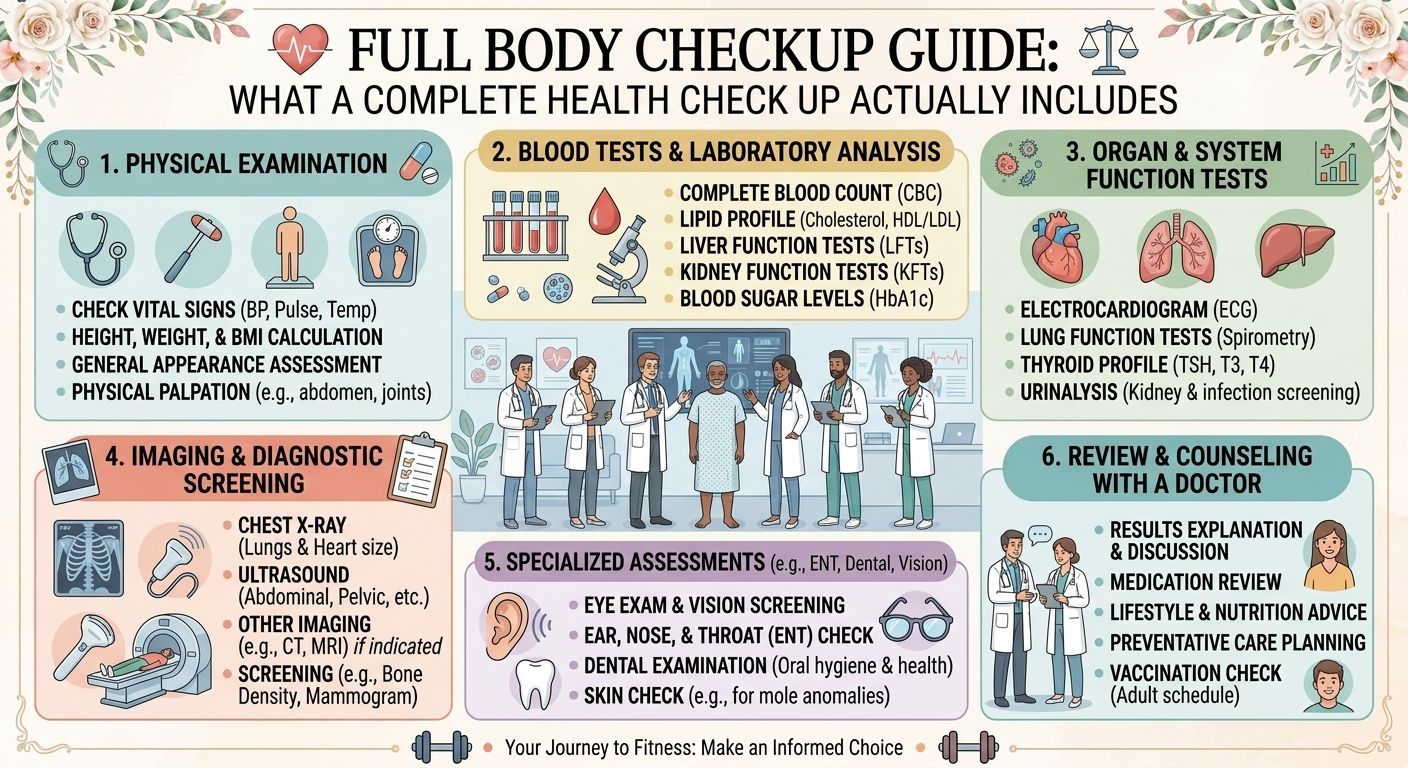
Considering a full body checkup? Learn what a complete health check up typically includes, why regular body checkups matter, and how to prepare for your appointment.
Why Regular Health Check Ups Matter
Many health conditions develop gradually and show few, if any, noticeable symptoms in their early stages. A full body checkup is designed to catch potential issues early — when they're often easier to manage — rather than waiting until symptoms become severe enough to prompt a doctor's visit. Regular health check ups also establish a baseline for your normal values, making it easier for a doctor to spot meaningful changes over time.
While the specific tests included in a full body test can vary based on age, gender, family history, and individual risk factors, most comprehensive checkups follow a similar general structure.
What a Full Body Checkup Typically Includes
Basic Vital Signs
Blood pressure, heart rate, temperature, and weight/BMI measurements are standard starting points for almost any body checkup, providing a quick overview of general health status.
Blood Tests
A complete blood count (CBC), lipid panel (cholesterol levels), blood glucose testing, and liver and kidney function tests are commonly included, since they can reveal a wide range of underlying conditions from anemia to diabetes risk.
Cardiovascular Screening
Depending on age and risk factors, this may include an electrocardiogram (ECG) to check heart rhythm and function, particularly for individuals with a family history of heart disease or other cardiovascular risk factors.
Cancer Screenings
Age- and gender-appropriate screenings, such as mammograms, Pap smears, prostate exams, or colonoscopies, are often incorporated into a full body checkup once a patient reaches the recommended screening age.
Vision and Hearing Assessment
Basic vision and hearing tests are frequently included, especially in checkups aimed at older adults, since gradual changes in these senses often go unnoticed without formal testing.
Bone Density Screening
Particularly relevant for postmenopausal women and older adults, bone density scans can identify osteoporosis risk before a fracture occurs.
Body Composition Analysis
Some comprehensive checkups include more detailed body composition testing beyond basic BMI, measuring muscle mass, body fat percentage, and other metrics that provide a more complete health picture.
How Often Should You Get a Full Body Checkup?
Recommendations vary based on age, risk factors, and existing health conditions, but general guidance often looks like:
- Ages 18–39: Every 2–3 years for generally healthy individuals without significant risk factors
- Ages 40–64: Annually, or every 1–2 years, as risk for chronic conditions increases
- Ages 65+: Annually, with more frequent monitoring for specific conditions as needed
These are general guidelines, not personalized medical advice — individuals with chronic conditions, a family history of certain diseases, or other risk factors may need more frequent checkups as recommended by their doctor.
How to Prepare for a Health Check Up
- Fast if required — Many blood tests, particularly those measuring glucose and cholesterol, require 8–12 hours of fasting beforehand; confirm this with your provider in advance.
- List your current medications and supplements — Having this ready saves time and ensures your doctor has a complete picture of what you're taking.
- Note any symptoms or concerns, even minor ones, so you remember to bring them up during the appointment rather than after.
- Bring your family medical history, especially if this is your first comprehensive checkup with a particular provider.
- Wear comfortable clothing that makes it easy to have blood pressure taken and blood drawn.
Choosing Where to Get a Full Body Test
- Primary care physician: Often the most personalized option, since your doctor already has access to your medical history and can tailor the checkup to your specific risk factors.
- Hospital-based executive health programs: Typically offer a more extensive, single-day battery of tests, which can be convenient for those with limited time but may come at a higher cost.
- Diagnostic and testing centers: Some standalone facilities offer package-based full body checkups at a fixed price, which can be a more budget-friendly option, though results are usually reviewed separately with your own doctor afterward.
- Employer or insurance-sponsored wellness programs: Many health insurance plans and employers offer discounted or fully covered annual checkups as part of preventive care benefits.
Understanding Your Results
After a full body checkup, most providers will review results with you directly, but a few general points are worth keeping in mind:
- A single abnormal result isn't necessarily cause for alarm — Many values naturally fluctuate, and your doctor will consider your results in the context of your overall health and history.
- Ask for a copy of your results for your own records, which can be useful for tracking changes over time or sharing with specialists.
- Follow up on any recommended additional testing promptly, since further tests are often ordered simply to rule out possibilities, not because something is necessarily wrong.
The Bottom Line
A full body checkup is one of the most effective tools for catching potential health issues early and maintaining a clear picture of your overall wellbeing over time. While the specific tests included in a health check up will vary based on your age, sex, and personal risk factors, most comprehensive checkups cover vital signs, blood work, cardiovascular screening, and age-appropriate cancer screenings. Scheduling regular checkups — and actually following through on recommended follow-up care — remains one of the most valuable habits for long-term health.
This article is for general informational purposes and isn't a substitute for personalized medical advice. Talk to your doctor about which specific tests are right for you based on your individual health history.