Learn what gut health really means, the best gut healthy foods to eat, when supplements can help, and how to build a healthy gut diet that supports digestion and overall wellness.
Why Gut Health Matters More Than You Think
Gut health has become one of the most talked-about topics in wellness — and for good reason. Your digestive system isn't just responsible for breaking down food; it plays a major role in immunity, energy levels, mood, and even skin health. At the center of it all is your gut microbiome — the trillions of bacteria, fungi, and other microorganisms living in your digestive tract.
When your gut microbiome is balanced, digestion tends to run smoothly, nutrients are absorbed efficiently, and your immune system functions well. When it's out of balance — a state often called "dysbiosis" — it can contribute to bloating, fatigue, irregular digestion, and other issues. That's why more people are focusing on gut healthy foods, better eating habits, and in some cases, gut health supplements to support their digestive wellness.
Signs Your Gut Health Might Need Attention
Not everyone with gut imbalance has obvious symptoms, but common signs include:
- Frequent bloating or gas
- Irregular bowel movements (too frequent or infrequent)
- Fatigue or low energy after meals
- Food sensitivities that seem to be increasing
- Skin issues like breakouts unrelated to other causes
- Frequent colds or infections, since a large portion of immune activity is tied to gut health
If several of these sound familiar, it may be worth focusing more intentionally on your diet and gut-supporting habits.
The Best Gut Healthy Foods
A healthy gut diet doesn't require anything extreme — it's about consistently including foods that feed beneficial bacteria and support digestion.
1. Fermented foods
Yogurt, kefir, sauerkraut, kimchi, and miso contain live probiotics — beneficial bacteria that can help support a balanced microbiome.
2. High-fiber foods
Fiber acts as "food" for good gut bacteria. Foods like oats, lentils, beans, apples, and leafy greens are excellent sources.
3. Prebiotic-rich foods
Prebiotics are fibers that specifically fuel beneficial bacteria. Garlic, onions, leeks, asparagus, and bananas are all naturally rich in prebiotics.
4. Polyphenol-rich foods
Berries, dark chocolate, green tea, and olive oil contain polyphenols, plant compounds that have been linked to a healthier gut environment.
5. Bone broth
Rich in collagen and amino acids, bone broth is often included in gut-focused diets for its potential to support the gut lining.
Foods That May Disrupt Gut Health
Just as some foods support gut health, others can work against it when consumed in excess:
- Highly processed foods with artificial additives
- Excess added sugar, which can feed less beneficial bacteria
- Fried and heavily processed fats
- Excessive alcohol consumption
- Artificial sweeteners, which some research suggests may negatively affect microbiome diversity in certain people
This doesn't mean these foods need to be eliminated entirely — moderation and balance matter more than perfection.
Do You Need Gut Health Supplements?
With so many gut health supplements on the market — probiotics, prebiotics, digestive enzymes, and gut-lining support formulas — it's easy to feel overwhelmed. Here's a simple breakdown:
Probiotic supplements contain live beneficial bacteria strains and may help after events that disrupt gut flora, such as a course of antibiotics. Look for products with well-researched strains and a guaranteed live-culture count.
Prebiotic supplements provide concentrated fiber compounds that feed good bacteria. These can be useful for people who struggle to get enough fiber from food alone.
Digestive enzyme supplements may help some people better break down proteins, fats, or carbohydrates, particularly those with specific digestive sensitivities.
Importantly, supplements are meant to complement a healthy gut diet — not replace one. Whole foods provide a broader range of fibers and nutrients than most supplements can offer alone, and for most healthy individuals, a well-rounded diet is the most effective foundation.
If you're considering supplements, especially for a specific digestive issue, it's worth speaking with a doctor or registered dietitian first, since gut health needs can vary significantly from person to person.
Building a Healthy Gut Diet: A Simple Framework
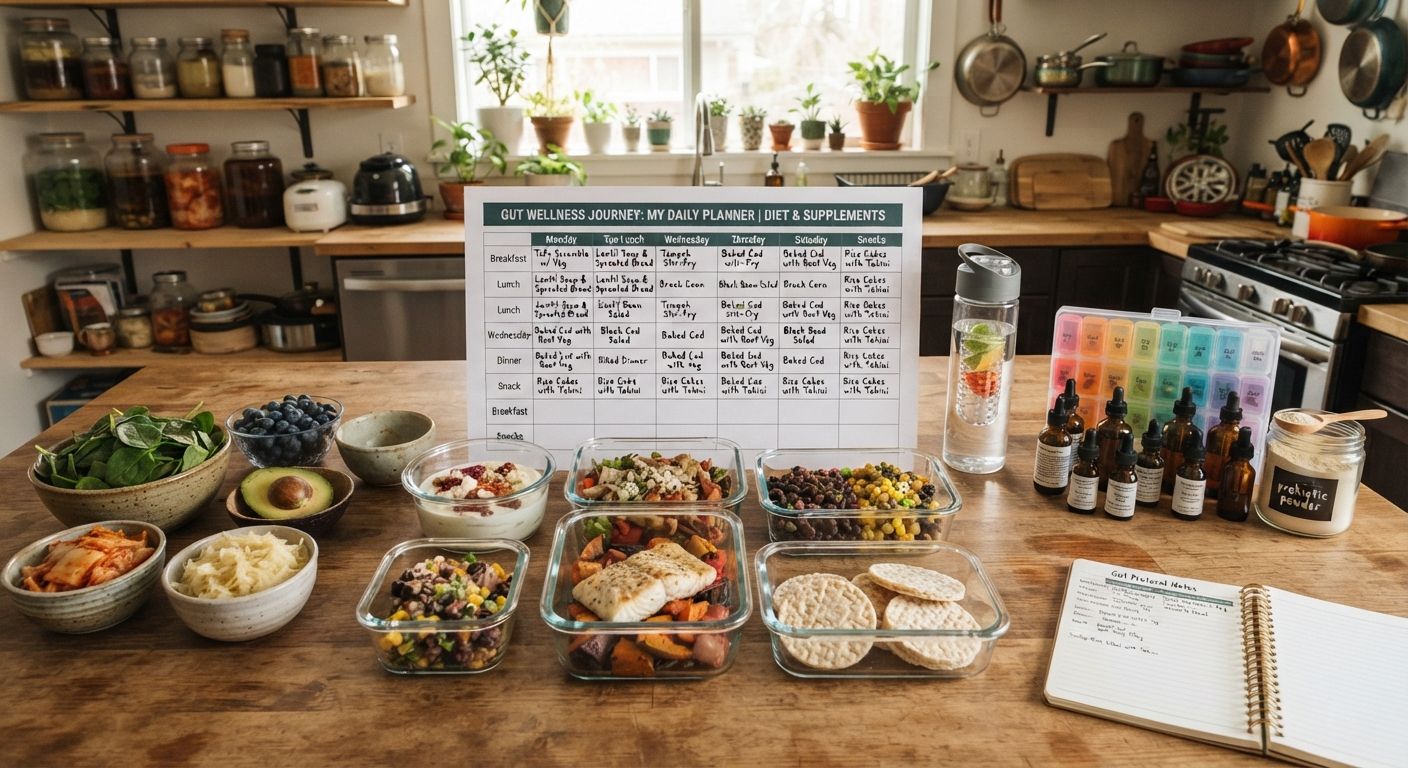
You don't need a complicated meal plan to support gut health. A practical daily approach might look like:
- Morning: Start with a fiber-rich breakfast like oatmeal topped with berries, or yogurt with fruit and seeds.
- Throughout the day: Aim to include a variety of colorful vegetables and fruits — diversity in plant foods is linked to a more diverse, resilient microbiome.
- Meals: Incorporate a fermented food at least once a day, whether that's yogurt, kimchi, or a small serving of sauerkraut.
- Hydration: Drink plenty of water, which supports healthy digestion and regularity.
- Limit: Reduce ultra-processed snacks and sugary drinks where possible, replacing them with whole-food alternatives.
Lifestyle Habits That Support Gut Health
Diet is important, but it's not the only factor. Several lifestyle habits also play a meaningful role:
- Manage stress — chronic stress has been linked to digestive imbalances due to the gut-brain connection.
- Prioritize sleep — poor sleep can negatively affect microbiome diversity over time.
- Stay physically active — regular movement is associated with a healthier, more diverse gut microbiome.
- Avoid unnecessary antibiotic use — while sometimes medically necessary, antibiotics can significantly disrupt gut flora, so they should only be used when appropriate and prescribed.
The Bottom Line
Good gut health isn't about following a restrictive diet or relying on a single "miracle" supplement — it's about consistently choosing gut healthy foods, staying hydrated, managing stress, and supporting your body's natural digestive processes. Fermented foods, fiber, and a diverse range of plant-based foods form the foundation of a healthy gut diet, while supplements can play a supportive role for specific needs.
If digestive issues persist despite dietary changes, it's always a good idea to consult a healthcare provider, since ongoing symptoms can sometimes indicate an underlying condition that needs proper diagnosis and care.