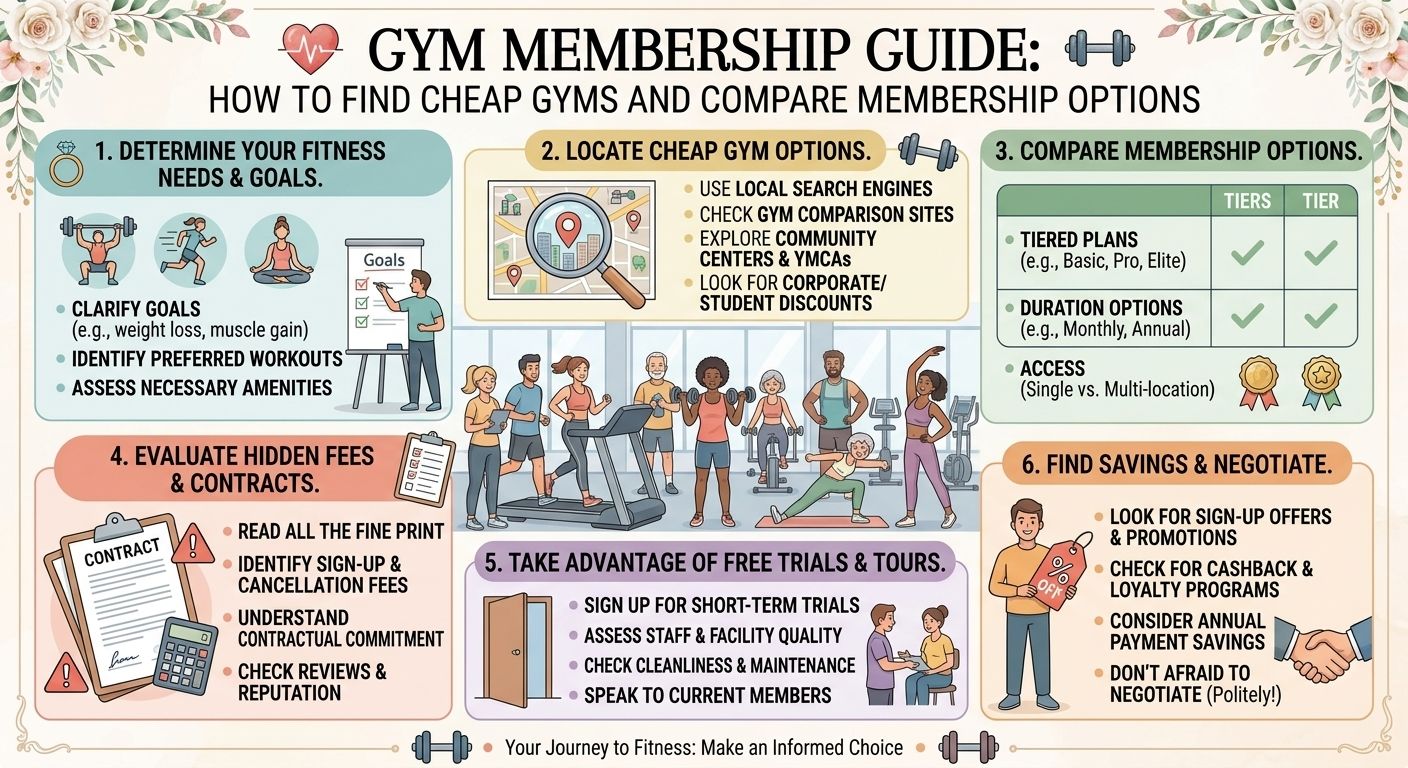
Looking for a gym membership near you? Learn how to compare gym membership options, find cheap gyms, and understand what to look for before signing a contract.
Why Choosing the Right Gym Membership Matters
A gym membership is only valuable if you actually use it. Yet many people sign up based on price or proximity alone, only to find the facility doesn't match their workout style, schedule, or goals — leading to a membership that goes unused. Taking a bit of time upfront to compare gym membership options can make the difference between a habit that sticks and a monthly charge you eventually forget to cancel.
What to Consider When Searching "Gym Memberships Near Me"
1. Location and hours
A gym close to home or work, with hours that match your schedule, is far more likely to become part of a consistent routine than one that requires a longer commute or has limited operating hours.
2. Equipment and class offerings
Some gyms focus heavily on strength training equipment, while others emphasize group fitness classes, cardio machines, or specialized areas like functional training zones. Matching the gym's strengths to your workout preferences matters more than overall size.
3. Membership flexibility
Look into whether the gym offers month-to-month options versus long-term contracts, and understand the cancellation policy before committing.
4. Amenities
Depending on your priorities, amenities like locker rooms, showers, childcare services, or a pool can significantly affect day-to-day convenience.
How to Find Cheap Gyms Without Sacrificing Quality
1. Compare big-box gyms vs. boutique studios
Large chain gyms typically offer lower monthly rates due to higher membership volume, while boutique studios tend to charge more per class but often provide more personalized instruction.
2. Ask about off-peak or basic membership tiers
Many gyms offer a lower-cost tier with restricted class access or limited location access (such as home-club-only), which can be a good option if you don't need full flexibility.
3. Look for promotional periods
Gyms frequently run sign-up promotions, particularly around New Year's and back-to-school season, offering reduced enrollment fees or discounted initial months.
4. Check community and employer discounts
Some employers, health insurance plans, and community organizations offer discounted or subsidized gym membership rates as part of wellness programs.
5. Consider multi-location access plans
Memberships like an Anytime Fitness membership often provide access to multiple locations nationwide, which can be valuable for frequent travelers or people who split time between multiple areas — sometimes offering more value per dollar than a single-location gym.
Questions to Ask Before Signing a Gym Membership Contract
- Is there a cancellation fee, and how much advance notice is required to cancel?
- Are there additional fees beyond the advertised monthly rate, such as annual maintenance fees?
- What happens if you need to pause the membership temporarily, such as during travel or injury recovery?
- Is a trial period or day pass available before committing to a full membership?
- Are group classes included in the base membership, or do they cost extra?
Comparing Gym Membership Types
Traditional Full-Service Gyms
Offer a wide range of equipment, classes, and amenities, typically at a moderate to higher monthly price point. Good for people who want variety and flexibility in their workouts.
Budget/No-Frills Gyms
Focus primarily on equipment access with minimal extra amenities, often at significantly lower monthly rates. A strong option for people who primarily want strength or cardio equipment without paying for services they won't use.
24-Hour Access Gyms
Chains offering round-the-clock, multi-location access (such as an Anytime Fitness membership) cater well to people with unpredictable schedules or those who travel frequently.
Boutique Fitness Studios
Specialized in specific formats like cycling, yoga, or high-intensity interval training, typically priced higher per session but offering more personalized instruction and community atmosphere.
Red Flags to Watch For
- High-pressure sales tactics during the sign-up process, which can indicate a gym relies more on membership churn than long-term member retention.
- Vague or hidden fee structures that aren't clearly explained before you sign.
- Poor equipment maintenance or consistently overcrowded conditions during your typical workout hours — visiting at the time you'd actually go before signing up is one of the best ways to catch this.
- No trial period or day pass option, which can make it harder to evaluate whether the gym is a good fit before committing financially.
Getting the Most Out of Your Gym Membership
- Visit during your actual planned workout times before signing up, to get an accurate sense of crowd levels and equipment availability.
- Take advantage of included services, like a free initial fitness assessment or trainer consultation, which many gyms offer but few members actually use.
- Set a consistent schedule rather than a vague intention to "go more," since specific, recurring time blocks tend to build stronger workout habits.
- Reassess periodically — as fitness goals evolve, the gym or membership tier that made sense initially may no longer be the best fit.
The Bottom Line
Finding the right gym membership comes down to matching a facility's location, offerings, and pricing structure to your actual workout habits and schedule — not just choosing the cheapest or closest option. Whether you're looking for a no-frills budget gym, a multi-location option like an Anytime Fitness membership, or a full-service facility with classes and amenities, taking the time to compare options and ask the right questions before signing a contract leads to a membership that actually gets used.