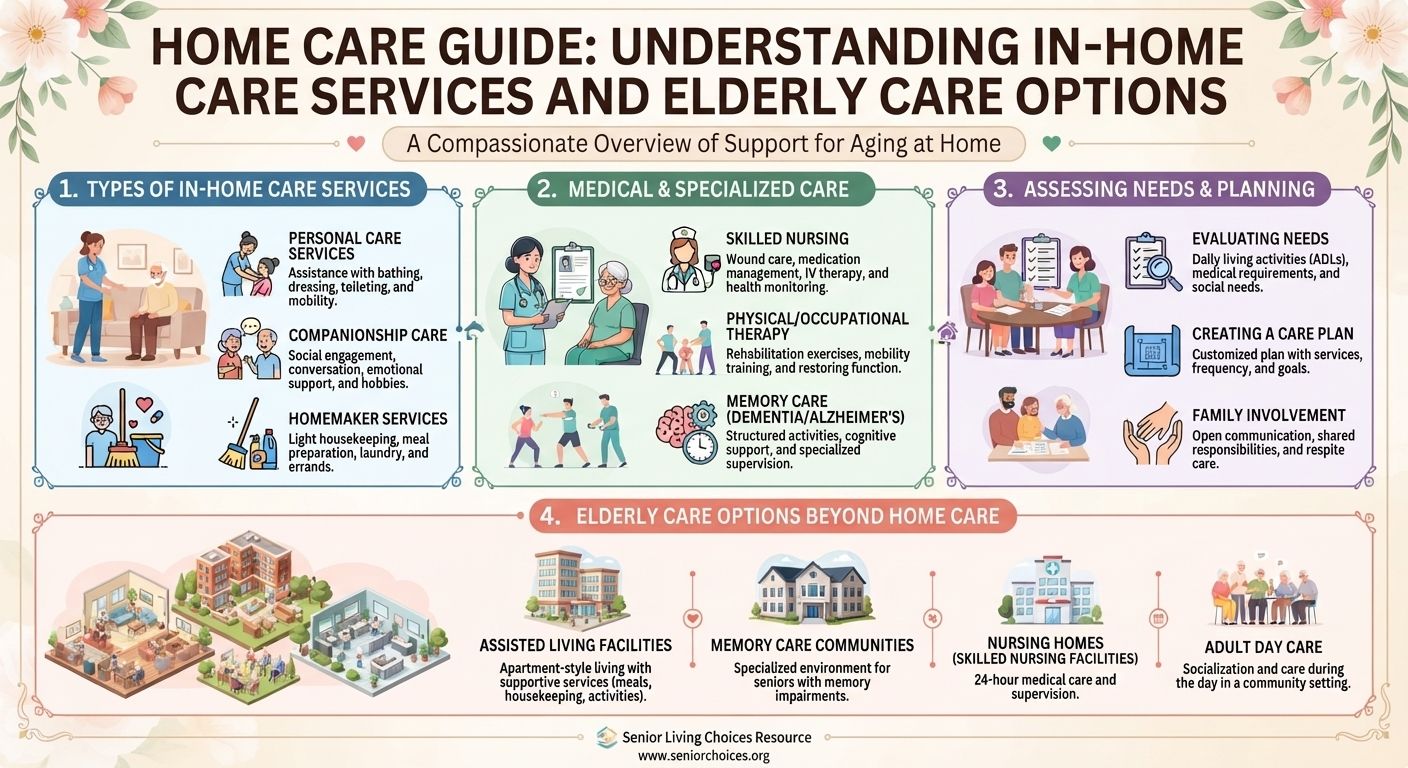
Exploring home care for a loved one? Learn how home care services work, what in-home care and elderly care typically include, and how to choose the right provider.
What Is Home Care, and Who Is It For?
Home care refers to a range of support services provided to individuals in their own homes, rather than in a hospital or residential care facility. It's most commonly associated with elderly care, but home care services also support people recovering from surgery, managing chronic illness, or living with disabilities who want to maintain independence while receiving the help they need.
For many families, in-home care offers a way to keep a loved one in a familiar, comfortable environment while still ensuring they receive proper support with daily activities, medication management, or medical needs.
Types of Home Care Services
Home care isn't one-size-fits-all — services generally fall into a few categories, and many families use a combination depending on individual needs.
Personal Care Assistance
Help with daily activities such as bathing, dressing, grooming, and mobility. This type of support is often needed by individuals who are otherwise cognitively independent but face physical limitations.
Companion Care
Focused on social interaction, light housekeeping, meal preparation, and transportation to appointments or errands. This can be especially valuable for reducing isolation in elderly individuals living alone.
Skilled Nursing Care
Provided by licensed nurses, this includes medication management, wound care, and monitoring of chronic health conditions. Skilled nursing care is typically ordered by a physician and may be covered differently than non-medical home care under insurance plans.
Specialized Elderly Care
Some home care providers offer services specifically tailored to conditions like dementia or Alzheimer's, with staff trained in techniques for managing memory-related challenges safely and compassionately.
Signs a Loved One May Need Home Care
Recognizing when additional support is needed can be difficult, especially from a distance. Some common indicators include:
- Noticeable decline in personal hygiene or home cleanliness
- Missed medications or confusion about dosages
- Unexplained weight loss, which can indicate difficulty preparing meals
- Increased isolation or withdrawal from social activities
- Difficulty managing mobility, increasing fall risk
- Frequent missed appointments or forgotten obligations
If you're noticing several of these signs, it may be a good time to have a conversation about home care options with your loved one and their healthcare provider.
How to Choose Home Care Services
1. Assess the level of care needed
Determine whether your loved one needs occasional companionship, daily personal care assistance, or ongoing skilled nursing support — this significantly narrows down the type of provider to look for.
2. Verify licensing and certification
Reputable home care agencies should be licensed according to your state or region's requirements, and caregivers should have relevant certifications for the level of care being provided.
3. Check agency screening processes
Ask how the agency screens and trains its caregivers, including background checks, and whether caregivers are employees of the agency or independent contractors.
4. Understand scheduling flexibility
Some families need a few hours of support per week, while others require live-in or 24-hour care. Confirm the agency can accommodate your specific schedule needs, including backup coverage if a caregiver is unavailable.
5. Ask about care plan customization
A good home care provider should develop an individualized care plan based on a loved one's specific needs, rather than offering a generic service package.
Questions to Ask a Home Care Provider
- How are caregivers matched to clients, and can you request a different caregiver if needed?
- What happens if a scheduled caregiver is unavailable?
- Is there a registered nurse or care coordinator overseeing the care plan?
- What is included in the hourly or daily rate, and are there additional fees?
- How is communication handled between the caregiver, family, and any healthcare providers involved?
Understanding Home Care Costs
Home care costs vary depending on the level of care, location, and hours needed. Some general considerations:
- Hourly personal or companion care tends to be less expensive than live-in or skilled nursing care.
- Insurance coverage varies — Medicare typically covers short-term skilled nursing care under specific conditions, while long-term custodial home care is often not covered and may require private pay, long-term care insurance, or Medicaid depending on eligibility.
- Comparing multiple agencies can help you understand the typical rate range in your area and what's included at each price point.
Supporting a Smooth Transition to Home Care
- Involve your loved one in the decision-making process whenever possible, since maintaining a sense of control can ease the emotional transition.
- Start with a trial period if the agency allows it, to ensure the caregiver is a good fit before committing to a long-term schedule.
- Maintain open communication with the care team about any changes in health or behavior.
- Revisit the care plan periodically, since needs often change over time, particularly for elderly individuals managing progressive conditions.
The Bottom Line
Home care and in-home care services offer a valuable way to support aging or recovering loved ones while allowing them to remain in the comfort of their own home. Whether you need companion care, personal care assistance, or skilled nursing support, taking the time to evaluate providers, ask the right questions, and build a care plan tailored to individual needs makes a significant difference in the quality of care received.