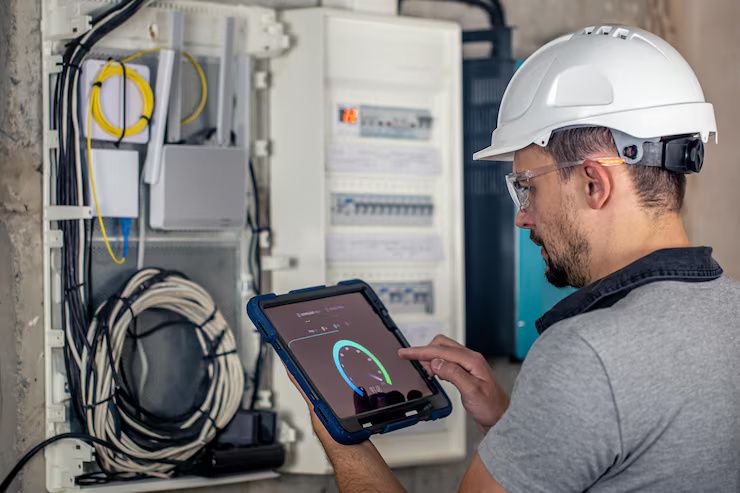
Humidity sensors are electronic instruments designed to measure moisture levels in the air. These devices are widely used in industrial processes, environmental monitoring systems, and building management to maintain controlled conditions. Accurate humidity measurement helps prevent damage to materials, ensures process stability, and supports comfortable indoor environments.
Humidity measurement became essential as industries recognized the impact of moisture on production quality and equipment performance. High humidity can cause corrosion, mold growth, and product degradation, while low humidity can lead to static electricity and material drying.
Modern humidity sensors operate by detecting changes in environmental conditions and converting them into electrical signals. These signals are processed to display relative humidity values. The three primary types of humidity sensors include capacitive, resistive, and thermal conductivity sensors.
Types of Humidity Sensors
- Capacitive Sensors: Measure changes in electrical capacitance caused by moisture levels
- Resistive Sensors: Detect variations in electrical resistance due to humidity
- Thermal Conductivity Sensors: Use temperature differences to calculate moisture content
These sensors are often integrated into automated systems for continuous monitoring and control.
Importance of Humidity Sensors in Industrial Systems
Humidity sensors are essential for maintaining efficiency, safety, and quality across multiple sectors. Their role extends to industries where environmental control is critical.
Key Benefits of Humidity Sensors
- Real-Time Monitoring: Provides continuous data for immediate adjustments
- Quality Control: Prevents defects caused by moisture imbalance
- Energy Efficiency: Optimizes climate control systems
- Process Stability: Maintains consistent production environments
- Health and Comfort: Supports indoor air quality in residential and commercial spaces
Industrial Applications of Humidity Sensors
| Industry | Application Example |
|---|---|
| Agriculture | Greenhouse humidity regulation |
| Food Processing | Controlled storage environments |
| Healthcare | Hospital and laboratory air monitoring |
| Manufacturing | Moisture-sensitive production processes |
| HVAC Systems | Building climate and air quality control |
These applications demonstrate how humidity sensors support operational efficiency and environmental stability.
Recent Trends and Developments in Humidity Sensor Technology
Recent advancements have improved the performance and integration capabilities of humidity sensors.
Key Developments
- Miniaturized Sensors (2024–2025): Smaller devices suitable for compact systems
- IoT Integration: Enables remote monitoring and automated control
- Improved Accuracy: Advanced calibration methods for reliable data
- Low Power Consumption: Suitable for portable and wireless devices
- Smart Environmental Systems: Integration with automated HVAC and industrial systems
Technology Adoption Trends
| Year | IoT Integration (%) | Accuracy Improvement (%) |
|---|---|---|
| 2023 | 50% | 12% |
| 2024 | 58% | 16% |
| 2025 | 66% | 20% |
These trends reflect the growing demand for intelligent environmental monitoring solutions.
Laws and Policies Affecting Humidity Sensor Usage
Humidity sensors are often used in regulated environments where compliance with safety and quality standards is required.
Key Regulatory Areas
- Environmental Monitoring Standards: Ensure accurate measurement and reporting
- Quality Control Regulations: Maintain product safety in industries like food and healthcare
- Workplace Safety Guidelines: Ensure safe environmental conditions
- Energy Efficiency Policies: Promote optimized use of climate control systems
Regulatory Framework in India
In India, humidity sensor usage is guided by various standards and regulatory bodies:
- Bureau of Indian Standards (BIS) for equipment quality and performance
- Food safety regulations for storage and processing environments
- Healthcare standards for controlled environmental conditions
- Energy efficiency guidelines for building management systems
These policies ensure reliable and safe implementation of humidity monitoring systems.
Tools and Resources for Humidity Sensor Systems
Various tools and systems support the effective use and monitoring of humidity sensors.
Common Tools and Systems
- Digital Hygrometers: Provide real-time humidity readings
- Environmental Monitoring Systems: Track multiple environmental parameters
- Data Loggers: Record humidity levels over time
- IoT Platforms: Enable remote access and control
- Calibration Instruments: Ensure sensor accuracy
Key Features in Modern Systems
| Feature | Description |
|---|---|
| Real-Time Monitoring | Displays instant humidity data |
| Data Logging | Stores historical information for analysis |
| Alert Systems | Notifies users of abnormal humidity levels |
| Wireless Connectivity | Enables remote monitoring |
| Multi-Parameter Support | Combines humidity with temperature measurement |
These tools enhance operational efficiency and improve environmental control systems.
Frequently Asked Questions About Humidity Sensors
What is a humidity sensor?
A humidity sensor is a device that measures moisture levels in the air and provides data for monitoring and control.
What are the main types of humidity sensors?
The main types are capacitive, resistive, and thermal conductivity sensors.
Why is humidity monitoring important?
It helps prevent damage to materials, ensures product quality, and maintains safe environmental conditions.
Where are humidity sensors used?
They are used in agriculture, healthcare, manufacturing, HVAC systems, and food processing industries.
How do humidity sensors improve efficiency?
They provide real-time data that allows automated systems to adjust conditions, improving energy efficiency and process control.
Conclusion
Humidity sensors are essential components in modern environmental monitoring and industrial systems. Their ability to measure and control moisture levels ensures efficiency, safety, and quality across various applications.
With continuous advancements in sensor technology, including IoT integration and improved accuracy, humidity sensors are becoming more reliable and widely adopted. Their role in supporting sustainable and efficient operations continues to grow across industries.