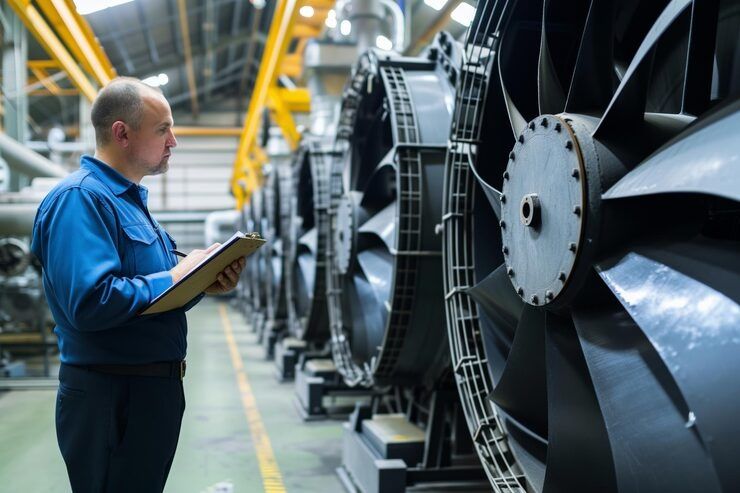
Industrial blowers are mechanical devices designed to move air or gas with higher pressure than standard fans. These systems are widely used in industrial environments to support ventilation, material handling, combustion processes, and cooling operations. By generating controlled airflow, industrial blowers help maintain efficient and safe working conditions across various sectors.
A typical industrial blower system includes components such as an impeller, motor, housing, and control system. The impeller rotates to increase the velocity and pressure of air, which is then directed through ducts or systems. Depending on the design, blowers can handle different volumes and pressures of air.
With advancements in engineering, modern blowers now include energy-efficient motors, automated control systems, and noise reduction features. These improvements have made them more reliable and suitable for continuous industrial use.
Importance of Industrial Blowers in Industrial Operations
Industrial blowers play a critical role in maintaining airflow, temperature control, and process efficiency. They are essential in industries where air movement directly affects productivity and safety.
Key Benefits of Industrial Blowers
- Efficient Air Movement: Provides consistent airflow for industrial processes
- Process Support: Assists in combustion, drying, and material handling
- Improved Ventilation: Maintains air quality in industrial environments
- Temperature Control: Supports cooling and heat management systems
- Durability: Designed for continuous operation in demanding conditions
Industrial Applications Overview
| Industry | Application Example |
|---|---|
| Manufacturing | Air circulation and cooling systems |
| Power Plants | Combustion air supply |
| Wastewater Treatment | Aeration and gas movement |
| Cement Industry | Material conveying and dust control |
| Food Processing | Drying and ventilation processes |
These applications highlight the importance of blowers in maintaining operational efficiency and environmental control.
Types of Industrial Blowers
Industrial blowers are classified based on their design and airflow characteristics. Each type is suited for specific applications and performance requirements.
Centrifugal Blowers
Centrifugal blowers use a rotating impeller to increase air velocity and pressure. Air enters the center and is pushed outward through the blades.
- Suitable for high-pressure applications
- Commonly used in HVAC systems and industrial ventilation
- Provides stable and continuous airflow
Axial Blowers
Axial blowers move air parallel to the axis of the fan. They are designed for high airflow with lower pressure.
- Ideal for cooling and ventilation
- Used in large spaces and industrial facilities
- Energy-efficient for low-pressure applications
Positive Displacement Blowers
Positive displacement blowers trap a fixed amount of air and move it through the system.
- Used in applications requiring constant airflow
- Common in wastewater treatment and pneumatic conveying
- Provides precise air delivery
Regenerative Blowers
Regenerative blowers use a high-speed impeller to create continuous airflow through a regenerative process.
- Suitable for low-pressure, high-flow applications
- Used in air knives, vacuum systems, and aeration
- Compact and low maintenance design
Performance Comparison of Blower Types
| Blower Type | Pressure Level | Airflow Volume | Common Use Case |
|---|---|---|---|
| Centrifugal Blower | High | Medium | Industrial ventilation |
| Axial Blower | Low | High | Cooling systems |
| Positive Displacement | Medium | Constant | Pneumatic conveying |
| Regenerative Blower | Low | Medium | Aeration and vacuum systems |
This comparison helps in selecting the appropriate blower based on operational needs.
Recent Trends and Developments in Industrial Blower Technology
Industrial blower systems have advanced significantly with improvements in efficiency and automation.
Key Developments
- Energy-Efficient Motors (2024–2025): Reduced power consumption and improved performance
- Smart Control Systems: Automated airflow adjustment based on process requirements
- Noise Reduction Technology: Improved acoustic design for quieter operation
- Compact Designs: Space-saving configurations for modern facilities
- Integration with Industrial Automation: Enhanced monitoring and control capabilities
Technology Adoption Trends
| Year | Energy Efficiency Improvement (%) | Automation Adoption (%) |
|---|---|---|
| 2023 | 12% | 45% |
| 2024 | 16% | 53% |
| 2025 | 20% | 61% |
These trends indicate a shift toward more sustainable and intelligent air management systems.
Laws and Policies Affecting Industrial Blowers
Industrial blowers are subject to safety, environmental, and efficiency regulations to ensure proper operation and compliance.
Key Regulatory Areas
- Energy Efficiency Standards: Promote reduced power consumption
- Emission Control Regulations: Ensure proper air handling and pollution control
- Workplace Safety Guidelines: Protect workers from noise and operational hazards
- Equipment Performance Standards: Maintain reliability and durability
Regulatory Framework in India
In India, industrial blower systems are influenced by standards and policies such as:
- Bureau of Indian Standards (BIS) for equipment quality
- Environmental regulations for air pollution control
- Industrial safety guidelines under factory laws
- Energy efficiency programs for industrial equipment
These regulations support safe and environmentally responsible use of blower systems.
Tools and Resources for Industrial Blower Systems
Various tools and systems support the operation, monitoring, and maintenance of industrial blowers.
Common Tools and Equipment
- Control Panels: Manage blower operation and settings
- Airflow Measurement Devices: Monitor performance and efficiency
- Vibration Monitoring Systems: Detect mechanical issues
- Noise Measurement Tools: Ensure compliance with safety standards
- Maintenance Software: Track performance and service schedules
Key Features in Modern Blowers
| Feature | Description |
|---|---|
| Variable Speed Drives | Adjust airflow based on demand |
| Automated Control Systems | Optimize performance and efficiency |
| Energy Monitoring | Tracks power usage |
| Safety Protection Systems | Prevent overheating and overload |
| Corrosion Resistance | Suitable for harsh environments |
These tools and features improve system performance and reliability.
Frequently Asked Questions About Industrial Blowers
What is an industrial blower?
An industrial blower is a device used to move air or gas at higher pressure for industrial applications.
What are the main types of industrial blowers?
The main types include centrifugal, axial, positive displacement, and regenerative blowers.
How do industrial blowers differ from fans?
Blowers operate at higher pressure and provide more controlled airflow compared to standard fans.
Where are industrial blowers used?
They are used in manufacturing, power plants, wastewater treatment, and HVAC systems.
What factors affect blower performance?
Performance depends on airflow capacity, pressure requirements, motor efficiency, and operating conditions.
Conclusion
Industrial blowers are essential equipment for managing airflow in various industrial applications. Their ability to provide controlled and efficient air movement supports processes such as ventilation, cooling, and material handling.
With advancements in energy efficiency, automation, and system design, industrial blowers continue to evolve. Their role in improving productivity, safety, and environmental performance makes them a vital component in modern industrial systems.