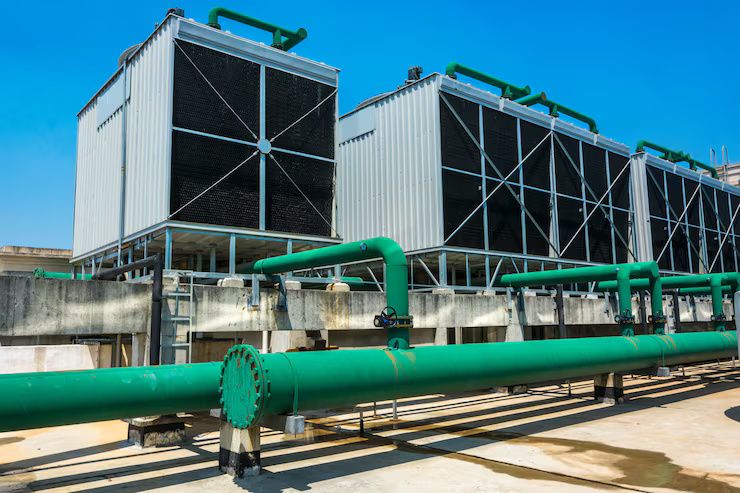
Industrial cooling equipment refers to systems and machines designed to remove excess heat from industrial processes, equipment, and facilities. Heat is a natural byproduct of many industrial operations, including manufacturing, power generation, chemical processing, and data handling. Without proper cooling, excess heat can reduce efficiency, damage machinery, and interrupt operations.
Industrial cooling technologies exist to maintain controlled temperatures, protect equipment, and ensure stable operating conditions. Unlike domestic or commercial cooling, industrial cooling systems are engineered to handle large thermal loads, continuous operation, and demanding environments. Over time, these systems have evolved to support higher output processes, stricter safety requirements, and improved energy performance.
Importance: Why Industrial Cooling Equipment Matters Today
Industrial cooling equipment is critical to modern industry because temperature control directly affects productivity, safety, and equipment lifespan. As industrial processes become more complex and energy-intensive, effective cooling becomes essential rather than optional.
This topic matters to:
-
Manufacturing facilities managing heat from machinery
-
Power plants and energy systems handling thermal output
-
Data centers requiring stable temperature conditions
-
Process industries such as chemicals, food processing, and metals
Industrial cooling equipment helps solve problems such as overheating, unplanned shutdowns, reduced product quality, and premature equipment wear. Proper cooling also supports operational continuity and helps maintain compliance with safety and environmental standards.
Overview of Industrial Cooling Technologies
Industrial cooling equipment includes several technologies, each designed for specific heat loads, environments, and operational needs. Understanding these technologies helps in selecting appropriate cooling methods for different applications.
Common industrial cooling technologies include:
-
Air-based cooling systems using airflow to dissipate heat
-
Water-based cooling systems that transfer heat through liquid circulation
-
Evaporative cooling systems using water evaporation to reduce temperature
-
Refrigeration-based cooling systems for precise temperature control
-
Closed-loop cooling systems that recirculate coolant within sealed circuits
Table: Comparison of Common Industrial Cooling Technologies
| Cooling Technology | Cooling Method | Typical Applications |
|---|---|---|
| Air Cooling | Heat dissipation through air | Light industrial equipment |
| Water Cooling | Heat transfer via water | Heavy machinery |
| Evaporative Cooling | Heat removal by evaporation | Large facilities |
| Refrigeration Cooling | Mechanical heat removal | Process industries |
| Closed-Loop Systems | Controlled coolant circulation | Precision equipment |
Each technology addresses specific thermal challenges and operational requirements.
Importance of Cooling Equipment Design and Capacity
The design and capacity of industrial cooling equipment determine its effectiveness. Cooling systems must match the heat load generated by industrial processes. Undersized systems may fail to control temperature, while oversized systems may reduce efficiency.
Key design considerations include:
-
Heat load calculation
-
Ambient temperature conditions
-
Continuous versus intermittent operation
-
Space and installation constraints
-
Energy efficiency requirements
Accurate cooling capacity planning improves system reliability and reduces operational disruptions.
Recent Updates: Trends and Developments in the Past Year
During 2024 and early 2025, industrial cooling equipment saw notable developments influenced by energy efficiency goals and digital monitoring trends. One key trend was the increased adoption of smart monitoring systems. These systems track temperature, flow rates, and system performance in real time, helping operators detect inefficiencies early.
Another important update involved the use of environmentally compliant refrigerants. Regulatory changes introduced in 2024 encouraged industries to transition toward refrigerants with lower environmental impact. As a result, many industrial cooling systems adopted alternative refrigerant technologies aligned with updated environmental guidelines.
In late 2024, advancements in heat exchanger design improved thermal transfer efficiency while reducing material usage. These changes support industrial efforts to optimize energy consumption and reduce operational strain.
Laws and Policies Affecting Industrial Cooling Equipment
Industrial cooling equipment is influenced by safety, energy, and environmental regulations. These rules aim to ensure safe operation, reduce emissions, and promote responsible energy use.
Key regulatory areas include:
-
Energy efficiency standards for industrial equipment
-
Environmental regulations governing refrigerant use
-
Workplace safety rules related to heat management
-
Water usage and discharge guidelines in cooling systems
Government programs in several countries support energy-efficient industrial upgrades by encouraging adoption of improved cooling technologies. These policies help reduce environmental impact while maintaining industrial productivity.
Tools and Resources for Industrial Cooling Equipment Management
A range of tools and resources support the planning, operation, and monitoring of industrial cooling equipment. These tools focus on technical accuracy and system optimization.
Helpful tools and resources include:
-
Heat load calculation spreadsheets and software
-
Energy efficiency assessment tools for cooling systems
-
Temperature and flow monitoring dashboards
-
Engineering reference manuals on thermal management
-
Compliance guidelines for refrigerant handling and safety
Table: Example Parameters Used in Cooling System Assessment
| Parameter | Purpose | Impact |
|---|---|---|
| Heat Load | Determines cooling capacity | System sizing |
| Flow Rate | Measures coolant movement | Heat transfer |
| Temperature Differential | Tracks cooling performance | Efficiency |
| Operating Hours | Assesses usage pattern | Maintenance planning |
These resources support informed decision-making and consistent system performance.
FAQs: Common Questions About Industrial Cooling Equipment
What is industrial cooling equipment used for?
Industrial cooling equipment removes excess heat from machines, processes, or facilities to maintain stable and safe operating temperatures.
How is industrial cooling different from commercial cooling?
Industrial cooling systems are designed for higher heat loads, continuous operation, and demanding environments compared to commercial cooling systems.
Why is energy efficiency important in cooling equipment?
Efficient cooling reduces energy consumption, supports sustainability goals, and improves long-term operational reliability.
What factors affect cooling system performance?
Performance depends on system design, correct capacity, maintenance practices, ambient conditions, and proper monitoring.
How does cooling equipment support equipment lifespan?
By controlling temperature, cooling systems reduce thermal stress on components, helping extend equipment life.
Additional Insight: Cooling Technology Adoption Trends
The table below illustrates a general shift in industrial cooling practices.
| Feature | Earlier Focus | Current Focus |
|---|---|---|
| Manual Monitoring | Common | Reduced |
| Automated Controls | Limited | Increasing |
| Energy Optimization | Moderate | High |
| Environmental Compliance | Basic | Advanced |
This trend highlights the growing importance of efficiency and regulatory alignment.
Conclusion
Industrial cooling equipment plays a vital role in maintaining safe, efficient, and reliable industrial operations. By removing excess heat, these systems protect machinery, support continuous production, and improve overall performance. Advances in cooling technologies, monitoring systems, and regulatory frameworks over the past year reflect the growing emphasis on energy efficiency and environmental responsibility.
A clear understanding of cooling technologies, design considerations, and operational tools helps industries manage thermal challenges effectively. With proper planning and informed use, industrial cooling equipment continues to support modern industrial systems across diverse sectors.