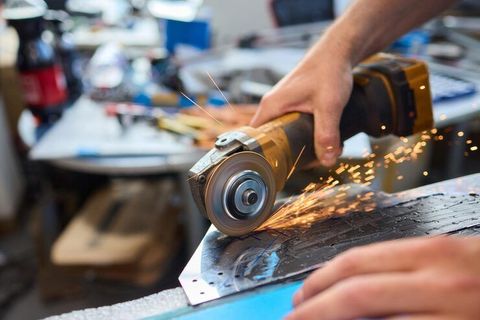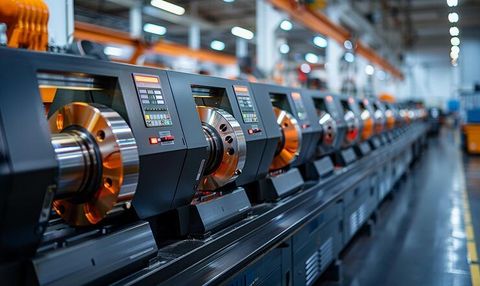
Industrial cutting tools are among the most important components in modern manufacturing. From producing automotive parts to shaping aerospace components and creating everyday household products, cutting tools help transform raw materials into finished products with precision and efficiency. Whether used in traditional machining or advanced CNC manufacturing, these tools play a central role in achieving accurate dimensions, smooth surface finishes, and consistent production quality.
As manufacturing technologies continue to evolve, cutting tools have also become more advanced. Modern tools are designed to work faster, last longer, and handle increasingly difficult materials such as hardened steel, titanium, and composite materials. Understanding how industrial cutting tools work and how they are selected helps manufacturers improve productivity while maintaining product quality.
This guide explains industrial cutting tools in simple language, covering their purpose, major types, materials, applications, maintenance practices, and recent developments shaping the manufacturing industry.
Understanding Industrial Cutting Tools
Industrial cutting tools are specialized tools used to remove material from a workpiece during machining processes. They create the desired shape, size, or surface finish by cutting away unwanted material. These tools operate on machines such as CNC milling machines, lathes, drilling machines, grinding machines, and machining centers.
The cutting edge of a tool is designed to withstand heat, pressure, and friction while maintaining sharpness throughout the machining process. Different cutting tools are designed for different operations, materials, and production requirements.
Manufacturers choose cutting tools based on factors such as workpiece material, machining speed, production volume, dimensional accuracy, and surface finish requirements.
Why Industrial Cutting Tools Matter in Manufacturing
Manufacturing industries depend on cutting tools because nearly every machined product requires material removal at some stage. The quality of a cutting tool directly affects production speed, component accuracy, machine efficiency, and tool life.
Modern cutting tools help industries produce complex parts with tighter tolerances while reducing waste and improving consistency. Efficient tools also reduce machine downtime because they require fewer replacements and maintain cutting performance for longer periods.
Industries ranging from automotive and aerospace to electronics, medical devices, energy equipment, and heavy engineering rely on cutting tools for precision manufacturing.
How Industrial Cutting Tools Work
Cutting tools remove material by applying force against a rotating or moving workpiece. During machining, the cutting edge penetrates the material and separates small pieces called chips. The generated chips are removed from the cutting zone while coolant or lubrication may reduce heat and friction.
The performance of a cutting tool depends on several machining parameters, including cutting speed, feed rate, depth of cut, spindle speed, tool geometry, and cooling conditions. Proper adjustment of these factors helps achieve efficient machining and longer tool life.
Main Types of Industrial Cutting Tools
Industrial cutting tools come in many designs depending on the machining operation. Each type serves a specific manufacturing purpose.
Milling Cutters
Milling cutters remove material from flat surfaces, slots, contours, and complex three-dimensional shapes. They are commonly used in CNC milling machines and machining centers for producing precision components across many industries.
Turning Tools
Turning tools shape cylindrical workpieces on lathes. They perform operations such as rough turning, finishing, facing, grooving, threading, and parting. Different insert geometries allow manufacturers to machine internal and external surfaces.
Drilling Tools
Drilling tools create holes in metal, plastic, wood, and composite materials. Various drill designs are available for deep holes, precision holes, high-speed drilling, and difficult materials.
End Mills
End mills are versatile cutting tools used for side cutting, slotting, profiling, pocketing, and contour machining. They are available in different flute designs, cutting diameters, and coatings for multiple machining applications.
Reamers
Reamers enlarge and finish previously drilled holes with improved dimensional accuracy and smoother surface finish. They are commonly used where precise hole tolerance is required.
Taps and Thread Mills
These tools create internal threads inside holes. Thread milling provides flexibility for different thread sizes and is often used in CNC machining.
Boring Tools
Boring tools enlarge existing holes and improve concentricity, diameter accuracy, and internal surface finish.
Cutting Tool Materials and Their Characteristics
The material used to manufacture a cutting tool determines its strength, heat resistance, wear resistance, and machining capability.
High-Speed Steel
High-speed steel tools remain popular because they offer good toughness and are suitable for moderate cutting speeds. They are widely used for drilling, tapping, and general machining operations.
Carbide Cutting Tools
Carbide tools provide higher hardness and wear resistance than high-speed steel. They maintain cutting performance at higher temperatures, making them ideal for high-speed CNC machining and mass production.
Ceramic Cutting Tools
Ceramic tools withstand extremely high temperatures and are commonly used for machining cast iron, hardened steel, and heat-resistant alloys at very high speeds.
Cubic Boron Nitride Tools
CBN tools are designed for machining hardened steels and difficult ferrous materials. They offer excellent wear resistance and dimensional accuracy during finishing operations.
Polycrystalline Diamond Tools
PCD tools are widely used for machining aluminum alloys, composites, plastics, graphite, and non-ferrous materials. They provide excellent surface finish and extended tool life.
Choosing the Right Cutting Tool
Selecting an industrial cutting tool involves understanding both the workpiece material and machining requirements. The correct combination improves machining efficiency while reducing tool wear.
The workpiece material is one of the most important considerations because soft aluminum requires a different cutting edge than hardened steel or titanium. Tool geometry also changes depending on whether the operation is rough machining or precision finishing.
Manufacturers also consider cutting speed, coolant availability, machine rigidity, production volume, desired surface finish, and dimensional tolerance before selecting a cutting tool.
Common Applications Across Industries
Industrial cutting tools support a wide variety of manufacturing sectors, each with unique machining requirements.
Industry | Typical Cutting Tool Applications |
| Automotive Manufacturing | Engine blocks, transmission components, brake systems, shafts, and gears. |
| Aerospace Manufacturing | Turbine blades, structural parts, titanium components, and lightweight alloy machining. |
| Medical Device Manufacturing | Surgical instruments, implants, orthopedic components, and precision stainless steel parts. |
| Electronics Industry | Aluminum housings, connectors, heat sinks, circuit board components, and miniature precision parts. |
| Construction Equipment | Heavy steel structures, hydraulic components, bearings, and machine parts. |
| Energy and Industrial Equipment | Pumps, valves, compressors, turbines, pipelines, and industrial machinery components. |
CNC Machines and Industrial Cutting Tools
Computer Numerical Control (CNC) machines have transformed how cutting tools are used in manufacturing. CNC machining automates cutting operations with high precision and repeatability.
Modern CNC machines use tool changers that automatically switch between multiple cutting tools during a machining cycle. This reduces production time and improves consistency across large manufacturing batches.
CNC software also optimizes cutting paths, spindle speed, feed rate, and tool engagement to improve efficiency and reduce unnecessary tool wear.
Tool Coatings That Improve Performance
Many industrial cutting tools receive protective coatings to increase durability and improve machining performance. Coatings reduce friction, improve heat resistance, and extend tool life.
Titanium nitride coatings improve wear resistance and reduce friction during general machining. Titanium aluminum nitride coatings provide better performance in high-temperature machining applications. Other advanced coatings improve oxidation resistance, chip evacuation, and machining of difficult materials.
Selecting the right coating depends on the material being machined, cutting speed, coolant conditions, and machining environment.
Factors That Affect Cutting Tool Life
Cutting tool life refers to the amount of machining a tool performs before losing acceptable cutting performance. Several factors influence tool longevity.
Excessive cutting speed increases heat generation, which accelerates wear. Incorrect feed rate can cause chipping or premature edge failure. Poor coolant flow may increase thermal stress, while machine vibration can damage cutting edges and reduce surface quality.
Tool life also depends on workpiece hardness, tool coating quality, chip removal efficiency, and proper machine alignment.
Monitoring tool wear helps manufacturers replace tools before product quality begins to decline.
Maintaining Industrial Cutting Tools
Proper maintenance helps cutting tools perform consistently and safely throughout their service life. Well-maintained tools improve machining accuracy and reduce unexpected production interruptions.
Tools should be inspected regularly for wear, cracks, edge chipping, discoloration, or excessive built-up material. Cleaning tools after machining prevents chip accumulation and corrosion.
Correct storage protects cutting edges from accidental damage. Manufacturers also follow recommended cutting parameters and coolant practices to reduce unnecessary stress on tools.
Scheduled maintenance and tool management systems help track tool usage and replacement intervals in production facilities.
Safety Considerations During Machining
Industrial cutting tools operate at high rotational speeds and generate sharp metal chips and heat. Safe machining practices protect both operators and equipment.
Operators should wear appropriate eye protection and follow machine operating procedures. Secure workpiece clamping prevents movement during machining. Proper chip removal reduces the risk of tool damage and machine blockage.
Regular machine inspection, correct tool installation, and proper spindle alignment also contribute to safer machining operations.
Recent Developments in Industrial Cutting Tools (2025–2026)
Industrial cutting tools continue evolving as manufacturing adopts automation, digital monitoring, and advanced materials.
One major trend is the increased use of advanced coatings that improve machining performance for hardened alloys and high-temperature materials. Manufacturers are also developing specialized geometries for composite materials and lightweight metals used in aerospace and electric vehicles.
Smart manufacturing has introduced digital tool monitoring systems that track wear, vibration, temperature, and cutting performance in real time. Predictive maintenance helps manufacturers replace tools before failures occur, reducing downtime and improving production planning.
Another important development is the growing use of sustainable machining practices. Improved tool materials, optimized cutting parameters, and efficient coolant management help reduce energy consumption and material waste during manufacturing.
Industrial Cutting Tools and Sustainable Manufacturing
Sustainability has become an important consideration in manufacturing. Longer-lasting cutting tools reduce material consumption because fewer replacements are required. Efficient chip formation also improves material recycling processes.
Dry machining and minimum lubrication techniques are becoming more common in suitable applications, reducing coolant usage while maintaining machining performance.
Manufacturers are also designing cutting tools that improve energy efficiency by reducing cutting forces and optimizing chip evacuation.
Future Trends in Cutting Tool Technology
The future of industrial cutting tools is closely connected with intelligent manufacturing and advanced materials engineering. Artificial intelligence is increasingly used to optimize machining parameters and predict tool wear before it affects production quality.
Additive manufacturing is also influencing cutting tool development by enabling more complex internal coolant channels and lightweight tool designs. Hybrid manufacturing systems combine additive and subtractive processes for greater flexibility.
As industries adopt automation and Industry 4.0 technologies, cutting tools will continue becoming smarter, more durable, and better integrated with digital manufacturing systems.
Conclusion
Industrial cutting tools are essential tools that make precision manufacturing possible across nearly every industrial sector. Their design, material, coating, and geometry directly influence machining accuracy, production efficiency, and component quality.
Understanding different types of cutting tools and selecting the appropriate tool for each machining operation helps manufacturers improve productivity while maintaining consistent quality. Advances in coatings, carbide technology, digital monitoring, and sustainable machining continue improving cutting tool performance in modern manufacturing environments.
As manufacturing technologies evolve through CNC automation, smart factories, and advanced materials, industrial cutting tools will remain a foundational part of efficient, accurate, and reliable production processes.