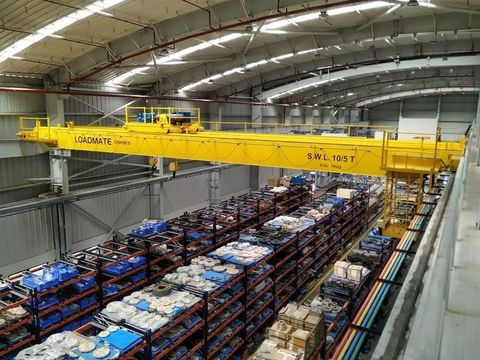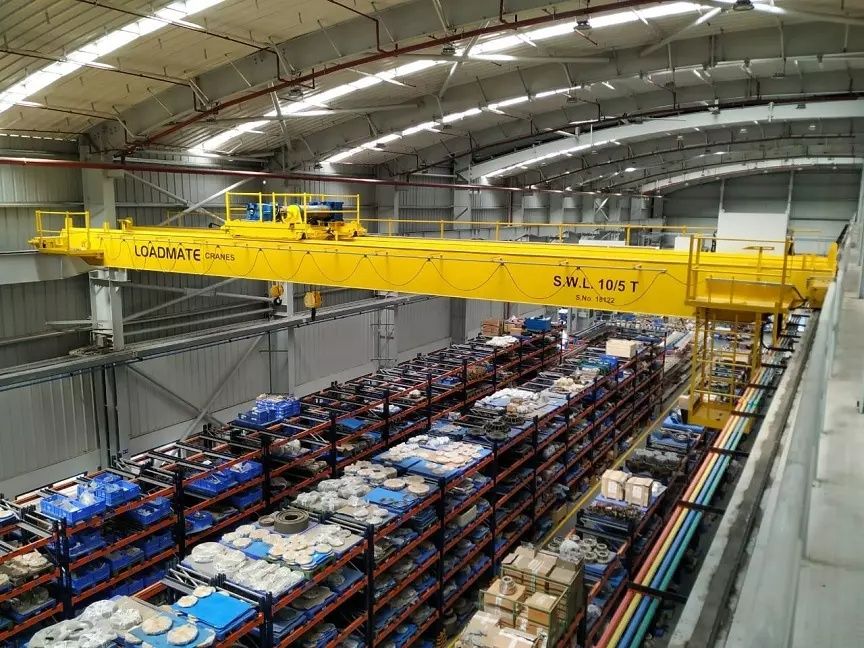
Industrial hoist manufacturing involves the engineering and production of lifting equipment designed to raise.
Hoists are widely used in factories, warehouses, construction operations, workshops, shipyards, power facilities, and material-handling systems.
Modern hoists combine mechanical structures, electric or manual drive systems, lifting chains or wire ropes, brakes, hooks, gears, controls, and safety mechanisms. Manufacturing precision is important because every major component must operate reliably under the specified lifting load and duty conditions.
What Is Industrial Hoist Manufacturing?
Industrial hoist manufacturing is the process of designing, fabricating, assembling, testing, and inspecting hoisting equipment for controlled lifting applications.
A complete hoist system can include:
- Load chain or wire rope
- Electric motor
- Gearbox
- Drum or chain wheel
- Hook assembly
- Brake system
- Limit switches
- Control panel
- Load-bearing frame
- Safety devices
The configuration depends on lifting capacity, lifting height, operating frequency, travel requirements, installation environment, and control method.
Types of Industrial Hoists
Different hoist designs are developed for specific lifting applications.
Electric Chain Hoists
Electric chain hoists use a motor-driven chain wheel to raise and lower loads. Their relatively compact construction makes them suitable for workshops, assembly areas, maintenance facilities, and light-to-medium industrial lifting.
Wire Rope Hoists
Wire rope hoists use a grooved drum and steel wire rope for lifting. They are commonly used for heavier loads and greater lifting heights.
Applications include:
- Manufacturing plants
- Steel facilities
- Foundries
- Machinery workshops
- Warehouses
- Heavy equipment handling
Manual Chain Hoists
Manual chain hoists use mechanical advantage to lift loads through hand-operated chain movement. They can be used where electrical power is unavailable or where occasional lifting is required.
Lever Hoists
Lever-operated hoists use a hand lever to operate an internal gearing mechanism. They can be used for pulling, positioning, tensioning, and lifting applications.
Explosion-Protected Hoists
Specialized hoists can be designed for environments where flammable gases, vapors, or combustible dust may be present. Electrical and mechanical components require appropriate protection based on the hazardous-area classification.
Key Components of an Industrial Hoist
Industrial hoists contain several components that work together to safely transfer lifting forces.
| Component | Primary Function |
|---|---|
| Electric Motor | Provides lifting power |
| Gearbox | Converts motor speed into lifting torque |
| Drum | Winds and stores wire rope |
| Chain Wheel | Drives lifting chain |
| Wire Rope | Transfers lifting force |
| Load Chain | Carries the suspended load |
| Hook | Connects the hoist to the load |
| Brake | Holds and controls the load |
| Limit Switch | Restricts travel at designated positions |
| Control Panel | Manages electrical operation |
| Frame | Supports major hoist components |
Component dimensions and materials are selected according to the required working load and operating conditions.
Industrial Hoist Manufacturing Process
The manufacturing process combines engineering, metal fabrication, precision machining, electrical assembly, and functional testing.
1. Engineering and Design
Production begins with specifications for:
- Rated load
- Lifting height
- Lifting speed
- Duty classification
- Operating frequency
- Power supply
- Travel requirements
- Environmental conditions
Computer-aided design tools can be used to model the hoist structure and evaluate component dimensions.
2. Material Selection
Structural and mechanical components are manufactured using materials selected for strength, durability, and operating conditions.
Common materials include:
- Carbon steel
- Alloy steel
- Stainless steel
- Hardened steel
- Cast iron
- Engineering polymers
High-strength alloy steels may be used for hooks, gears, shafts, and other highly loaded components.
3. Structural Fabrication
Frames, housings, brackets, and support structures can be manufactured through cutting, bending, drilling, welding, and related fabrication processes.
Welded structures require controlled procedures to maintain dimensional accuracy and structural integrity.
4. Gear Manufacturing
Gears transmit torque between the motor and lifting mechanism. Depending on the design, gear manufacturing may involve:
- Gear hobbing
- Gear shaping
- Gear milling
- Heat treatment
- Gear grinding
- Dimensional inspection
Gear accuracy influences mechanical efficiency, noise, wear, and operating life.
5. Shaft and Drum Machining
Shafts, drums, chain wheels, and other rotating components are manufactured using CNC turning, milling, boring, and grinding processes.
Critical dimensions include bearing seats, shaft diameters, keyways, drum grooves, and mounting interfaces.
6. Heat Treatment
Selected components may undergo processes such as:
- Hardening
- Tempering
- Carburizing
- Nitriding
Heat treatment can improve hardness, wear resistance, fatigue performance, and surface durability.
7. Electrical Assembly
Electric hoists require integration of motors, brakes, contactors, control panels, limit switches, sensors, and pendant or remote controls.
Wiring and electrical protection systems are assembled according to the equipment's electrical specifications.
8. Mechanical Assembly
The motor, gearbox, brake, drum or chain mechanism, hook assembly, frame, and related components are integrated into the final hoist.
Correct alignment is important to reduce mechanical stress, vibration, and premature component wear.
9. Functional Testing
Completed hoists undergo operational and load-related testing according to applicable technical requirements.
Testing can evaluate lifting, lowering, braking, controls, limit switches, mechanical movement, and abnormal operating conditions.
Manufacturing Equipment Used for Hoists
A manufacturing facility can use a combination of heavy fabrication and precision machining equipment.
| Equipment | Manufacturing Application |
|---|---|
| CNC Turning Machine | Shafts and cylindrical components |
| CNC Machining Center | Precision mechanical components |
| Gear Hobbing Machine | Gear production |
| Gear Grinding Machine | Gear finishing |
| Welding Equipment | Structural fabrication |
| Cutting Machines | Steel and plate preparation |
| Heat Treatment Equipment | Component hardening |
| Balancing Machine | Rotating component balancing |
| Load Testing Equipment | Hoist performance testing |
| Measuring Equipment | Dimensional inspection |
Automation can improve repeatability across machining, inspection, and assembly operations.
Applications of Industrial Hoists
Industrial hoists are used in environments where controlled vertical lifting is required.
Manufacturing Plants
Hoists can move:
- Machinery components
- Dies and molds
- Raw materials
- Maintenance equipment
- Fabricated assemblies
Warehouses
Hoists can support material-handling operations where heavy components must be lifted between designated working positions.
Construction
Construction environments may use hoists for lifting tools, equipment, structural components, and construction materials.
Steel and Metal Industries
Heavy-duty hoists are used to handle coils, fabricated sections, molds, machinery, and other high-mass components.
Shipyards
Hoisting systems support the movement and positioning of engines, assemblies, structural components, and maintenance equipment.
Power Plants
Hoists can be integrated into maintenance areas for handling motors, valves, pumps, generators, and other heavy equipment.
Important Industrial Hoist Specifications
Selecting an industrial hoist requires careful consideration of technical specifications.
Rated Load Capacity
Rated capacity defines the maximum load the hoist is designed to handle under specified operating conditions.
The selected capacity should account for the actual load and applicable engineering requirements rather than relying on an approximate estimate.
Lifting Height
Lifting height determines the required length of wire rope or chain and influences the overall hoist configuration.
Lifting Speed
Hoists can be designed with single or multiple lifting speeds. Variable-speed control may be used where precise load positioning is important.
Duty Classification
Duty classification indicates how frequently and intensively the hoist is expected to operate. A hoist intended for frequent production cycles may require a different configuration from one used occasionally.
Power Supply
Electric hoists must match the available voltage, phase, frequency, and electrical infrastructure.
Control System
Controls may include:
- Pendant control
- Radio remote control
- Push-button stations
- Variable-frequency drives
- PLC-based control
Hoist Safety Systems
Safety is a fundamental consideration in hoist design and manufacturing.
Common safety components include:
- Mechanical brakes
- Overload protection
- Upper and lower limit switches
- Emergency stop controls
- Load monitoring
- Thermal motor protection
- Hook safety latches
- Phase protection
- Rope or chain monitoring
Safety systems should be designed, inspected, and maintained according to applicable regulations and manufacturer specifications.
Quality Control in Hoist Manufacturing
Quality assurance covers structural, mechanical, electrical, and functional characteristics.
Material Inspection
Materials may be inspected for dimensions, composition, mechanical properties, and certification requirements.
Dimensional Inspection
Critical components such as gears, shafts, drums, hooks, and frames are measured to verify conformity with engineering drawings.
Weld Inspection
Structural welds may undergo visual examination and, where required, non-destructive testing methods such as ultrasonic or magnetic-particle inspection.
Load Testing
Load testing evaluates whether the completed hoist operates correctly under defined test conditions.
Brake Testing
Brake performance is examined to verify controlled stopping and load-holding behavior.
Factors Affecting Hoist Performance
Load Characteristics
Load weight, dimensions, center of gravity, and lifting geometry influence equipment selection.
Operating Frequency
Frequent lifting cycles can increase thermal and mechanical loads on motors, brakes, gears, and lifting components.
Environment
Dust, moisture, corrosive chemicals, extreme temperatures, and outdoor exposure may require specialized materials and protective systems.
Lifting Height
Greater lifting heights can affect rope or chain selection, drum capacity, motor requirements, and overall equipment dimensions.
Travel Requirements
If the hoist is integrated with an overhead crane or trolley, horizontal travel requirements must also be considered.
Automation in Industrial Hoist Manufacturing
Automation is increasingly used in modern hoist production and operation.
Manufacturing automation can include:
- CNC machining
- Robotic welding
- Automated inspection
- Digital dimensional measurement
- Automated assembly
- Load testing systems
- Production traceability
During operation, sensors and digital controllers can monitor load, motor temperature, operating cycles, brake condition, and travel limits.
Predictive maintenance systems can use operating data to identify potential component problems before serious mechanical failure occurs.
Maintenance of Industrial Hoists
Routine maintenance helps maintain safe and reliable operation.
Important inspection areas include:
- Wire rope condition
- Chain condition
- Hook deformation
- Brake operation
- Gearbox condition
- Lubrication
- Limit switches
- Electrical connections
- Motor temperature
- Structural components
- Bolted and welded connections
Inspection frequency should be based on manufacturer instructions, operating intensity, applicable regulations, and site conditions.
How to Evaluate Industrial Hoist Manufacturers
When evaluating industrial hoist manufacturers, consider their engineering, manufacturing, testing, and quality-control capabilities.
Important factors include:
- Hoist technology expertise
- Load-capacity range
- Custom engineering capabilities
- Gear manufacturing facilities
- Structural fabrication capabilities
- Electrical integration
- Load-testing facilities
- Quality-control procedures
- Safety-system integration
- Documentation and traceability
- Maintenance support capabilities
Technical documentation should clearly specify rated capacity, duty classification, lifting speed, lifting height, power requirements, environmental limitations, and applicable standards.
Frequently Asked Questions
What is industrial hoist manufacturing?
Industrial hoist manufacturing involves designing, fabricating, machining, assembling, and testing lifting equipment used to raise, lower, and position heavy loads in industrial environments.
What are the main types of industrial hoists?
Common types include electric chain hoists, wire rope hoists, manual chain hoists, lever hoists, and specialized explosion-protected hoists.
What materials are used to manufacture industrial hoists?
Carbon steel, alloy steel, stainless steel, hardened steel, cast iron, and engineering polymers can be used for different structural and mechanical components.
What specifications are important when selecting an industrial hoist?
Important specifications include rated load capacity, lifting height, lifting speed, duty classification, power supply, control method, operating environment, and travel requirements.
Why is load testing important for industrial hoists?
Load testing helps verify lifting, lowering, braking, control, and structural performance under defined test conditions. Testing procedures should follow applicable technical requirements and manufacturer specifications.
Conclusion
Industrial hoist manufacturing combines structural fabrication, precision machining, gear production, heat treatment, electrical integration, mechanical assembly, and performance testing. Different hoist technologies are designed for different load capacities, lifting heights, operating frequencies, and environmental conditions.
Electric chain hoists, wire rope hoists, manual hoists, lever hoists, and specialized configurations each have distinct operating characteristics. Proper selection requires evaluating the load, duty cycle, lifting height, speed, environment, power supply, control system, and safety requirements together.
Modern CNC production, automated welding, digital inspection, sensor-based monitoring, and advanced load-testing systems are helping improve manufacturing consistency and operational reliability.