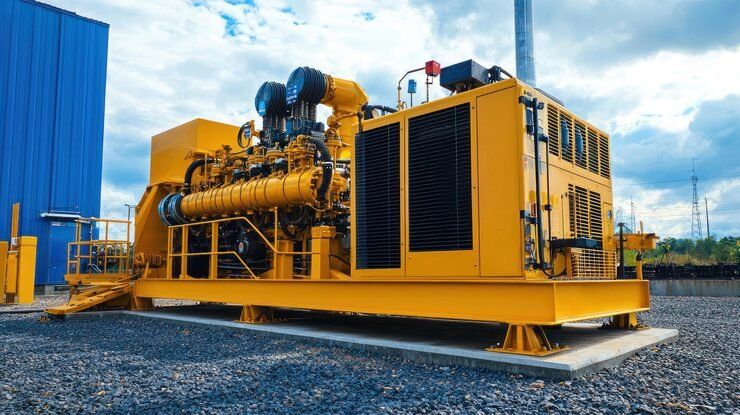
Industrial power generators are engineered systems that convert mechanical energy into electrical energy for factories, infrastructure, commercial facilities, construction sites, data centers, utilities, and other applications requiring dependable electrical power. They are available in different configurations, fuel types, capacities, and control architectures.
Modern industrial generators combine engines or other prime movers with alternators, fuel systems, cooling systems, control panels, exhaust systems, voltage regulation equipment, and protective devices. Generator selection depends on required electrical load, operating conditions, fuel availability, runtime, environmental requirements, and standby or continuous-duty requirements.
Why Industrial Power Generators Matter
Industrial facilities often operate equipment with significant electrical loads. An interruption can affect production processes, automated systems, refrigeration, communications, safety equipment, and critical infrastructure.
Industrial power generators can provide:
Standby electrical power
Emergency power during grid interruptions
Continuous power for selected applications
Prime power for remote facilities
Backup power for critical equipment
Temporary power for construction and industrial projects
Power support for peak-load conditions
Generator systems can also be integrated with automatic transfer switches, synchronization equipment, remote monitoring, and facility control systems.
Types of Industrial Power Generators
Diesel Generators
Diesel generators combine a diesel engine with an alternator to produce electricity. They are widely used for standby, prime, and emergency power applications.
Their characteristics can include high durability, substantial load-handling capability, and suitability for extended operation.
Natural Gas Generators
Natural gas generators use gas-powered engines to drive an alternator. They can be suitable for facilities with access to natural gas infrastructure.
Gas generators are used in commercial buildings, manufacturing facilities, distributed power systems, and other stationary applications.
Bi-Fuel Generators
Bi-fuel systems can operate using a combination of diesel and gaseous fuel. These systems are designed to combine characteristics of diesel and gas-based operation.
Gasoline Generators
Gasoline-powered systems are more commonly associated with smaller equipment, although certain industrial applications use gasoline engines where appropriate.
Renewable Hybrid Generator Systems
Hybrid power systems can combine generators with solar photovoltaic systems, batteries, energy-management systems, or other power sources.
These configurations can reduce generator operating hours in applications where renewable power and energy storage are available.
Power Generation Technologies
Internal Combustion Engines
Internal combustion engines convert chemical energy in fuel into mechanical energy. The engine's crankshaft drives the generator alternator.
Diesel and gas engines are common prime movers for industrial generator systems.
Alternators
The alternator converts mechanical rotation into electrical energy through electromagnetic induction.
Major components can include:
Rotor
Stator
Bearings
Excitation system
Cooling system
Housing
Automatic Voltage Regulation
Automatic voltage regulators help maintain generator output voltage within the required operating range as electrical loads change.
Synchronization Technology
Synchronization systems allow multiple generators or a generator and electrical grid to operate together when designed for parallel operation.
The system coordinates voltage, frequency, phase angle, and other operating parameters before connection.
Automatic Transfer Systems
Automatic transfer switches can detect a utility power interruption and transfer connected loads to an available generator source.
Remote Monitoring
Modern generator systems can incorporate sensors and communication systems that monitor parameters such as:
Engine temperature
Oil pressure
Fuel level
Battery condition
Generator voltage
Frequency
Operating hours
Load level
Industrial Generator Components
An industrial generator typically contains several major subsystems.
Prime Mover
The engine or other mechanical power source supplies rotational energy to the alternator.
Alternator
The alternator converts mechanical energy into electrical energy.
Fuel System
The fuel system stores, filters, and delivers fuel to the prime mover.
Cooling System
Cooling equipment manages heat produced during engine operation. Radiators, coolant circuits, fans, and heat exchangers can form part of the system.
Exhaust System
The exhaust system directs combustion gases away from the engine and facility while incorporating appropriate emissions-control components.
Control Panel
The controller monitors operating parameters and allows operators to start, stop, configure, and monitor the generator.
Base Frame and Enclosure
The base frame supports the generator assembly. Enclosures can provide environmental protection and help manage acoustic emissions.
Manufacturing Processes of Industrial Power Generators
1. Engineering and System Design
Manufacturers establish power ratings, voltage requirements, frequency, engine specifications, cooling requirements, fuel configuration, control architecture, and enclosure requirements.
2. Engine Manufacturing
Engines are manufactured through processes including casting, forging, machining, heat treatment, component assembly, and testing.
3. Alternator Manufacturing
Alternator production involves electrical steel components, copper windings, rotor assemblies, stator assemblies, insulation systems, bearings, housings, and electrical testing.
4. Frame and Enclosure Fabrication
Steel sheets and structural materials are cut, formed, welded, and finished to produce base frames, fuel tanks, acoustic enclosures, and protective housings.
5. System Assembly
The engine, alternator, cooling equipment, fuel system, control panel, exhaust components, battery system, and electrical connections are integrated into a complete generator package.
6. Control System Integration
Controllers, sensors, protection devices, communication modules, circuit breakers, and monitoring equipment are installed and configured.
7. Testing
Industrial generators can undergo electrical load testing, voltage testing, frequency testing, vibration checks, temperature monitoring, fuel-system inspection, and functional testing.
Global Manufacturers and Suppliers
The industrial power-generation market includes companies specializing in generator sets, engines, alternators, control systems, power equipment, and distributed-generation technologies.
Examples of established companies active in this sector include:
Caterpillar
Cummins
Rolls-Royce Holdings
Kohler
Generac
Mitsubishi Heavy Industries
Industrial generator suppliers may provide individual generator sets, complete power systems, synchronization equipment, transfer systems, control solutions, spare components, and related engineering capabilities.
Industrial Applications
Manufacturing Plants
Factories use generators for emergency power, standby systems, critical production equipment, control systems, and selected continuous-power applications.
Data Centers
Data centers require carefully engineered backup power systems for servers, networking equipment, cooling systems, security systems, and other critical infrastructure.
Hospitals and Healthcare Facilities
Generators can provide backup electricity for critical medical equipment, lighting, communications, ventilation, and essential building systems.
Oil and Gas Facilities
Remote oil and gas operations can use generator systems to supply electrical power for pumps, compressors, control equipment, lighting, and processing systems.
Construction Sites
Industrial generator sets provide temporary electricity for construction machinery, lighting, tools, cranes, pumps, and site facilities.
Mining Operations
Mining facilities can require high-capacity power systems for crushers, conveyors, pumps, ventilation systems, processing equipment, and remote operations.
Commercial and Industrial Buildings
Large buildings can use standby generator systems for emergency loads, HVAC systems, elevators, security equipment, lighting, and communications.
Industrial Power Generator Comparison
| Generator Type | Primary Fuel/Source | Typical Application |
|---|---|---|
| Diesel generator | Diesel | Standby and prime power |
| Natural gas generator | Natural gas | Stationary power systems |
| Bi-fuel generator | Diesel + gas | Extended fuel flexibility |
| Gasoline generator | Gasoline | Selected industrial applications |
| Hybrid generator | Multiple energy sources | Distributed and hybrid power |
| Parallel generator system | Multiple generator sets | High-capacity power systems |
Factors to Consider When Selecting an Industrial Generator
Power Rating
Determine the continuous and peak electrical loads that the generator must support. Motor starting currents and other transient loads should also be considered.
Duty Type
Generators can be configured for standby, prime, or continuous applications depending on the intended operating pattern.
Fuel Availability
Diesel, natural gas, and other fuel options should be evaluated according to local infrastructure, storage requirements, operating conditions, and fuel logistics.
Voltage and Frequency
Generator output must match the electrical characteristics required by the connected equipment.
Load Characteristics
Facilities should consider resistive, inductive, nonlinear, motor-driven, and electronic loads when specifying a generator.
Environmental Conditions
Altitude, ambient temperature, humidity, dust, ventilation, and installation location can influence generator sizing and configuration.
Automatic Controls
Facilities may require automatic transfer, synchronization, load sharing, remote monitoring, and automated shutdown functions.
Maintenance Requirements
Engine oil, filters, batteries, cooling systems, fuel systems, electrical connections, and other components require scheduled inspection and maintenance.
Future Trends in Industrial Power Generation
Industrial generator technology is increasingly connected with digital monitoring, automated controls, energy storage, and hybrid power architectures.
Remote monitoring systems can transmit generator operating data to centralized platforms. Predictive maintenance technologies can analyze engine and alternator parameters to identify unusual operating conditions.
Hybrid systems can combine generators with batteries, solar generation, or other energy sources. These architectures can help manage variable loads and reduce generator operating hours in suitable applications.
Advanced control systems are also enabling multiple generators to operate as coordinated power-generation systems, with automated synchronization and load management.
FAQs
What is an industrial power generator?
An industrial power generator is an electrical generation system designed to provide power for industrial facilities, infrastructure, commercial buildings, remote operations, and other applications with substantial or critical electrical loads.
What are the main types of industrial generators?
Common types include diesel generators, natural gas generators, bi-fuel systems, gasoline generators, and hybrid generator systems.
What are the main components of an industrial generator?
Major components include the prime mover, alternator, fuel system, cooling system, exhaust system, control panel, electrical protection equipment, battery system, and structural enclosure.
How are industrial generators manufactured?
Manufacturing involves engine and alternator production, precision machining, electrical assembly, frame fabrication, system integration, control installation, and electrical and mechanical testing.
Where are industrial power generators used?
They are used in manufacturing plants, data centers, hospitals, construction sites, mining operations, oil and gas facilities, commercial buildings, telecommunications facilities, and other critical infrastructure.
Conclusion
Industrial power generators combine mechanical power systems, alternators, fuel systems, cooling equipment, electrical controls, and protection technologies to provide dependable electricity for industrial and infrastructure applications.
Diesel, natural gas, bi-fuel, and hybrid configurations provide different operating characteristics. Generator selection depends on power requirements, duty cycle, fuel availability, electrical characteristics, environmental conditions, automation requirements, and maintenance considerations.
Digital monitoring, synchronization, energy storage, hybrid architectures, and automated control technologies are continuing to expand the capabilities of modern industrial power-generation systems.