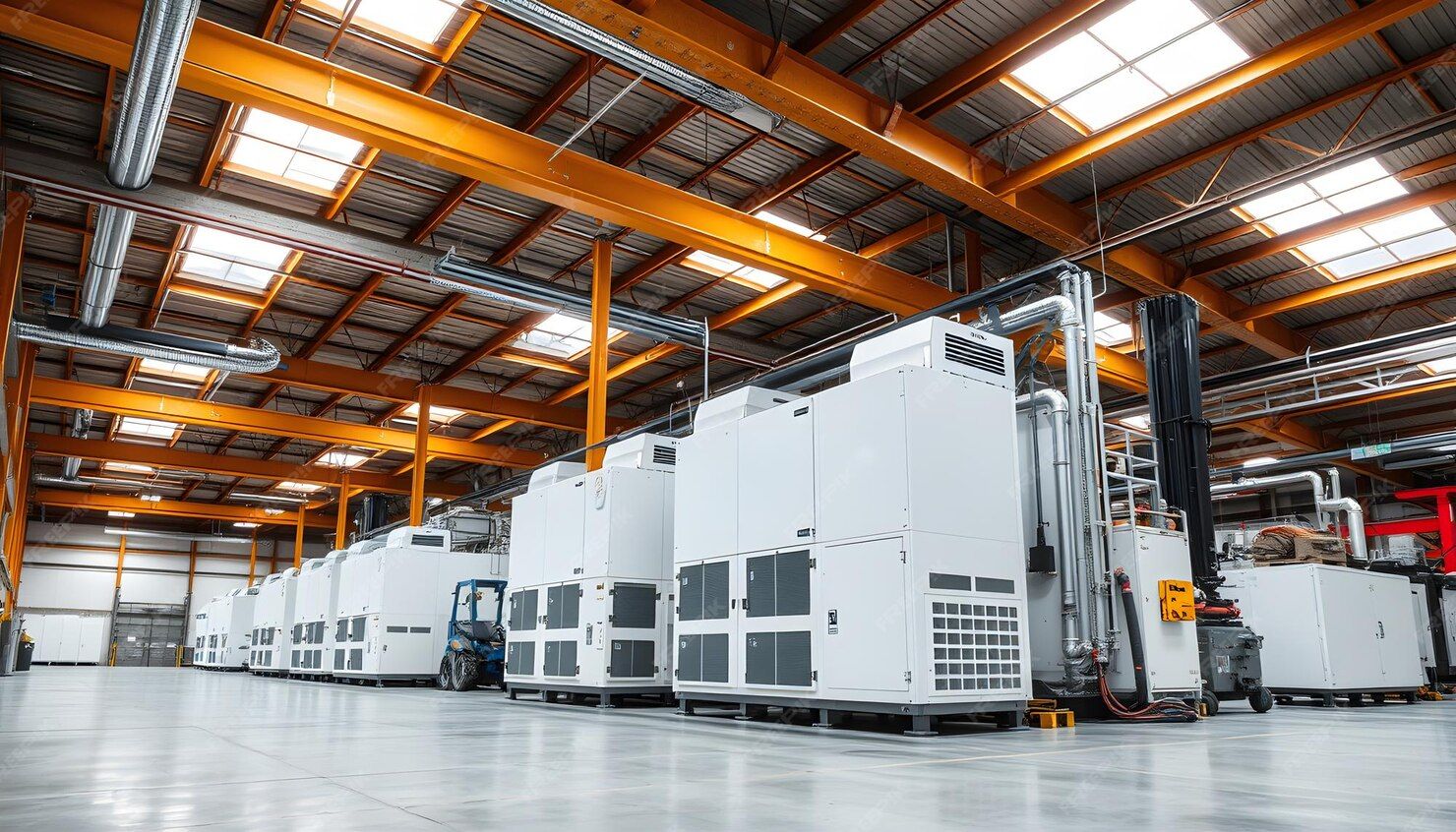
Industrial refrigeration systems are large-scale cooling technologies designed to maintain low temperatures in manufacturing, storage, and processing environments. These systems operate in industries such as food processing, pharmaceuticals, chemical manufacturing, cold storage logistics, and beverage production. Their purpose is to control temperature conditions to preserve product quality, ensure safety, and support industrial processes that depend on cooling.
Unlike household refrigeration units, industrial refrigeration systems use advanced compressors, evaporators, condensers, and refrigerants to manage large cooling loads. Facilities such as cold storage warehouses, dairy plants, and meat processing plants rely on these systems to maintain consistent temperatures over extended periods.
Industrial cooling systems have evolved significantly due to technological advancements, energy efficiency goals, and environmental regulations. Modern systems often incorporate automation, digital monitoring, and energy management tools to improve performance and reduce environmental impact.
Core Components of Industrial Refrigeration
| Component | Function | Common Technologies |
|---|---|---|
| Compressor | Circulates refrigerant through the system | Screw, reciprocating, centrifugal |
| Condenser | Removes heat from refrigerant | Air-cooled, water-cooled |
| Evaporator | Absorbs heat from the cooled space | Plate, shell-and-tube |
| Expansion Valve | Regulates refrigerant flow | Electronic or thermostatic |
| Refrigerant | Cooling medium used in system | Ammonia, CO₂, HFC alternatives |
These components work together in a continuous refrigeration cycle that transfers heat from a low-temperature environment to a higher-temperature external area.
Importance of Industrial Refrigeration Systems
Industrial refrigeration plays a crucial role in modern infrastructure and global supply chains. Many industries rely on controlled temperature environments to preserve raw materials, maintain product quality, and meet regulatory requirements.
Food Safety and Preservation
Temperature-controlled environments help prevent microbial growth and spoilage in food products. Cold chain logistics depends on industrial refrigeration systems to maintain freshness during transportation and storage. Industries such as seafood processing, frozen food production, and dairy manufacturing rely heavily on reliable refrigeration technologies.
Pharmaceutical and Healthcare Applications
Pharmaceutical manufacturing requires strict temperature control to maintain the stability of medicines, vaccines, and biological materials. Refrigeration systems ensure consistent storage conditions across laboratories, manufacturing plants, and distribution centers.
Energy Efficiency and Sustainability
Modern refrigeration systems contribute to energy optimization in industrial operations. Energy-efficient compressors, heat recovery systems, and variable-speed drives help reduce electricity consumption.
Industrial Process Cooling
Many manufacturing processes require precise temperature control. Chemical production, plastic molding, and beverage manufacturing often depend on process cooling systems to stabilize equipment and maintain product quality.
Global Cold Storage Expansion
The demand for cold storage facilities has grown significantly in recent years due to increased e-commerce grocery services and international food trade. Industrial refrigeration supports temperature-controlled warehouses that store large volumes of perishable goods.
Recent Developments in Industrial Refrigeration Technology
Industrial refrigeration technology continues to evolve with innovations aimed at sustainability, efficiency, and automation.
Natural Refrigerant Adoption
Between 2023 and 2025, industries increasingly shifted toward natural refrigerants such as ammonia (NH₃), carbon dioxide (CO₂), and hydrocarbons. These refrigerants have lower global warming potential compared to traditional synthetic refrigerants.
CO₂ transcritical systems are becoming more common in cold storage warehouses and food processing plants due to their environmental benefits and improved efficiency in colder climates.
Smart Monitoring and IoT Integration
Digital monitoring tools and Internet of Things (IoT) sensors are now widely used to track system performance, temperature levels, and energy usage in real time. Facility managers can detect faults early and maintain consistent cooling performance.
Energy Optimization Technologies
Advanced control systems introduced during 2024 allow refrigeration facilities to adjust cooling output based on demand. Variable-speed compressors and automated energy management systems reduce unnecessary power consumption.
Heat Recovery Systems
Industrial refrigeration systems generate significant waste heat. New heat recovery technologies allow facilities to reuse this energy for water heating, space heating, or industrial processes.
Cold Chain Infrastructure Growth
According to industry reports released in 2024, global cold chain infrastructure investments increased due to expanding food exports and pharmaceutical logistics. Many countries are upgrading refrigeration systems to support larger storage capacities and more efficient distribution networks.
Laws and Environmental Policies Affecting Refrigeration Systems
Industrial refrigeration technologies operate within regulatory frameworks designed to improve safety and reduce environmental impact.
Refrigerant Regulations
Many countries follow international environmental agreements that restrict high global warming potential refrigerants. Regulations encourage the transition toward natural refrigerants or lower-emission alternatives.
In India, refrigerant usage policies align with the Hydrofluorocarbon (HFC) phase-down schedule introduced under international environmental agreements.
Energy Efficiency Standards
Energy efficiency standards apply to refrigeration equipment used in industrial settings. These standards encourage manufacturers and facility operators to adopt technologies that reduce electricity consumption.
Government agencies often publish guidelines for refrigeration system efficiency, including compressor performance requirements and insulation standards for cold storage facilities.
Industrial Safety Regulations
Large refrigeration systems using ammonia must follow strict safety protocols. Industrial safety authorities require leak detection systems, ventilation standards, and emergency response procedures to protect workers and surrounding environments.
Environmental Compliance Programs
Environmental monitoring programs require industries to track refrigerant usage, emissions, and energy consumption. Compliance reporting helps ensure that refrigeration systems operate within environmental safety guidelines.
Tools and Resources for Industrial Refrigeration Knowledge
Engineers, facility managers, and industry professionals often use specialized tools and platforms to design, monitor, and manage refrigeration systems.
Refrigeration System Design Software
Engineering simulation tools allow professionals to model refrigeration cycles, analyze cooling loads, and evaluate system performance before installation.
Examples of commonly used tools include:
| Tool | Purpose |
|---|---|
| Refrigeration cycle simulators | Analyze thermodynamic performance |
| HVAC design software | Model cooling systems |
| Energy modeling tools | Evaluate system efficiency |
| Industrial monitoring platforms | Track temperature and system health |
Energy Efficiency Calculators
Energy calculators help estimate cooling loads, compressor power requirements, and operational efficiency improvements.
Technical Standards and Guidelines
Engineering organizations publish refrigeration design standards, safety guidelines, and system performance benchmarks. These resources help engineers develop safe and efficient refrigeration facilities.
Industry Publications and Research
Academic journals, engineering research papers, and industry reports provide insights into refrigeration innovations, system optimization strategies, and sustainability developments.
Training and Certification Resources
Professional training programs help technicians and engineers understand refrigeration system design, maintenance, and environmental compliance.
Common Types of Industrial Refrigeration Systems
| System Type | Typical Applications |
|---|---|
| Ammonia Refrigeration | Food processing, cold storage |
| CO₂ Refrigeration | Supermarkets, cold logistics |
| Cascade Systems | Low-temperature industrial processes |
| Glycol Cooling Systems | Process cooling and breweries |
| Absorption Refrigeration | Facilities with waste heat recovery |
These system types are selected based on cooling capacity, temperature requirements, environmental considerations, and facility size.
Frequently Asked Questions
What industries use industrial refrigeration systems?
Industries such as food processing, pharmaceuticals, chemical manufacturing, beverage production, and cold storage logistics commonly use industrial refrigeration systems to maintain temperature-controlled environments.
What refrigerants are commonly used in industrial systems?
Industrial refrigeration systems often use refrigerants such as ammonia (NH₃), carbon dioxide (CO₂), hydrocarbons, and certain synthetic refrigerants designed for large-scale cooling operations.
How do industrial refrigeration systems improve efficiency?
Efficiency improvements come from advanced compressors, automated control systems, improved insulation, and energy management technologies that reduce power consumption while maintaining cooling performance.
Why are natural refrigerants becoming more common?
Natural refrigerants have lower environmental impact and reduced global warming potential compared to many synthetic refrigerants. Environmental regulations and sustainability initiatives are encouraging their adoption.
How does refrigeration support cold chain logistics?
Cold chain logistics relies on refrigeration systems to maintain consistent temperatures during storage and transportation. This helps preserve food quality, pharmaceutical stability, and product safety across long supply chains.
Conclusion
Industrial refrigeration systems are essential technologies that support modern manufacturing, food preservation, pharmaceutical production, and global supply chains. These systems maintain precise temperature environments required for safe storage, stable chemical processes, and efficient industrial operations.
Recent technological advancements have improved refrigeration efficiency, environmental sustainability, and system monitoring capabilities. Innovations such as natural refrigerants, smart monitoring platforms, and energy optimization tools are transforming how industries manage large-scale cooling systems.
Regulatory frameworks and environmental policies continue to influence refrigeration technologies by encouraging lower-emission refrigerants and improved energy performance. As industries expand cold storage capacity and global trade increases, industrial refrigeration systems will remain a critical component of modern infrastructure.
Understanding refrigeration technologies, system components, efficiency strategies, and regulatory requirements helps industry professionals and businesses make informed decisions about cooling technologies and sustainable industrial operations.