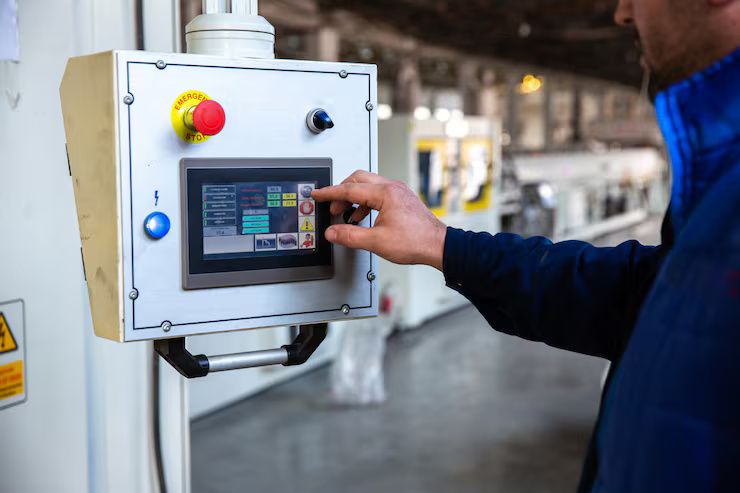
Industrial sensors are devices used to detect, measure, and report physical conditions within industrial environments. These conditions may include temperature, pressure, flow, level, vibration, proximity, or chemical composition. The data collected by sensors is sent to control systems, where it is analyzed and used to guide automated or semi-automated processes.
Industrial sensors exist because modern industrial operations depend on accuracy and consistency. Manual observation alone cannot reliably track fast-changing or complex processes. Sensors provide continuous measurements, allowing systems to respond in real time.
In industrial control processes, sensors act as the connection between the physical world and digital systems. Without them, control systems would not know what is happening inside machines, pipelines, or production lines. Their role is foundational in sectors such as manufacturing, energy, utilities, transportation, and processing industries.
Importance: Why Industrial Sensors Matter Today
Industrial sensors are increasingly important due to automation, digitalization, and data-driven decision-making. As industries adopt advanced control systems, reliable input data becomes essential.
Industrial sensors affect:
-
Operators who monitor processes
-
Engineers who design control systems
-
Maintenance teams responsible for equipment reliability
-
Organizations managing safety, efficiency, and compliance
Key problems industrial sensors help solve include:
-
Inconsistent product quality
-
Equipment failure due to undetected changes
-
Safety risks from abnormal operating conditions
-
Limited visibility into industrial processes
By delivering precise measurements, sensors support industrial automation systems and industrial control systems. They enable machines to adjust operations automatically, reducing human intervention and improving consistency.
Industrial sensors also play a critical role in industrial IoT sensor networks. When sensor data is connected to analytics platforms, organizations can identify trends, detect anomalies, and improve operational planning.
Recent Updates: Trends and Developments in the Past Year
In the past year, industrial sensor technology has continued to evolve alongside industrial automation and digital transformation.
Notable developments since 2024 include:
-
Expansion of industrial IoT sensors: Throughout 2024, more sensors were designed with built-in connectivity for integration with industrial networks.
-
Edge processing capabilities: Early 2025 saw increased adoption of sensors capable of processing data locally before transmitting it to control systems.
-
Improved environmental durability: New sensor models released in late 2024 focus on operating reliably in extreme temperatures, vibration, and corrosive environments.
-
Standardized communication protocols: Adoption of unified protocols has increased, improving compatibility across industrial automation systems.
-
Energy monitoring integration: Sensors are more frequently used to track energy consumption as part of efficiency initiatives.
These updates reflect a broader trend toward smarter, more interconnected industrial control processes.
Laws and Policies: Regulatory Influence on Industrial Sensors
Industrial sensors are subject to regulations related to safety, quality, and data integrity. The specific requirements depend on industry and region.
In many countries, industrial sensor usage aligns with standards from organizations such as International Organization for Standardization, which defines guidelines for measurement accuracy, calibration, and reliability.
In the United States, workplace safety regulations from Occupational Safety and Health Administration influence how sensors are used to monitor hazardous conditions.
Key regulatory considerations include:
-
Process safety standards: Sensors must provide accurate readings to prevent unsafe operating conditions.
-
Calibration requirements: Many regulations require sensors to be calibrated at defined intervals.
-
Data traceability: Measurement data may need to be recorded and stored for audits or inspections.
-
Environmental compliance: Sensors are often used to monitor emissions, leaks, or discharge levels.
In highly regulated industries such as pharmaceuticals, chemicals, and energy, compliance with sensor-related standards is closely linked to operational approval.
Tools and Resources: Helpful References for Industrial Sensors
Understanding and managing industrial sensors involves a range of tools and technical resources. These support configuration, monitoring, and analysis.
Common categories include:
-
Industrial control software used to process sensor data
-
Calibration reference guides for maintaining measurement accuracy
-
Simulation tools for testing control processes
-
Technical documentation libraries for sensor specifications
Examples of practical resources:
-
Industrial automation system dashboards
-
Signal analysis and visualization tools
-
Sensor selection comparison charts
-
Maintenance planning templates
The table below shows how sensor data is commonly applied in control systems:
| Sensor Type | Measured Variable | Typical Application Area |
|---|---|---|
| Temperature sensor | Heat level | Process control and safety |
| Pressure sensor | System pressure | Pipelines and hydraulic systems |
| Flow sensor | Fluid movement | Utilities and processing lines |
| Proximity sensor | Object detection | Automated machinery |
| Vibration sensor | Mechanical movement | Equipment condition monitoring |
These tools and references help ensure sensors perform their role accurately within industrial control processes.
FAQs: Common Questions About Industrial Sensors
What is the main role of an industrial sensor?
An industrial sensor measures physical conditions and sends data to a control system so processes can be monitored and adjusted.
Are industrial sensors only used in manufacturing?
No. They are also widely used in energy, utilities, transportation, and environmental monitoring.
How do industrial sensors support automation?
They provide real-time data that control systems use to make automated adjustments without manual input.
Do industrial sensors require regular maintenance?
Yes. Calibration and inspection are recognized practices to maintain accuracy and reliability.
What is the difference between sensors and controllers?
Sensors collect data, while controllers analyze that data and decide how the system should respond.
Conclusion
Industrial sensors play a central role in industrial control processes by connecting physical conditions with digital control systems. They enable accurate monitoring, support automation, and improve operational reliability.
Recent developments show a clear move toward smarter, more connected sensors that integrate easily with industrial automation systems. At the same time, laws and standards continue to shape how sensors are selected, installed, and maintained.
As industries rely more on data-driven control, industrial sensors will remain essential components in maintaining safe, efficient, and well-regulated industrial environments.