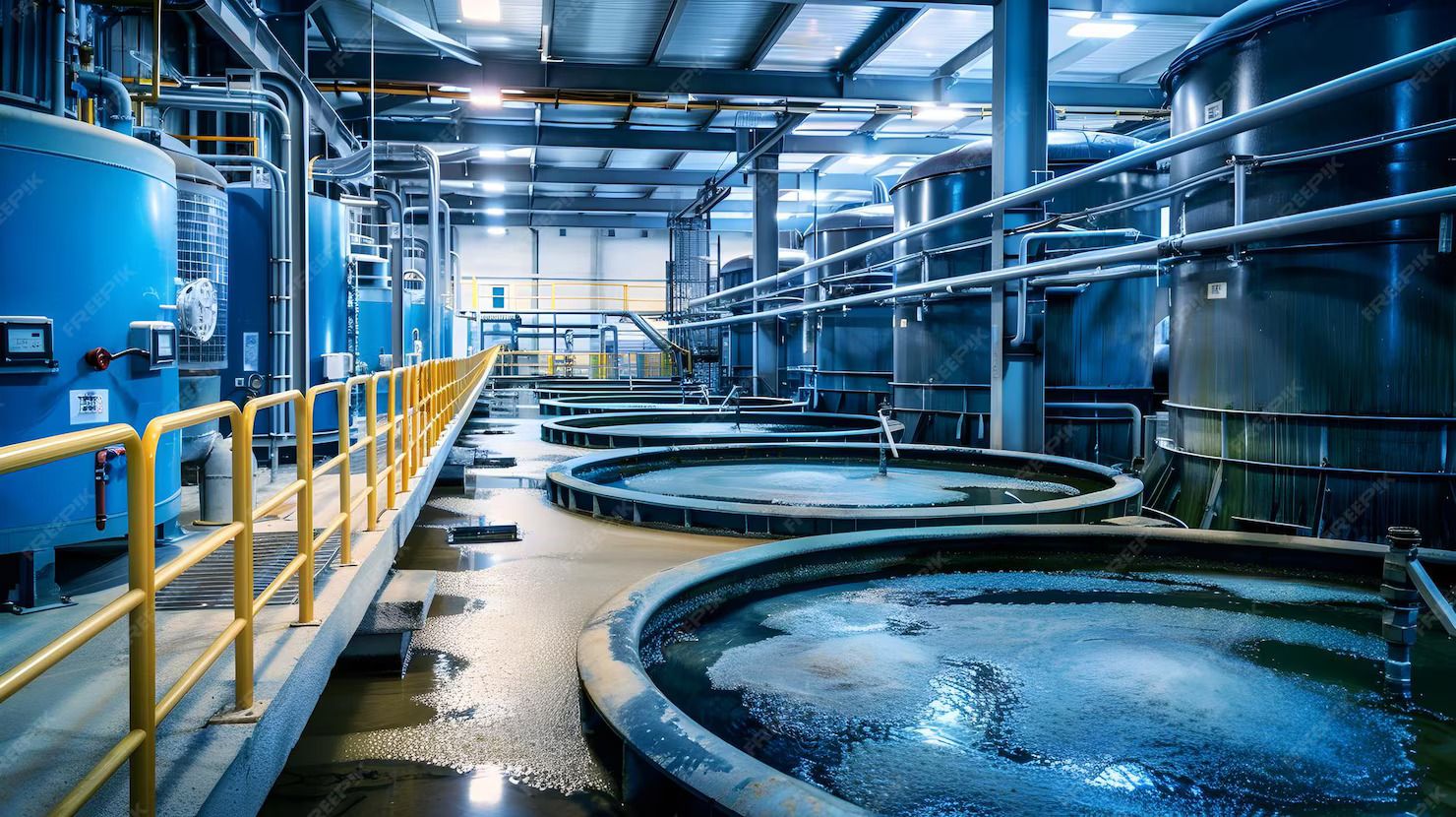
Industrial water treatment refers to the processes and technologies used to improve water quality so it can be safely used in industrial operations. Many industries rely on large volumes of water for manufacturing, cooling systems, energy generation, and cleaning procedures. Because natural water sources often contain minerals, microorganisms, and chemical contaminants, treatment is necessary before the water can be used or discharged.
Water treatment systems in industrial environments are designed to remove impurities, control corrosion, prevent scaling in equipment, and reduce environmental impact. These systems can include filtration, chemical treatment, biological processes, and advanced purification technologies.
Modern industrial sectors such as manufacturing, energy production, pharmaceuticals, food processing, and chemical production depend heavily on effective water treatment strategies. Without proper treatment, contaminated water can damage equipment, reduce production efficiency, and create environmental hazards.
Industrial water treatment exists because industrial processes interact closely with natural water resources. The goal is to ensure that water used in operations meets quality requirements while minimizing waste and pollution.
Industrial Water Treatment Importance
Environmental Protection
Industrial activities can introduce pollutants such as heavy metals, oils, chemicals, and organic waste into water systems. Effective treatment prevents these contaminants from entering rivers, lakes, and groundwater supplies.
Proper water management helps protect ecosystems, maintain biodiversity, and reduce long-term environmental damage.
Operational Efficiency
Water that contains excessive minerals or impurities can cause scaling, corrosion, and fouling in industrial equipment such as boilers, cooling towers, and pipelines. Treatment systems help maintain equipment efficiency and extend operational lifespan.
Regulatory Compliance
Many countries enforce strict environmental standards that require industries to treat wastewater before releasing it into the environment. Compliance ensures industries operate responsibly while meeting environmental protection guidelines.
Resource Conservation
Water scarcity is a growing concern in many regions. Recycling and reusing treated industrial water can reduce freshwater consumption and support sustainable resource management.
Key Industrial Water Contaminants
| Contaminant Type | Source | Potential Impact |
|---|---|---|
| Suspended solids | Manufacturing processes | Equipment clogging |
| Heavy metals | Metal processing | Environmental toxicity |
| Oils and grease | Mechanical systems | Water pollution |
| Microorganisms | Natural water sources | Biofouling and contamination |
| Dissolved salts | Groundwater sources | Scaling in pipelines |
Industrial Water Treatment Trends and Updates
Industrial water management has evolved significantly in recent years due to technological advancements and increasing environmental awareness.
Growth of Smart Water Monitoring
In 2024 and 2025, industries began adopting digital monitoring systems that track water quality parameters such as pH, turbidity, conductivity, and temperature in real time. These systems allow operators to detect problems quickly and optimize treatment performance.
Increased Focus on Water Reuse
According to environmental sustainability reports published in 2024, many manufacturing companies are implementing closed-loop water systems. These systems recycle treated water within facilities, reducing freshwater demand.
Adoption of Advanced Filtration Technologies
Membrane filtration technologies such as reverse osmosis and ultrafiltration have become more widely used during the past year. These systems can remove microscopic contaminants and dissolved salts with high efficiency.
Integration with Sustainable Manufacturing
Environmental sustainability initiatives in 2025 increasingly link industrial water treatment with energy efficiency and carbon reduction goals. Industries are exploring solutions that reduce both water consumption and environmental footprint.
Emerging Treatment Technologies
Recent innovations include:
| Technology | Function | Industrial Application |
|---|---|---|
| Reverse osmosis | Removes dissolved salts | Power plants, pharmaceuticals |
| Ultrafiltration | Removes bacteria and particles | Food processing |
| Electrocoagulation | Removes heavy metals | Mining and metallurgy |
| Biological treatment | Breaks down organic waste | Chemical manufacturing |
Industrial Water Treatment Regulations and Policies
Industrial water treatment practices are influenced by environmental regulations that ensure responsible water management.
Water Pollution Control Standards
Many countries implement strict pollution control standards requiring industries to treat wastewater before discharge. These rules define acceptable levels of pollutants such as chemical oxygen demand (COD), biological oxygen demand (BOD), and heavy metals.
Environmental Protection Programs
Government environmental agencies often monitor industrial water usage and wastewater discharge. Industries must maintain treatment facilities that comply with approved environmental guidelines.
Industrial Effluent Standards
Effluent standards determine the maximum allowable pollutant concentrations in wastewater released into natural water bodies. These standards are regularly updated to reflect evolving environmental research.
Water Conservation Initiatives
Water management policies increasingly encourage industries to adopt recycling and reuse systems. Programs launched in 2024 and 2025 promote sustainable industrial water practices to reduce pressure on freshwater resources.
Environmental Reporting Requirements
Some regulations require industries to document water usage and wastewater treatment processes. Environmental reports help regulatory authorities monitor industrial impact on water ecosystems.
Industrial Water Treatment Tools and Resources
A variety of digital tools, platforms, and analytical systems help industries manage water treatment operations effectively.
Water Quality Monitoring Platforms
Modern monitoring platforms track chemical and physical properties of water. Sensors collect real-time data that helps engineers adjust treatment processes quickly.
Process Simulation Software
Industrial engineers use simulation software to analyze treatment system performance and design optimized water treatment plants. These tools help predict system behavior before implementation.
Environmental Data Portals
Government and environmental organizations provide online portals that offer water quality data, pollution reports, and regulatory guidance.
Calculation Tools
Engineers frequently use specialized calculators to determine water treatment parameters.
| Tool Type | Purpose |
|---|---|
| Water hardness calculator | Determines mineral concentration |
| Chemical dosage calculator | Calculates treatment chemical amounts |
| Flow rate calculator | Measures water movement through systems |
| Wastewater load calculator | Estimates pollutant levels |
Educational Resources
Online courses, technical publications, and environmental research journals provide valuable insights into water treatment methods and emerging technologies.
These resources support engineers, environmental specialists, and industrial operators in maintaining efficient water management systems.
Industrial Water Treatment Frequently Asked Questions
What is the main purpose of industrial water treatment?
The primary goal is to improve water quality so it can be safely used in industrial operations and released into the environment without causing pollution.
What industries commonly use water treatment systems?
Industries such as manufacturing, energy generation, food processing, pharmaceuticals, chemical production, and mining rely heavily on water treatment technologies.
What are the most common water treatment processes?
Common processes include filtration, chemical treatment, biological treatment, reverse osmosis, and sedimentation. These methods remove contaminants and improve water quality.
Why is wastewater treatment important for industries?
Wastewater treatment prevents pollutants from entering natural water systems, protects ecosystems, and helps industries comply with environmental regulations.
How do industries monitor water quality?
Industries use sensors, laboratory testing, and digital monitoring systems to track water parameters such as pH, turbidity, dissolved solids, and microbial activity.
Industrial Water Treatment Conclusion
Industrial water treatment plays a critical role in maintaining safe, efficient, and environmentally responsible industrial operations. As industries continue to grow and demand more resources, the need for effective water management becomes increasingly important.
Advanced treatment technologies, digital monitoring systems, and sustainable water reuse strategies are shaping the future of industrial water management. These developments help industries maintain operational efficiency while protecting natural water resources.
Environmental regulations and conservation programs encourage industries to adopt responsible water treatment practices. By integrating modern technologies and data-driven management approaches, industries can reduce environmental impact and support long-term sustainability.
Understanding the principles, tools, and regulatory frameworks associated with industrial water treatment helps organizations maintain safe operations and contribute to global water conservation efforts.