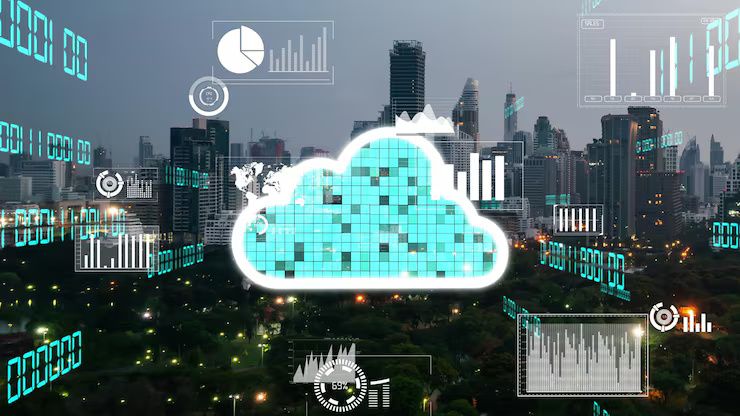
The Internet of Things (IoT) refers to connected devices that gather data from physical environments. These devices include sensors, smart meters, industrial machinery, wearable gadgets, environmental monitors, and household systems. IoT analytics on cloud platforms is the process of collecting, storing, and analyzing real-time device data using cloud computing resources.
IoT analytics exists because connected systems generate large and continuous data streams. Traditional storage and on-device computation are not sufficient for managing these volumes efficiently. Cloud platforms provide scalable storage, remote monitoring, flexible dashboards, and powerful analytics tools that help organizations understand device behavior, detect anomalies, measure performance, and improve decision-making.
In earlier industrial systems, manual monitoring and local data logging were common. Today, real-time analytics, remote dashboards, digital logs, edge computing, and predictive monitoring are possible through cloud technology. IoT analytics on the cloud integrates data visualization, device metrics, machine learning insights, centralized processing, and automated notifications.
This environment helps industries move from reactive decision-making to predictive planning. It supports sectors such as smart homes, manufacturing, energy grids, healthcare monitoring, logistics, agriculture, and smart cities. Cloud-based IoT analytics makes monitoring more reliable, collaborative, and scalable.
Importance: Why IoT Analytics on Cloud Matters Today
IoT analytics on cloud platforms has become essential as organizations rely increasingly on digital monitoring, automation, and real-time environmental awareness.
Who IoT cloud analytics affects
-
Manufacturing and industrial plants monitoring machinery and logistics
-
Smart home system developers using continuous environment sensing
-
Healthcare and wearable device companies tracking vital signals
-
Energy companies monitoring grid stability and consumption patterns
-
Smart city projects analyzing transportation, public lighting, or waste
-
Agriculture innovators measuring soil quality, irrigation, and crop health
-
Logistics and transportation networks tracking fleet location and temperature levels
Why IoT cloud analytics matters
-
Enables centralized monitoring of distributed devices
-
Supports operational efficiency and safety
-
Improves decision-making using real-time device insights
-
Detects unusual behavior and helps prevent downtime
-
Enables predictive maintenance and reduces disruption
-
Assists with environmental control, automation, and analytics
Cloud IoT analytics helps organizations understand device conditions, plan maintenance, enhance system reliability, and improve long-term asset value.
Everyday problems IoT cloud analytics can help solve
-
Limited visibility into equipment conditions
-
Manual checkups and inefficient data recording
-
Risk of unexpected system failure or downtime
-
Difficulty coordinating large device networks
-
Inconsistent reporting and delayed insights
-
High storage and computing requirements for local data systems
A simplified comparison:
| Without Cloud IoT Analytics | With Cloud IoT Analytics |
|---|---|
| Manual checks and fragmented logs | Real-time centralized dashboards |
| Limited device visibility | At-scale fleet monitoring |
| Higher operational uncertainty | Predictive system insights |
| Delayed issue detection | Early anomaly detection |
| Local storage pressure | Cloud-based scalable storage |
Cloud-based IoT analytics improves consistency, accuracy, scalability, automation, and operational transparency.
Recent Updates, Trends, and News in IoT Cloud Analytics (2024–2025)
IoT and cloud analytics have seen rapid development in recent years due to expanded sensor adoption, edge processing, and artificial intelligence.
AI-assisted monitoring and anomaly detection
2024 saw increased integration of artificial intelligence into IoT analytics platforms. Machine-learning models help detect unusual system behaviors such as overheating, vibration spikes, irregular energy usage, or environmental imbalance. These algorithms improve automated alerts and operational decision-making.
Edge computing collaboration
Many IoT solutions now incorporate hybrid edge-cloud computing. Devices perform lightweight real-time processing locally, while detailed analytics, long-term storage, and dashboards are handled in cloud environments. This approach improves speed and reduces bandwidth.
Digital twins and industrial insights
Digital twin concepts gained momentum across industrial IoT. A digital twin is a virtual representation of a machine, building, production line, or environmental zone. Cloud analytics platforms coordinate metrics to model real-time conditions and forecast outcomes.
Energy and sustainability metrics
Environmental monitoring is expanding, with IoT cloud analytics helping organizations analyze electricity usage, greenhouse gas readings, water consumption, and resource optimization. Sustainability dashboards became more common in 2024.
Smart agriculture and climate monitoring
IoT devices measure soil health, irrigation levels, temperature, humidity, and harvest conditions. Cloud analytics helps farmers improve crop planning, resource distribution, and sustainability.
Enhanced cybersecurity visibility
Cloud IoT security dashboards provide device authentication logs, data encryption alerts, network segmentation, and risk visibility. These systems protect IoT networks from unauthorized access.
The IoT landscape continues developing with predictive analytics, digital twins, sustainability dashboards, edge-cloud processing, and automated system intelligence.
Laws, Standards, and Policy Considerations (India Focus)
IoT analytics on cloud platforms intersects with data regulations, device safety standards, cybersecurity expectations, and digital governance. India has been advancing policies related to digital device ecosystems, cloud adoption, and data protection.
Data privacy and cloud governance
Organizations handling IoT data must follow responsible storage practices, encryption guidelines, and privacy expectations. Device data, even if environmental, should be routed securely, and user-related analytics must be handled transparently.
Cybersecurity frameworks
IoT cloud networks require secure communication protocols, device authentication practices, and threat-prevention standards. Public sector projects implementing smart city or environmental IoT monitoring often include cybersecurity policies for data handling.
National data protection initiatives
Digital data regulations emphasize responsible access control, data minimization, and secure retention. Policies encourage careful treatment of personal or sensitive device analytics.
Safety standards for device deployment
IoT devices used in industrial or public spaces may require testing, reliability reviews, and operational compliance. Safety standards help reduce environmental risks or device malfunction.
Smart infrastructure and public programs
Government-supported smart city and rural development programs may include IoT-based water monitoring, electricity analytics, traffic sensors, and agriculture intelligence systems. Cloud analytics helps coordinate large-scale public data in a transparent manner.
Policies reinforce data privacy, cybersecurity, reliability, transparent cloud management, and responsible IoT data usage.
Tools, Platforms, and Resources for Cloud IoT Analytics
Cloud-based IoT analytics uses a combination of dashboards, data storage platforms, monitoring tools, and device management software.
IoT cloud analytics platforms
-
Device fleet monitoring dashboards
-
Automated alert systems
-
Data visualization portals
-
Machine learning and anomaly detection tools
-
Multi-device communication channels
Cloud database and metrics management
-
Scalable data storage platforms
-
Sensor telemetry logs
-
Time-series analysis tools
-
Batch and real-time data aggregation
-
System health reporting
Edge and hybrid frameworks
-
Edge processing nodes for real-time control
-
Hybrid cloud connectivity protocols
-
Distributed analytics environments
-
Firmware monitoring consoles
Collaboration and learning resources
-
Online IoT analytics documentation and tutorials
-
Cloud architecture learning libraries
-
Industry benchmark dashboards
-
Predictive analytics and sustainability calculators
-
Security evaluation checklists for IoT networks
These tools help improve fleet visibility, system health tracking, predictive analytics, workflow scaling, and continuous device monitoring.
FAQs
What is IoT analytics on cloud platforms?
It is the process of collecting, analyzing, and visualizing device data using cloud computing resources. Cloud analytics enables predictive monitoring and centralized dashboards for connected systems.
Why is cloud useful for IoT analytics?
Cloud environments offer scalable storage, secure transmission, reliable uptime, and central dashboards for a large number of device signals. Local systems cannot always manage large or continuous telemetry streams.
Is IoT cloud analytics only for industrial setups?
No. It supports smart homes, healthcare monitoring, agriculture systems, logistics networks, and environmental projects. Any device that generates regular data may benefit from cloud analytics.
How do IoT cloud dashboards help?
They show real-time metrics, device health indicators, event alerts, and long-term analytics trends. Dashboards assist operators in early decision-making and predictive planning.
Is IoT analytics related to cybersecurity?
Yes. Devices, cloud data, and communication channels require secure access controls, encryption, risk monitoring, and authenticated traffic.
Conclusion
IoT analytics on cloud environments enables scalable monitoring, real-time data processing, predictive maintenance, security awareness, and environmental insight. It supports manufacturing, smart agriculture, city infrastructure, logistics, energy systems, and healthcare monitoring.
Recent developments highlight AI-driven analytics, edge-cloud collaboration, sustainability dashboards, digital twins, and automated anomaly detection. Policy frameworks emphasize responsible data handling, cybersecurity, cloud governance, and device reliability.
IoT cloud analytics improves modern operational efficiency by transforming device metrics into actionable insights. As connected systems continue expanding, cloud-based analytics will remain central to system visibility, predictive planning, smart automation, and digital transformation.