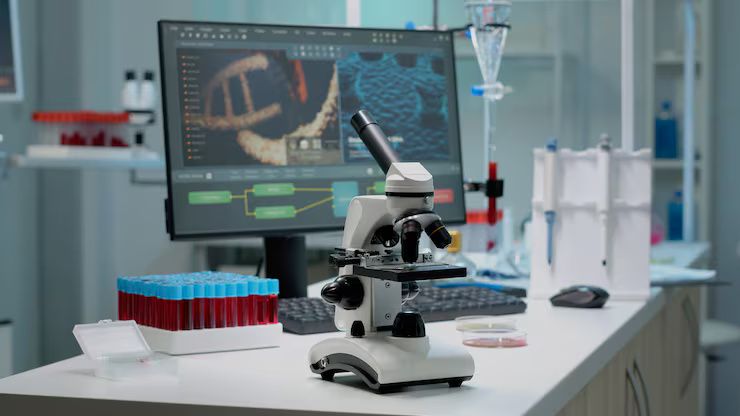
Laboratory machinery includes instruments and devices designed to perform specific scientific tasks such as mixing, heating, cooling, measuring, separating, or observing samples. These machines are essential because many scientific processes cannot be carried out reliably by manual methods alone. Controlled conditions, precise measurements, and repeatable procedures are necessary for credible scientific outcomes.
The development of laboratory machinery is closely linked to advances in chemistry, biology, physics, and engineering. As research questions became more complex, the need for specialized instruments increased. Modern laboratories now rely on a combination of mechanical, electronic, and digital systems to support experimentation and analysis. From basic benchtop tools to advanced analytical instruments, laboratory machinery forms the backbone of experimental science and applied research.
Importance: Why Laboratory Machinery Matters Today
Laboratory machinery plays a critical role in today’s world because scientific evidence underpins decision-making in healthcare, environmental protection, food safety, and industrial innovation. Accurate laboratory equipment supports reliable data generation, which is essential for understanding diseases, developing materials, and monitoring environmental changes.
This topic affects a wide audience, including researchers, healthcare professionals, educators, quality control teams, and policy makers. Laboratory machinery helps solve practical problems such as identifying pathogens, ensuring product quality, and validating research findings. As global challenges like public health preparedness and climate monitoring grow more complex, dependable laboratory equipment becomes increasingly important.
Key reasons laboratory machinery matters include:
-
Supporting accurate medical testing and diagnostics
-
Enabling research and development in pharmaceuticals and biotechnology
-
Ensuring quality and safety in food, water, and materials testing
-
Providing data for regulatory compliance and scientific validation
Without reliable laboratory machinery, many modern scientific and industrial processes would lack consistency and credibility.
Recent Updates: Trends and Developments in the Past Year
During 2024 and early 2025, several notable trends influenced laboratory machinery design and usage. One major development was the wider adoption of automated laboratory systems. Automation helps reduce manual handling, minimize errors, and improve throughput, especially in high-volume testing environments.
Another trend observed in late 2024 was the increased integration of digital interfaces and data connectivity. Many laboratory instruments now support direct data transfer to laboratory information management systems, improving traceability and record accuracy. This shift aligns with broader digital transformation initiatives across scientific research facilities.
Sustainability also became a focus area. Updated equipment designs introduced energy-efficient components and reduced reagent consumption. In mid-2024, several industry standards highlighted the importance of environmentally responsible laboratory practices, influencing how new machinery is developed and evaluated.
Laws and Policies: Regulatory Considerations for Laboratory Machinery
Laboratory machinery is subject to various regulations and standards to ensure safety, accuracy, and reliability. These rules vary by country but generally address equipment performance, calibration, and operator safety. Regulatory frameworks often require laboratories to use validated instruments and follow documented procedures.
Common policy areas affecting laboratory machinery include:
-
Occupational safety regulations for electrical and mechanical equipment
-
Quality management standards for testing and calibration laboratories
-
Environmental guidelines related to waste handling and emissions
Government-supported research programs and accreditation schemes also influence laboratory machinery usage. By promoting standardized testing methods and compliance with recognized benchmarks, these policies help ensure that laboratory results are consistent and scientifically sound.
Tools and Resources: Helpful References for Laboratory Equipment Use
A variety of tools and resources support effective use and understanding of laboratory machinery. These references focus on education, accuracy, and compliance rather than commercial promotion.
Helpful tools and resources include:
-
Equipment manuals and technical specification documents
-
Calibration schedules and validation checklists
-
Laboratory safety guidelines and reference handbooks
-
Data management templates for recording test results
-
Online scientific databases and technical knowledge portals
Example Table: Common Laboratory Machinery and Their Functions
| Equipment Type | Primary Function | Typical Application |
|---|---|---|
| Centrifuge | Separates components by density | Clinical and research labs |
| Spectrophotometer | Measures light absorption | Chemical and biological analysis |
| Incubator | Maintains controlled temperature | Cell culture studies |
| Autoclave | Sterilizes tools and media | Microbiology laboratories |
| Analytical Balance | Measures precise mass | Quality control testing |
These tools and references help laboratories maintain accuracy, repeatability, and safety in daily operations.
Equipment Categories: Understanding Types of Laboratory Machinery
Laboratory machinery can be grouped into categories based on function. Understanding these categories helps clarify how different instruments contribute to scientific workflows.
Sample Preparation Equipment
These machines prepare samples for analysis by mixing, grinding, or separating components. Examples include mixers, shakers, and homogenizers. Proper sample preparation improves test reliability.
Analytical Instruments
Analytical machinery measures chemical, physical, or biological properties. Instruments such as chromatographs and spectrometers provide detailed data used in research and quality assessment.
Environmental Control Equipment
This category includes incubators, ovens, and climate chambers. These machines maintain specific temperature, humidity, or atmospheric conditions required for experiments.
Safety and Sterilization Equipment
Autoclaves, biosafety cabinets, and fume hoods help protect users and samples. They reduce contamination risks and support safe laboratory practices.
Data Snapshot: Shifts in Laboratory Machinery Usage
| Feature Focus | Earlier Emphasis | Current Trend |
|---|---|---|
| Manual Operation | Common | Decreasing |
| Automated Systems | Limited | Increasing |
| Digital Data Capture | Moderate | High |
| Energy Efficiency | Emerging | Strong focus |
This overview highlights how laboratories are adapting to efficiency, safety, and data integrity requirements.
FAQs: Common Questions About Laboratory Machinery
What is laboratory machinery used for?
Laboratory machinery is used to prepare, analyze, and test samples under controlled conditions, supporting research, diagnostics, and quality evaluation.
Why is calibration important for laboratory equipment?
Calibration ensures that instruments provide accurate and reliable measurements, which is essential for valid test results and regulatory compliance.
How does automation affect laboratory work?
Automation improves consistency, reduces manual errors, and increases processing capacity, especially in high-throughput laboratories.
Are laboratory machines standardized across all labs?
While many instruments follow international standards, specific equipment choices depend on the laboratory’s field, regulatory requirements, and testing scope.
How do safety regulations influence laboratory machinery?
Safety regulations guide equipment design and usage to reduce risks such as electrical hazards, exposure to harmful substances, and contamination.
Conclusion
Laboratory machinery is a foundational element of modern science and applied research. By enabling precise measurement, controlled experimentation, and reliable data collection, laboratory equipment supports critical work in healthcare, environmental monitoring, and industrial development. Recent trends emphasize automation, digital integration, and sustainability, reflecting evolving scientific and regulatory expectations.
Understanding equipment types and functions helps users operate laboratories more effectively and responsibly. With appropriate tools, documentation, and adherence to standards, laboratory machinery continues to support accurate, repeatable, and meaningful scientific outcomes across many fields.