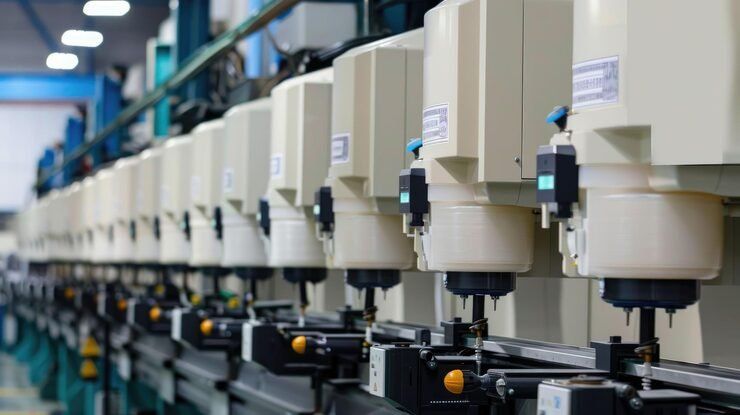
Liquid dispensing modules are engineered systems designed to deliver controlled quantities of liquids, fluids, chemicals, adhesives, coatings, lubricants, inks, reagents, and other materials. They are widely used in automated manufacturing, electronics assembly, medical-device production, pharmaceutical processing, chemical handling, automotive manufacturing, packaging, and laboratory automation.
A liquid dispensing module can combine pumps, valves, tubing, reservoirs, nozzles, sensors, pressure controls, and electronic control systems into an integrated fluid-delivery unit. Depending on the application, the module can provide continuous flow, intermittent dosing, metered dispensing, micro-volume delivery, or automated multi-point application.
Modern liquid dispensing technologies emphasize repeatability, flow control, contamination management, automation, and compatibility with different fluid characteristics.
What Are Liquid Dispensing Modules?
A liquid dispensing module is a mechanical, pneumatic, hydraulic, or electronically controlled assembly designed to deliver a predetermined amount of liquid to a specific location.
The module can be integrated into:
Automated production lines
Robotic systems
Filling machines
Laboratory automation platforms
Electronics assembly equipment
Medical manufacturing systems
Pharmaceutical equipment
Packaging machinery
Chemical-processing equipment
Depending on the application, dispensing may occur through a nozzle, needle, spray head, valve outlet, manifold, or other delivery interface.
How Liquid Dispensing Modules Work
The basic operation involves storing, controlling, transporting, and delivering a fluid.
1. Fluid Storage
The liquid is stored in a reservoir, cartridge, tank, syringe, bottle, or centralized supply system.
The storage arrangement depends on fluid volume, viscosity, chemical compatibility, and production requirements.
2. Fluid Pressurization
A pump, pneumatic pressure source, gravity system, or other mechanism creates the force needed to move the liquid through the dispensing pathway.
3. Flow Regulation
Valves, regulators, pumps, and electronic controls regulate the amount of fluid delivered.
Flow can be controlled according to pressure, time, pump speed, valve opening, or measured volume.
4. Dispensing
The liquid exits through a nozzle, needle, dispensing tip, spray head, or other outlet.
The delivery pattern can range from a single drop to a continuous bead or spray.
5. Monitoring and Feedback
Sensors can monitor pressure, flow, temperature, reservoir level, or other operating conditions.
Automated systems can use this information to maintain consistent dispensing performance.
Major Liquid Dispensing Technologies
Time-Pressure Dispensing
Time-pressure systems use controlled pneumatic pressure to push liquid through a dispensing tip for a defined period.
They are commonly used for adhesives, coatings, solder pastes, lubricants, and other materials.
Positive Displacement Dispensing
Positive displacement systems mechanically measure and move a defined volume of liquid.
Examples include:
Piston pumps
Syringe pumps
Gear pumps
Peristaltic pumps
Progressive cavity pumps
These technologies can provide controlled fluid delivery for applications requiring repeatable dosing.
Jet Dispensing
Jet dispensing systems eject small volumes of liquid without requiring the dispensing nozzle to contact the target surface.
They can support high-speed application and precise deposition.
Valve-Based Dispensing
Valves regulate fluid delivery through controlled opening and closing.
Common configurations include:
Needle valves
Pinch valves
Diaphragm valves
Solenoid valves
Piston valves
Spray valves
Spray Dispensing
Spray systems atomize or distribute liquids over a surface.
They can be used for coatings, lubricants, adhesives, cleaning materials, and other process fluids.
Gravimetric Dispensing
Gravimetric systems use weight measurements to determine the amount of liquid delivered.
They can be useful when high dosing accuracy is required.
Liquid Dispensing Module Types
| Module Type | Main Technology | Typical Applications |
|---|---|---|
| Pump-Based Module | Mechanical pumping | Industrial fluid delivery |
| Syringe Module | Controlled displacement | Laboratory and medical applications |
| Valve Module | Flow switching | Automated manufacturing |
| Jet Module | High-speed droplet ejection | Electronics and precision assembly |
| Spray Module | Atomized delivery | Coating and lubrication |
| Peristaltic Module | Tubing-based pumping | Sensitive and controlled fluids |
| Multi-Channel Module | Multiple outlets | High-throughput production |
| Micro-Dispensing Module | Very small-volume delivery | Electronics and medical manufacturing |
Key Components of Liquid Dispensing Modules
Pumps
Pumps provide the pressure or mechanical movement required to transport fluid.
Pump selection depends on viscosity, flow rate, pressure, chemical compatibility, and required dosing accuracy.
Dispensing Valves
Valves control the timing and volume of fluid delivery.
Fast-response valves can support automated high-cycle production.
Reservoirs and Cartridges
Reservoirs store the fluid before dispensing.
Cartridge-based systems can simplify material handling and fluid replacement.
Tubing and Fluid Lines
Tubing transports fluid between the reservoir, pump, valve, and dispensing head.
Material compatibility is important when handling aggressive chemicals or sensitive fluids.
Nozzles and Needles
Nozzles and needles determine the final delivery geometry.
Different outlet diameters and shapes can produce different flow patterns.
Sensors
Sensors can monitor:
Pressure
Flow
Temperature
Fluid level
Position
Equipment status
Controllers
Electronic controllers coordinate pumps, valves, sensors, actuators, and other system components.
Programmable control allows dispensing parameters to be adjusted for different production conditions.
Manufacturing Processes for Liquid Dispensing Modules
Manufacturing processes depend on the module design and intended application.
Engineering and Product Design
The design process begins with analysis of:
Fluid viscosity
Flow rate
Dispensing volume
Pressure
Temperature
Chemical compatibility
Required accuracy
Cycle frequency
Installation requirements
Precision Machining
Metal components such as valve bodies, pump components, manifolds, and mounting structures can be produced using CNC machining.
Precision machining helps maintain controlled internal passages and mating surfaces.
Injection Molding
Polymer components such as fluid housings, connectors, tubing fittings, and certain valve components can be manufactured using injection molding.
Microfabrication
Miniaturized dispensing systems may use precision microfabrication techniques to produce small channels, valves, nozzles, and fluidic structures.
Surface Treatment
Internal fluid-contact surfaces may require polishing, coating, passivation, or other treatments depending on the fluid and application.
Assembly
Assembly can include:
Pumps
Valves
Tubing
Reservoirs
Sensors
Nozzles
Electrical connectors
Control components
Testing and Calibration
Finished modules can undergo leak testing, flow testing, pressure testing, dimensional inspection, electrical testing, and dispensing accuracy verification.
Materials Used in Liquid Dispensing Modules
Material selection depends heavily on the fluid being handled.
Common materials include:
Stainless steel
Aluminum
Engineering plastics
PTFE
PEEK
Silicone
EPDM
Fluoropolymers
Ceramic materials
Stainless steel can be used for durable fluid-contact components, while fluoropolymers and specialized plastics can provide compatibility with selected chemicals.
Factors Affecting Dispensing Performance
Fluid Viscosity
High-viscosity fluids generally require greater pressure or specialized pumping mechanisms.
Low-viscosity fluids may require tighter flow control to prevent unwanted dripping or oversupply.
Dispensing Volume
The required volume determines the appropriate pump, valve, nozzle, and control strategy.
Applications can range from large-volume liquid transfer to extremely small-volume dispensing.
Pressure
Pressure influences flow rate and dispensing consistency.
Excessive pressure can produce unwanted splashing, dripping, or material deformation.
Temperature
Temperature can influence viscosity and therefore dispensing behavior.
Some systems incorporate fluid or nozzle temperature control.
Nozzle Geometry
Outlet diameter, length, internal geometry, and material can affect flow characteristics and deposition quality.
Fluid Compatibility
All wetted components must be compatible with the chemical and physical properties of the fluid.
Automation and Control
Liquid dispensing modules are increasingly integrated with industrial automation systems.
A typical automated system may include:
PLC controllers
Servo motors
Pneumatic controls
Vision systems
Pressure sensors
Flow sensors
Temperature sensors
Robotic positioning
Human-machine interfaces
Machine vision can inspect deposited material and identify deviations in bead size, position, or coverage.
Robotic dispensing systems can also move dispensing heads across complex surfaces according to programmed paths.
Industrial Applications of Liquid Dispensing Modules
Electronics Manufacturing
Dispensing modules are used for:
Adhesive application
Thermal interface materials
Encapsulation
Underfill
Solder-related materials
Protective coatings
Precision dispensing is particularly important when components are small and material quantities must be tightly controlled.
Automotive Manufacturing
Liquid dispensing systems can apply adhesives, sealants, lubricants, coatings, and other process fluids.
Applications can include battery assembly, electronics, sensors, interior components, and structural bonding.
Medical Device Manufacturing
Dispensing modules can apply adhesives, coatings, lubricants, reagents, and other controlled materials during medical-device manufacturing.
Pharmaceutical Manufacturing
Automated dispensing technologies can support controlled liquid handling, filling, dosing, and laboratory processes.
Chemical Processing
Industrial dispensing modules can deliver chemicals, catalysts, additives, lubricants, and process fluids.
Packaging
Liquid dispensing systems can apply adhesives, coatings, inks, sealants, and other materials to packaging components.
Laboratory Automation
Small-volume dispensing modules are used in automated laboratory equipment for controlled reagent and sample handling.
Liquid Dispensing Modules vs Conventional Fluid Systems
| Feature | Liquid Dispensing Module | Conventional Fluid System |
|---|---|---|
| Volume Control | Highly controlled | Depends on system |
| Automation | High | Variable |
| Integration | Modular | Often system-specific |
| Precision | Suitable for controlled dosing | Application-dependent |
| Sensors | Frequently integrated | May be separate |
| Multi-Channel Capability | Available | Depends on configuration |
| Applications | Precision manufacturing | General fluid handling |
Global Liquid Dispensing Module Manufacturers and Suppliers
The global liquid-dispensing market includes companies specializing in precision fluid handling, automated dispensing, pumps, valves, laboratory automation, electronics manufacturing, and industrial process equipment.
Examples include:
Nordson
Musashi Engineering
Fisnar
Graco
DOPAG
Suppliers may provide complete dispensing modules, pumps, valves, cartridges, nozzles, controllers, sensors, tubing, manifolds, and automation interfaces.
When evaluating suppliers, manufacturers generally consider fluid compatibility, dispensing accuracy, operating pressure, flow range, cycle rate, automation compatibility, cleaning requirements, and maintenance needs.
How to Select a Liquid Dispensing Module
Selection should begin with the characteristics of the fluid and the required dispensing process.
Important factors include:
Fluid viscosity
Required dispensing volume
Flow rate
Operating pressure
Fluid temperature
Chemical compatibility
Required accuracy
Dispensing frequency
Nozzle size
Automation requirements
Cleaning requirements
Available installation space
The module should be selected according to the actual fluid and process rather than only its nominal flow capacity.
Maintenance of Liquid Dispensing Modules
Regular maintenance helps maintain dispensing consistency.
Typical activities include checking:
Pumps
Valves
Nozzles
Tubing
Seals
Filters
Pressure regulators
Sensors
Fluid reservoirs
Electrical connections
Fluid residues can accumulate around nozzles and valves, making appropriate cleaning procedures important.
Calibration and performance checks may also be required when dispensing accuracy is critical.
Frequently Asked Questions
1. What are liquid dispensing modules?
Liquid dispensing modules are integrated systems designed to deliver controlled quantities of liquids or other flowable materials using pumps, valves, pressure systems, nozzles, sensors, and controllers.
2. What liquids can dispensing modules handle?
Depending on their construction, modules can handle adhesives, lubricants, coatings, chemicals, inks, pharmaceutical liquids, laboratory reagents, sealants, and other process fluids.
3. What affects liquid dispensing accuracy?
Fluid viscosity, pressure, temperature, pump characteristics, valve response, nozzle geometry, dispensing volume, and control-system performance can all influence accuracy.
4. Where are liquid dispensing modules used?
They are used in electronics, automotive manufacturing, medical-device production, pharmaceuticals, chemicals, packaging, laboratory automation, and other industrial processes.
5. What companies manufacture liquid dispensing equipment?
Companies active in relevant dispensing and fluid-handling technologies include Nordson, Musashi Engineering, Fisnar, Graco, and DOPAG, along with many specialized regional manufacturers and suppliers.
Conclusion
Liquid dispensing modules provide controlled fluid delivery for automated manufacturing and precision process applications. By integrating pumps, valves, reservoirs, tubing, nozzles, sensors, and electronic controllers, these modules can deliver liquids with controlled volume, flow rate, timing, and placement.
Technologies such as positive displacement pumping, time-pressure dispensing, jet dispensing, valve-based delivery, spray application, and micro-dispensing allow systems to accommodate a wide range of fluid properties and production requirements.
Manufacturing involves precision machining, molding, microfabrication, surface treatment, assembly, calibration, and functional testing. Material selection is particularly important because fluid-contact components must remain compatible with the chemicals and operating conditions involved.
As automated manufacturing continues to require greater process consistency and material control, liquid dispensing modules remain important components in electronics, automotive, medical, pharmaceutical, chemical, packaging, and laboratory applications.