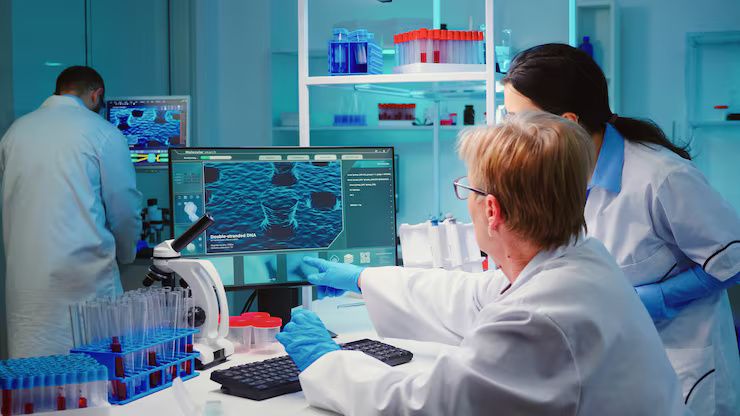
Next-generation sequencing (NGS) is a modern laboratory technology used to determine the order of nucleotides in DNA or RNA molecules. This process allows scientists to analyze genetic material quickly and in large quantities. Next-generation sequencing has become an important tool in genomics research because it enables detailed study of genetic information across entire genomes.
Earlier DNA sequencing methods, such as Sanger sequencing, allowed researchers to examine relatively small sections of DNA at a time. While these methods were useful for early genetic discoveries, they required significant time and laboratory effort when studying large genomes. The development of next-generation sequencing technology introduced automated systems capable of processing millions of DNA fragments simultaneously.
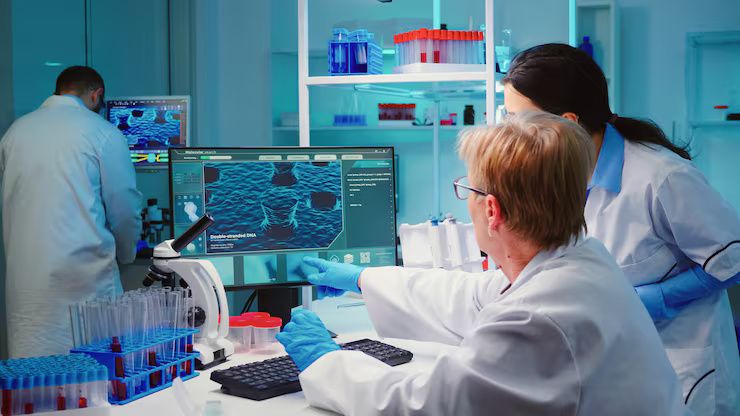
NGS platforms combine advanced chemistry, imaging systems, and computer-based analysis to generate large volumes of genetic data. Researchers can examine DNA from humans, plants, animals, microorganisms, and environmental samples. This ability has expanded the scope of genetic research and enabled scientists to investigate biological systems in greater detail.
Today, next-generation sequencing is widely used in genomics laboratories, medical research centers, agricultural studies, and environmental science projects. The technology continues to influence how scientists explore genetic variation and biological processes.
Importance
The development of next-generation sequencing has significantly changed the scale and speed of genetic research. Scientists can now analyze large genomes, compare genetic variations across populations, and study the genetic basis of biological traits.
NGS supports several key research areas within the field of genomics:
-
Genome analysis: Researchers can examine the entire DNA sequence of an organism to understand genetic structure and variation.
-
Disease research: Scientists study genetic mutations and variations that may influence health conditions.
-
Microbial research: Sequencing technologies help identify microorganisms in environmental samples and biological systems.
-
Evolutionary studies: Genetic comparisons between species provide insights into evolutionary relationships.
The ability to generate extensive genetic datasets has also improved collaboration among research institutions. Large genomic databases allow scientists to share and analyze genetic information collectively.
In addition, NGS has influenced the development of personalized approaches to medicine. By examining genetic variations, researchers can better understand how individuals respond differently to environmental factors and medical treatments.
Recent Updates
Advancements in next-generation sequencing technology continue to expand its capabilities. Researchers and technology developers are working to improve sequencing accuracy, data processing speed, and analytical tools.
Long-Read Sequencing Developments
New sequencing platforms are capable of reading longer sections of DNA in a single run. Long-read sequencing helps scientists study complex regions of the genome that were previously difficult to analyze.
These methods improve understanding of structural variations and repetitive DNA sequences.
Improved Data Analysis Tools
The growth of sequencing data has increased the importance of bioinformatics software. Advanced algorithms help interpret sequencing results and organize large genomic datasets.
Machine learning techniques are also being explored to identify patterns within genetic information.
Expanded Environmental Genomics
Next-generation sequencing is increasingly used to study ecosystems. Environmental DNA sampling allows researchers to analyze genetic material collected from soil, water, or air samples.
This approach supports biodiversity research and environmental monitoring.
Integration with Multi-Omics Research
NGS is now frequently combined with other molecular analysis methods such as transcriptomics and proteomics. These integrated approaches allow scientists to study gene activity and protein production alongside DNA sequences.
Such interdisciplinary research provides a broader understanding of biological systems.
Laws or Policies
Genomic research involving next-generation sequencing is influenced by regulatory frameworks related to research ethics, privacy protection, and biological data management.
Research Ethics Guidelines
Many countries require research involving human genetic data to follow ethical guidelines. Institutional review boards or ethics committees evaluate research proposals to ensure participant protection and responsible data handling.
These guidelines often address informed consent, data confidentiality, and responsible research practices.
Genetic Data Protection
Genetic data contains sensitive biological information. Regulations in several regions address how genomic data can be stored, analyzed, and shared.
For example, privacy regulations in some jurisdictions require organizations to protect personal genetic information and limit unauthorized access.
Laboratory Standards
Laboratories performing sequencing research typically follow quality management frameworks to maintain reliability in laboratory procedures. These standards address equipment calibration, sample handling, and data documentation.
International Collaboration Policies
Genomics research frequently involves collaboration between institutions in different countries. International guidelines help ensure ethical sharing of genetic resources and research findings.
These frameworks help maintain transparency and responsible use of genetic information in scientific research.
Tools and Resources
Next-generation sequencing research relies on specialized laboratory equipment and computational resources. These tools support DNA preparation, sequencing operations, and analysis of genetic data.
Common tools used in sequencing research include:
-
DNA library preparation kits: Used to prepare genetic samples for sequencing.
-
Sequencing platforms: Automated instruments that read DNA fragments and generate sequence data.
-
Bioinformatics software: Programs that analyze genetic sequences and identify variations.
-
Genomic databases: Online repositories where researchers store and access DNA sequence data.
-
Data visualization tools: Software that displays genomic information for interpretation and analysis.
Key Components of an NGS Workflow
The next-generation sequencing process typically follows a structured workflow involving multiple steps. The table below summarizes these stages.
| Workflow Stage | Description | Purpose |
|---|---|---|
| Sample Collection | Biological samples such as blood, tissue, or environmental material are obtained | Source of genetic material |
| DNA Extraction | Genetic material is isolated from the sample | Preparation for analysis |
| Library Preparation | DNA fragments are prepared with adapters for sequencing | Enables sequencing reactions |
| Sequencing Run | Sequencing machine reads DNA fragments | Generates raw sequence data |
| Data Analysis | Bioinformatics tools analyze genetic sequences | Identifies genetic variations |
Each stage contributes to generating reliable genetic information for research and analysis.
FAQs
What is next-generation sequencing?
Next-generation sequencing is a laboratory technology used to determine the sequence of DNA or RNA molecules. It allows scientists to analyze large volumes of genetic information simultaneously.
How does next-generation sequencing technology work?
Next-generation sequencing technology breaks DNA into smaller fragments and reads the sequence of nucleotides in each fragment. Computer software then reconstructs the complete genetic sequence by assembling these fragments.
What are the applications of next-generation sequencing in genomics research?
Next-generation sequencing supports many research areas, including genome analysis, disease research, microbial identification, evolutionary biology, and environmental genomics studies.
How is next-generation sequencing different from traditional DNA sequencing?
Traditional DNA sequencing methods analyze one DNA fragment at a time, while next-generation sequencing can process millions of fragments simultaneously. This approach allows faster and more extensive genomic analysis.
What tools are required for next-generation sequencing?
Next-generation sequencing typically requires DNA extraction tools, library preparation systems, sequencing machines, and bioinformatics software for analyzing genetic data.
Conclusion
Next-generation sequencing has transformed the field of genomics by allowing researchers to analyze genetic material at large scale and high resolution. The technology combines advanced laboratory techniques with computational analysis to generate detailed genomic data.
Applications of next-generation sequencing extend across many research fields, including medicine, agriculture, environmental science, and evolutionary biology. Advances in sequencing platforms and bioinformatics tools continue to expand its capabilities.
Understanding the technology, workflow, and research applications of next-generation sequencing provides insight into how scientists explore genetic information and biological systems.