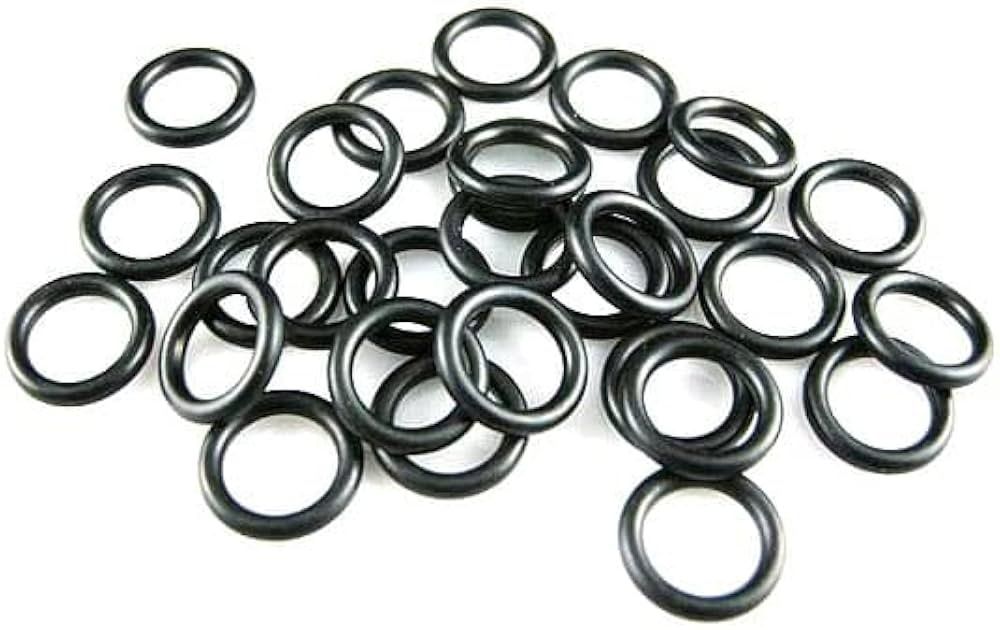
O rings are circular mechanical seals designed to prevent the leakage of fluids or gases between two joined surfaces. Typically made from elastomeric materials, these small components create a tight barrier when compressed inside a groove. Despite their simple appearance, O rings play a critical role in countless industrial, commercial, and mechanical systems.
The concept behind industrial O rings is straightforward: when pressure is applied, the ring deforms slightly to fill microscopic gaps between mating parts. This deformation creates a reliable seal that supports both static and dynamic applications. Over time, O rings became widely adopted because they are compact, adaptable, and compatible with a broad range of operating environments.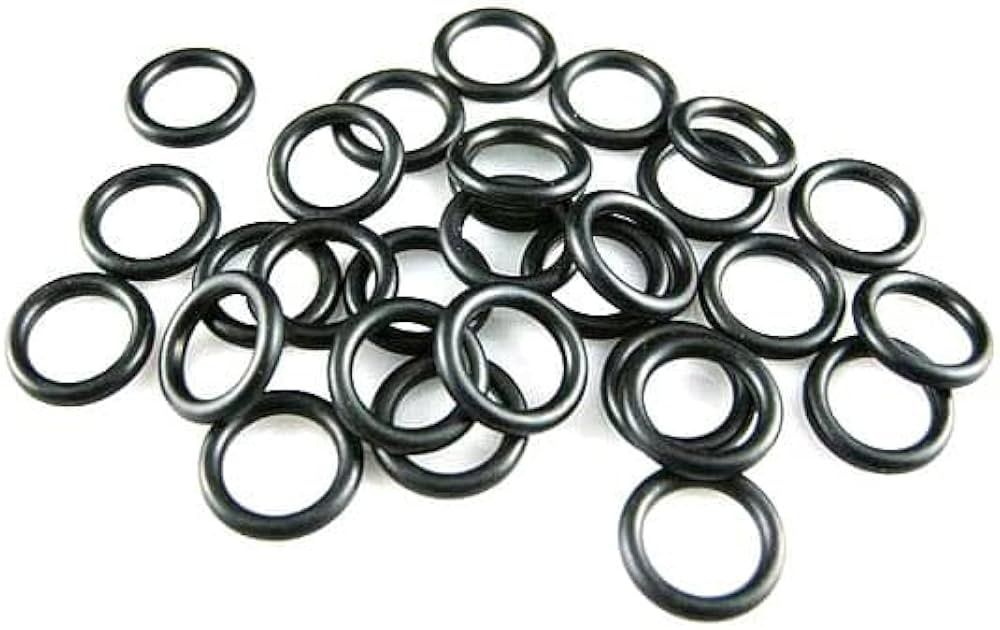
Today, O rings are found in hydraulic systems, automotive assemblies, manufacturing equipment, plumbing installations, and many other applications where consistent sealing is required.
Importance: Why O Ring Seals Matter Across Industries
O rings matter because sealing performance directly affects system reliability, safety, and efficiency. A properly selected O ring prevents leakage, protects internal components, and supports stable operation across varying pressures and temperatures.
Their importance extends to multiple stakeholders, including maintenance teams, design engineers, production operators, and quality managers.
Key reasons O ring seals are essential include:
-
Leak prevention: Effective sealing protects equipment from fluid or gas loss.
-
Equipment protection: Seals help prevent contaminants from entering sensitive components.
-
Operational stability: Reliable sealing supports consistent system performance.
-
Compact design: O rings fit into small spaces without complex hardware.
-
Material versatility: Different O ring materials support diverse environments.
Industries such as manufacturing, automotive, energy, chemical processing, and construction rely on hydraulic O rings and related sealing components to maintain controlled operations.
Recent Updates: Evolving Trends in O Ring Materials and Applications
Recent developments in O ring technology focus on durability, material performance, and compatibility with modern equipment. Rather than major design changes, progress centers on improving how O rings perform under demanding conditions.
Key trends observed in recent periods include:
-
Advanced elastomer formulations designed to withstand higher temperatures and aggressive media
-
Improved chemical resistance for use in challenging industrial environments
-
Enhanced dimensional consistency supporting automated assembly processes
-
Greater emphasis on material traceability for regulated applications
-
Integration with predictive maintenance systems to monitor seal condition indirectly
These advancements help industrial O rings align with modern manufacturing requirements that prioritize reliability and reduced downtime.
Laws or Policies: Regulatory Considerations for O Ring Applications
O rings are influenced by regulatory frameworks related to industrial safety, material standards, and environmental compliance. While requirements vary by region and application, several policy areas commonly affect their use.
Typical considerations include:
-
Industrial machinery safety standards governing sealing components in rotating or pressurized systems
-
Material compliance regulations for applications involving food contact or chemical exposure
-
Environmental guidelines related to elastomer disposal and sustainability
-
Equipment certification frameworks ensuring sealing components meet defined performance benchmarks
Understanding these policies helps organizations select rubber O rings and other sealing materials responsibly for specific operational environments.
Tools and Resources: Practical References for Working with O Rings
Several technical tools and reference materials support the selection and evaluation of O rings in engineering and maintenance contexts.
Common resources include:
-
O ring sizing charts used to match groove dimensions with seal diameter
-
Material compatibility guides that outline elastomer resistance to various fluids
-
Compression calculators for estimating sealing force requirements
-
Installation reference sheets describing proper handling and placement techniques
-
Technical standards documentation covering tolerances and groove design
These tools assist professionals in choosing appropriate O ring materials and ensuring correct installation for dependable sealing performance.
Common O Ring Types and Their Typical Applications
Different O ring configurations are used depending on pressure, motion, and environmental conditions.
| O Ring Type | Typical Use Case | Key Characteristic |
|---|---|---|
| Standard O rings | General sealing | Simple circular profile |
| Hydraulic O rings | Fluid power systems | Pressure-resistant design |
| Encapsulated O rings | Chemical exposure | Protective outer layer |
| Quad rings | Dynamic applications | Reduced friction |
| High-temperature O rings | Heat-intensive systems | Thermal stability |
Selecting the appropriate type depends on system requirements, operating conditions, and material compatibility.
FAQs
What are O rings mainly used for?
O rings are used to create seals between mechanical components, preventing leakage of fluids or gases gas in pressurized or non-pressurized systems.
How do industrial O rings differ from standard seals?
Industrial O rings are designed for higher durability, broader temperature ranges, and compatibility with demanding environments.
Why is material selection important for O ring seals?
Different O ring materials respond differently to heat, chemicals, and pressure. Proper selection ensures reliable performance.
Where are hydraulic O rings commonly found?
Hydraulic O rings are widely used in pumps, valves, cylinders, and fluid power systems.
Can rubber O rings be used in multiple industries?
Yes. Rubber O rings are used across manufacturing, automotive, construction, and processing sectors due to their flexibility and sealing efficiency.
Conclusion
O rings remain one of the most widely used sealing components in modern engineering. Their ability to provide reliable, compact, and adaptable sealing makes them essential across countless applications. From basic machinery to complex hydraulic systems, industrial O rings support operational stability by preventing leaks and protecting internal components.
As material science and manufacturing techniques continue to evolve, O rings are becoming more resilient and application-specific. Understanding O ring types, materials, and practical uses helps organizations make informed decisions and maintain dependable sealing performance across diverse environments.