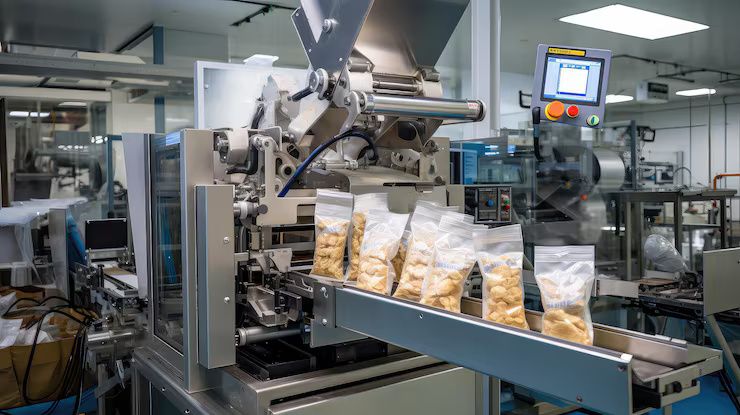
Packaging machinery refers to industrial equipment used to prepare products for storage, transport, and distribution by enclosing or protecting them with suitable materials. These machines exist because products must reach end users in a safe, organized, and identifiable form. Packaging supports containment, protection, handling, and information display, making it a critical step between production and distribution.
Historically, packaging was handled manually using simple tools and materials such as paper, cloth, or wooden containers. As production volumes increased during industrialization, manual packaging became inefficient and inconsistent. This led to the development of mechanical and later automated packaging machinery capable of handling higher volumes with uniform results.
Modern packaging machinery integrates mechanical motion, sensors, control systems, and material handling components. These machines manage tasks such as filling, sealing, labeling, and wrapping across a wide range of industries, including food, pharmaceuticals, consumer goods, and industrial products. The core purpose of packaging machinery is to ensure consistency, efficiency, and reliability in packaging processes.
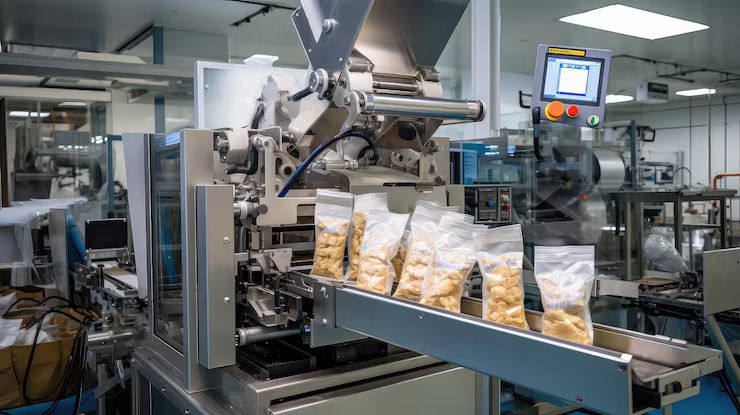
Importance: Why Packaging Machinery Matters Today
Packaging machinery matters today because global supply chains rely on standardized, efficient packaging to move products safely across long distances. Packaging quality directly affects product integrity, traceability, and handling efficiency.
This topic matters because packaging machinery:
-
Supports high-volume, consistent packaging operations
-
Helps protect products from damage and contamination
-
Improves efficiency in logistics and storage
-
Enables clear identification and handling of products
Packaging machinery affects manufacturers, logistics providers, quality teams, and regulators. Without reliable machinery, packaging errors such as improper sealing, inconsistent filling, or mislabeling can occur, leading to waste, delays, or compliance challenges.
By automating repetitive and precision-based tasks, packaging machinery helps industries meet production demands while maintaining predictable packaging outcomes.
Recent Updates: Packaging Machinery Trends from the Past Year
During 2024 and early 2025, packaging machinery development followed broader trends in automation, efficiency, and sustainability. In early 2024, there was increased attention on flexible packaging lines. Machines capable of handling multiple packaging formats with minimal changeover gained visibility in industrial discussions.
In mid-2024, smart packaging machinery became a key topic. Equipment integrated with sensors and digital controls allowed real-time monitoring of fill levels, seal integrity, and machine performance. These updates supported better process transparency and reduced packaging variability.
By late 2024 and into 2025, energy efficiency and material optimization were more frequently discussed. Packaging machinery designs focused on reducing material waste, improving sealing accuracy, and lowering energy consumption during continuous operation.
Another notable update involved greater integration with upstream and downstream systems. Packaging machines increasingly communicated with production and palletizing equipment, supporting smoother end-to-end manufacturing workflows.
Laws and Policies: Standards Affecting Packaging Machinery
Packaging machinery is influenced by industrial safety regulations, material standards, and sector-specific compliance requirements. These frameworks ensure that packaging processes support safety, hygiene, and traceability.
International standards developed by the International Organization for Standardization provide guidance on packaging performance, quality management, and machine safety. These standards help ensure consistency across packaging operations worldwide.
In India, industrial machinery and packaging practices align with guidelines from the Bureau of Indian Standards, which addresses machine safety, electrical compliance, and packaging material requirements.
For certain sectors such as food and pharmaceuticals, additional regulatory frameworks influence packaging processes. These policies focus on hygiene, labeling accuracy, and product protection, indirectly shaping how packaging machinery is designed and operated.
Tools and Resources: Understanding Packaging Machinery and Processes
A range of educational and technical resources help explain packaging machinery and its role in industrial production. These tools support learning, planning, and process evaluation.
Helpful tools and references include:
-
Packaging process flow diagrams
-
Machine layout planning tools
-
Packaging material compatibility charts
-
Production efficiency and output calculators
-
Industry handbooks on packaging technology
The table below outlines common packaging machinery types and their primary function:
| Packaging Machine Type | Core Function | Typical Application Area |
|---|---|---|
| Filling machines | Measure and dispense products | Liquids, powders, granules |
| Sealing machines | Close and secure packages | Pouches, cartons, bottles |
| Wrapping machines | Protect products with outer wrap | Consumer and industrial goods |
| Labeling machines | Apply product information labels | Identification and tracking |
| Cartoning machines | Place products into cartons | Secondary packaging |
| Palletizing systems | Stack packaged goods | Storage and logistics |
These tools help readers understand how packaging machinery fits into broader production systems.
Frequently Asked Questions About Packaging Machinery
What is the main role of packaging machinery?
Its main role is to prepare products for safe handling, storage, and distribution through consistent packaging.
Do packaging machines work with different materials?
Yes, packaging machinery can handle various materials such as paper, plastic, metal, and composite packaging.
Why is automation important in packaging?
Automation improves speed, accuracy, and consistency while reducing manual handling errors.
Are packaging machines used only in large factories?
No, packaging machinery is used in both small-scale and large-scale production environments.
How does packaging machinery affect product quality?
Proper packaging helps maintain product condition and supports reliable identification and handling.
Conclusion: Packaging Machinery as a Core Industrial Process
Packaging machinery plays a central role in modern manufacturing by transforming finished products into ready-to-distribute units. Through controlled filling, sealing, labeling, and handling, these machines ensure consistency and efficiency across supply chains.
Understanding the context, importance, recent developments, regulatory frameworks, and educational resources related to packaging machinery provides clarity on its industrial significance. As production systems continue to evolve toward automation and integration, packaging machinery remains a foundational element that supports reliable, organized, and scalable manufacturing operations.