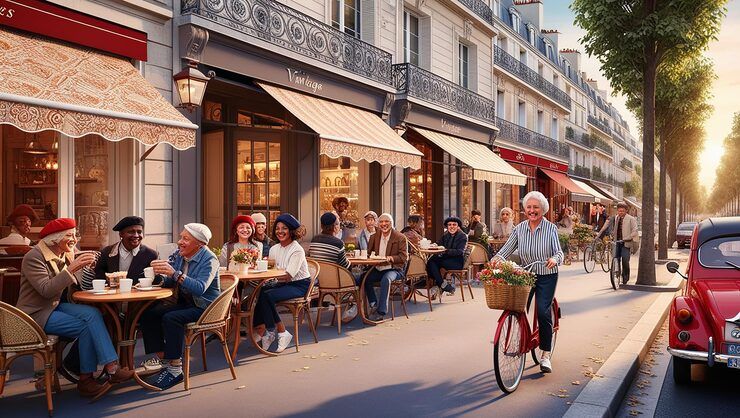
Paris street cafés are one of the most recognizable features of the city's urban landscape. Rows of chairs facing sidewalks, compact tables, awnings, historic façades, and busy streets create an outdoor environment that is closely connected with everyday Parisian life.
The tradition developed alongside the growth of cafés, restaurants, boulevards, public squares, and pedestrian activity. Over time, cafés became places for meals and drinks as well as informal meetings, reading, writing, conversation, and observing city life.
Today, the experience extends across traditional neighborhood cafés, historic literary cafés, modern bistros, restaurant terraces, seasonal terraces, rooftop locations, and outdoor spaces beside the Seine.
Paris tourism authorities describe terraces as an important part of the city's outdoor culture, with options ranging from neighborhood cafés to historic establishments, rooftops, museum terraces, and riverside locations.
Paris Café Culture at a Glance
| Feature | What It Represents |
|---|---|
| Sidewalk seating | Outdoor urban culture |
| Historic cafés | Literary and artistic heritage |
| Brasseries | Traditional French dining culture |
| Seasonal terraces | Flexible use of public space |
| Rooftop terraces | Contemporary city views |
| Riverside cafés | Leisure along the Seine |
| Neighborhood cafés | Local community life |
The café experience can therefore vary significantly depending on the arrondissement, time of day, season, and type of establishment.
Why Paris Street Cafés Matter Today
Street cafés contribute to the visual and social character of Paris. They create places where residents and visitors can pause between activities while remaining connected to the surrounding streets.
For travelers, cafés can also provide an informal way to experience different neighborhoods without planning a major attraction around every stop.
The importance of café culture extends into urban planning. Outdoor seating occupies sidewalks, parking areas, and other public spaces, so city authorities need to balance pedestrian movement, accessibility, neighborhood quiet, environmental concerns, and commercial activity.
Paris has approximately 17,000 terraces across cafés, bars, and restaurants, according to the Paris tourism office. In 2026, the city also had roughly 4,600 seasonal terrace installations in addition to permanent terraces.
This makes terraces a significant part of the city's public-space landscape.
Café Culture and Tourism
Cafés also contribute to the broader visitor experience.
Paris tourism data published in September 2026 described 2025 as a year of continued international tourism activity and highlighted a transition toward more sustainable and innovative tourism models.
For visitors, café terraces can connect several travel interests at once:
- French food culture
- Architecture
- Neighborhood exploration
- People-watching
- Literary history
- Outdoor dining
- Photography
- Walking tours
- Local customs
Historic cafés in Saint-Germain-des-Prés, for example, have associations with writers, artists, philosophers, and other cultural figures. Paris tourism information identifies establishments such as Café de Flore and Les Deux Magots as notable parts of this café heritage.
Recent Developments in Paris Café Culture
Paris continues to adjust its approach to outdoor terraces, particularly through seasonal programs and public-space management.
Seasonal Terraces in 2026
On July 22, 2026, the City of Paris confirmed that seasonal terraces were operating through October 31. Under the normal seasonal framework, authorized temporary terraces can operate from April 1 through October 31. They generally must close by 22:00, with a summer extension allowing operation until 23:00 from June 21 through August 30.
The city announced the 2026 23:00 summer extension on May 13, noting that the arrangement followed the experience of 2025 and was intended to balance outdoor activity with neighborhood tranquility.
The arrangement differs from 2024, when the closing time was exceptionally extended to midnight during the Olympic and Paralympic period.
Seasonal Terraces and Public Space
Temporary terraces can be placed on sidewalks, certain parking spaces, or designated public areas, provided the applicable authorization and spatial requirements are met.
The city emphasizes maintaining pedestrian passage and encourages vegetation on temporary terrace installations.
This illustrates how Paris continues to experiment with public-space design while maintaining pedestrian access.
Summer Terrace Trends
The Paris tourism office updated its terrace guides several times during 2026. Its June guide highlighted historic cafés, rooftops, museum terraces, riverside locations, neighborhood cafés, and seasonal outdoor spaces.
An August 2026 guide also highlighted temporary terraces with different themes, including cultural, community-focused, waterfront, rooftop, and environmentally oriented spaces.
A Changing Outdoor Landscape
| Development | Recent Information |
|---|---|
| Seasonal terraces | Generally April 1–October 31 |
| Summer closing extension | Until 23:00, June 21–August 30, 2026 |
| Seasonal installations | About 4,600 in 2026 |
| Total terraces | About 17,000 |
| Summer terrace guides | Updated by Paris tourism authorities |
| Public-space focus | Pedestrian access and neighborhood tranquility |
Laws and Policies Affecting Paris Cafés
Paris café terraces are closely regulated because many occupy or affect public space.
Terrace Authorization
A café, restaurant, or other eligible establishment needs authorization from the City of Paris to install a terrace or display arrangement in public space.
The city maintains a specific regulatory framework governing terraces and provides an online process for relevant authorization applications.
For visitors, this means that not every outdoor seating arrangement has identical operating conditions.
Operating Hours
The city's seasonal terrace rules establish specific closing times.
For 2026, authorized seasonal terraces generally close at 22:00, while the summer period from June 21 through August 30 permits operation until 23:00.
Special temporary arrangements can occur during major public events. For example, during the 2026 FIFA World Cup matches in July, Paris authorized extended terrace hours until 02:00 for relevant match evenings through July 19.
These temporary arrangements demonstrate why visitors should check current municipal announcements rather than relying only on general opening-hour information.
Heating and Cooling Rules
Paris prohibits heating or air-conditioning open terraces and other outdoor public spaces. The restriction has applied since March 31, 2022, with an exception for certain enclosed covered terraces meeting specified physical conditions.
The rule is part of the city's wider approach to energy use and outdoor-space management.
Public Space and Accessibility
Terrace layouts must leave appropriate pedestrian passage. The city specifically notes that seasonal installations on sidewalks or other public areas must preserve space for pedestrians.
This is especially relevant for visitors using wheelchairs, travelers with luggage, families with strollers, and pedestrians moving through busy streets.
Tools and Resources for Exploring Paris Cafés
Digital resources can make it easier to understand the café landscape and plan an itinerary.
Paris Je t'aime
The official Paris tourism website maintains current guides to cafés, terraces, rooftops, restaurants, outdoor areas, and seasonal locations.
Its interactive terrace guide can help visitors compare locations based on atmosphere, views, neighborhood, and outdoor setting.
City of Paris
The official municipal website provides current information about terrace regulations, seasonal schedules, public-space rules, and major event-related changes.
This is particularly useful when a visit coincides with a major festival, sporting event, heatwave, or temporary public-space arrangement.
Digital Maps
Map applications are useful for identifying cafés near:
- Museums
- Historic monuments
- Metro stations
- Parks
- Shopping streets
- Seine riverbanks
- Hotels
- Walking routes
Travelers should check the latest opening information because café schedules can vary by day and season.
Paris Tourism App
Paris Je t'aime reported the development of stronger digital visitor tools during its 2025 transformation, including the Paris Je t'aime app and a broader network of visitor-information points.
Such tools can help visitors find current information while moving around the city.
Café Planning Checklist
Before visiting a Paris street café, travelers can consider:
- Check opening hours.
- Confirm whether outdoor seating is currently available.
- Look at the location on a map.
- Check weather conditions.
- Consider pedestrian accessibility.
- Review any reservation requirements.
- Check whether the terrace is seasonal or permanent.
- Respect local noise and public-space rules.
- Keep personal belongings secure in crowded areas.
Frequently Asked Questions
What makes Paris street cafés distinctive?
Paris cafés combine outdoor seating with street life, architecture, food culture, and neighborhood activity. Their character varies from traditional neighborhood cafés to historic literary establishments, modern terraces, rooftops, and riverside locations.
When are Paris seasonal terraces available?
Authorized seasonal terraces generally operate from April 1 through October 31. In 2026, the standard closing time is 22:00, with an extension to 23:00 from June 21 through August 30.
Do Paris cafés require reservations?
Many ordinary cafés operate without advance reservations, particularly for casual seating. Popular historic cafés, rooftop terraces, hotel terraces, and larger restaurants may have different arrangements. Checking the establishment's current information is advisable.
Can visitors sit outside all year?
Permanent terraces can operate beyond the seasonal period, subject to their specific authorization and applicable regulations. Seasonal terraces are subject to the city's designated April–October framework.
Are Paris café terraces regulated?
Yes. Terrace installations on public space require authorization, and rules cover issues such as location, pedestrian passage, operating hours, appearance, and equipment. Additional restrictions apply to heating and cooling open terraces.
Conclusion
Paris street cafés are an important part of the city's cultural and urban identity. They connect outdoor dining with architecture, neighborhood life, tourism, history, and the everyday rhythm of the French capital.
The café landscape is also changing. In 2026, Paris continued its seasonal terrace program, with approximately 4,600 temporary summer installations alongside roughly 17,000 terraces overall. The city also continued adjusting operating hours and public-space rules to balance outdoor activity with pedestrian access and neighborhood tranquility.
For travelers, exploring Parisian cafés can be incorporated naturally into a walking itinerary. Official tourism resources, digital maps, municipal announcements, and current terrace guides can help visitors understand where outdoor seating is available and what rules apply.
The distinctive character of Paris cafés ultimately comes from their relationship with the street. A terrace is not simply a place to sit; it is part of the city's public landscape, where food, architecture, conversation, history, and everyday urban life meet.