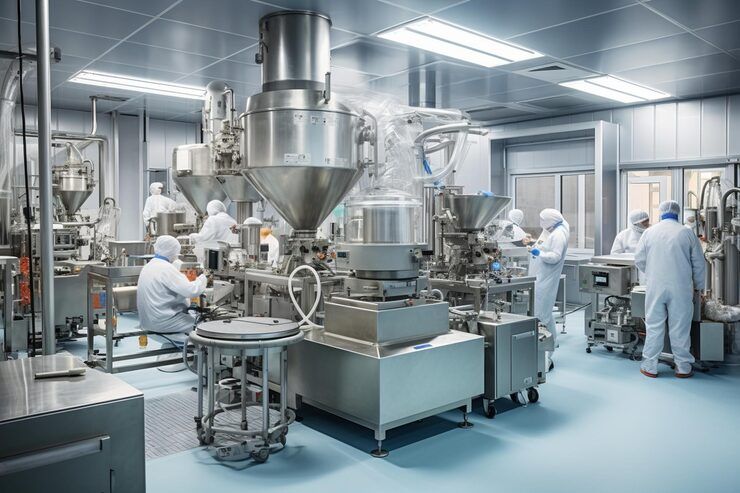
Pharmaceutical machinery refers to specialized equipment used in the manufacturing, processing, and packaging of medicines. These systems are designed to produce tablets, capsules, injectables, syrups, and other pharmaceutical products under controlled and standardized conditions.
The pharmaceutical industry relies on highly engineered production systems to ensure consistency, safety, and quality. Pharmaceutical manufacturing equipment supports every stage of production, including:
-
Raw material processing
-
Mixing and granulation
-
Tablet compression
-
Capsule filling
-
Sterile injection manufacturing
-
Packaging and labeling
As global demand for medicines increases, automated production lines and industrial automation systems have become central to pharmaceutical facilities. These machines operate in regulated environments such as cleanrooms and must follow Good Manufacturing Practice (GMP) standards.
Pharmaceutical machinery exists to ensure that medicines are produced accurately, safely, and efficiently while meeting regulatory requirements.
Importance
Pharmaceutical machinery plays a critical role in public health and global healthcare systems. It affects patients, healthcare providers, regulatory authorities, and manufacturing organizations.
Why it matters today
-
Supports large-scale medicine production.
-
Reduces contamination risks through cleanroom equipment.
-
Improves dosage accuracy and product consistency.
-
Enables rapid response during health emergencies.
Advanced pharmaceutical production systems address several challenges:
-
Maintaining sterility in injectable manufacturing.
-
Ensuring uniform tablet weight and composition.
-
Scaling production for vaccines and essential medicines.
-
Meeting international GMP compliance standards.
Automation has become increasingly important. Industrial automation systems integrated with programmable logic controllers (PLCs) and data monitoring tools allow manufacturers to:
-
Track batch production in real time.
-
Reduce human error.
-
Maintain digital production records.
Pharmaceutical packaging machines also play a key role by ensuring tamper evidence, accurate labeling, and batch traceability.
Core Types of Pharmaceutical Machinery
Tablet Press Machine
Compresses powdered material into tablets with precise weight and hardness control.
Capsule Filling Machine
Fills empty capsules with powders, pellets, or liquids in controlled volumes.
Granulation Equipment
Used in wet or dry granulation processes to improve powder flow and compression.
Sterile Production Line
Includes vial washing, sterilization tunnels, filling stations, and sealing systems for injectables.
Pharmaceutical Packaging Machine
Handles blister packaging, bottle filling, labeling, and serialization.
Pharmaceutical Production Workflow Table
| Stage | Equipment Used | Purpose |
|---|---|---|
| Raw Material Handling | Powder transfer systems | Controlled material movement |
| Mixing & Granulation | High-shear mixers, fluid bed granulators | Uniform blending |
| Compression | Tablet press machine | Form solid dosage |
| Capsule Filling | Capsule filling machine | Accurate capsule dosing |
| Sterile Filling | Aseptic filling line | Injectable production |
| Packaging | Blister packaging machine | Product protection |
Importance of Cleanroom Equipment
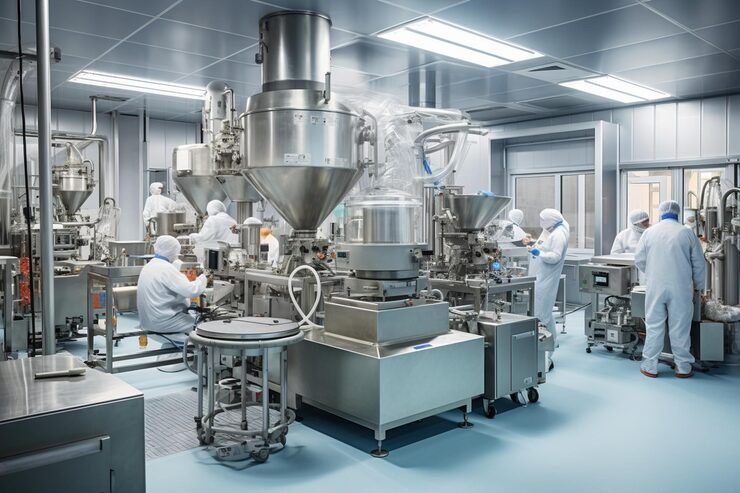
Cleanroom equipment ensures contamination control. Pharmaceutical cleanrooms are classified according to air quality standards, often using ISO classifications.
Key features include:
-
HEPA filtration systems
-
Laminar airflow units
-
Stainless steel surfaces
-
Controlled humidity and temperature
These systems are essential for sterile injectable manufacturing and biotechnology production facilities.
Recent Updates
In 2025–2026, pharmaceutical manufacturing trends show significant technological progress.
Automation and Digitalization
Manufacturers increasingly adopt Industry 4.0 principles, integrating sensors and real-time monitoring systems into pharmaceutical machinery.
Continuous Manufacturing
Instead of batch production, some facilities now use continuous manufacturing systems to improve efficiency and reduce downtime.
Sustainable Production Systems
Energy-efficient motors and waste reduction technologies are gaining attention in pharmaceutical equipment design.
Serialization and Track-and-Trace Systems
Governments continue expanding serialization requirements to prevent counterfeit medicines. Advanced packaging machines now include integrated coding and verification modules.
Digital twin technology, which creates virtual models of production lines, is also being explored for predictive maintenance and performance analysis.
Laws or Policies
Pharmaceutical machinery operates under strict regulatory frameworks. Compliance is mandatory in most countries.
In the United States, manufacturing must align with guidelines from the U.S. Food and Drug Administration (FDA), particularly Current Good Manufacturing Practice (cGMP) regulations.
In Europe, the European Medicines Agency (EMA) oversees pharmaceutical standards.
In India, production facilities follow regulations issued by the Central Drugs Standard Control Organization (CDSCO).
These regulations influence:
-
Equipment validation procedures
-
Documentation practices
-
Cleanroom classification
-
Batch traceability
-
Equipment qualification (IQ/OQ/PQ)
Government programs in many countries also encourage modernization of pharmaceutical manufacturing infrastructure, particularly for vaccine and essential medicine production.
Non-compliance may result in production suspension or regulatory action, which emphasizes the importance of certified pharmaceutical manufacturing equipment.
Tools and Resources
Several digital and institutional resources help professionals understand pharmaceutical production systems.
Regulatory and Compliance Resources
-
U.S. Food and Drug Administration – cGMP guidance documents
-
European Medicines Agency – EU pharmaceutical regulations
-
World Health Organization – GMP technical reports
Technical Tools
-
Equipment validation templates
-
Cleanroom classification calculators
-
PLC programming software
-
Maintenance scheduling systems
-
Pharmaceutical production management software
Educational Materials
-
GMP compliance training modules
-
ISO cleanroom standards documentation
-
Pharmaceutical engineering textbooks
These tools help ensure regulatory alignment, quality control, and operational efficiency.
Key Considerations in Pharmaceutical Machinery Selection
| Factor | Why It Matters |
|---|---|
| GMP Compliance | Ensures regulatory approval |
| Material Compatibility | Prevents chemical reactions |
| Automation Capability | Enhances accuracy |
| Cleanability | Supports contamination control |
| Scalability | Enables production expansion |
Facilities must evaluate machinery based on production volume, dosage form, and regulatory jurisdiction.
FAQs
What is pharmaceutical machinery used for?
It is used to manufacture, process, and package medicines under controlled and regulated conditions.
What is GMP compliance in pharmaceutical manufacturing?
GMP compliance refers to adherence to Good Manufacturing Practice regulations that ensure product safety, quality, and consistency.
What is a tablet press machine?
A tablet press machine compresses powdered ingredients into tablets with precise weight and hardness.
Why are cleanrooms important in pharmaceutical production?
Cleanrooms reduce contamination risks by controlling air quality, temperature, and humidity.
What is serialization in pharmaceutical packaging?
Serialization assigns unique codes to medicine packages to improve traceability and reduce counterfeit risks.
Conclusion
Pharmaceutical machinery forms the backbone of modern medicine production. From tablet press machines and capsule filling machines to sterile production lines and pharmaceutical packaging machines, these systems ensure consistent and safe medicine manufacturing.
Recent developments in automation, continuous manufacturing, and digital monitoring have enhanced efficiency and compliance capabilities. Regulatory frameworks from authorities such as the FDA, EMA, and CDSCO shape equipment design and operational standards.
Understanding production systems, cleanroom requirements, and compliance guidelines allows stakeholders to make informed decisions about pharmaceutical manufacturing equipment. As global healthcare demands grow, advanced pharmaceutical machinery will continue to support safe, standardized, and reliable medicine production across international markets.