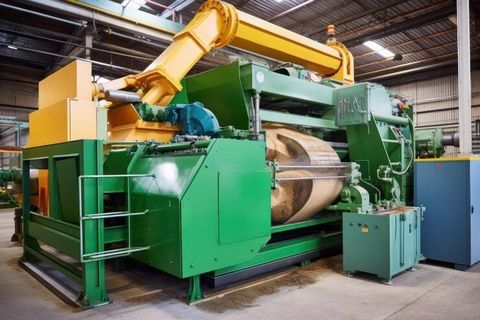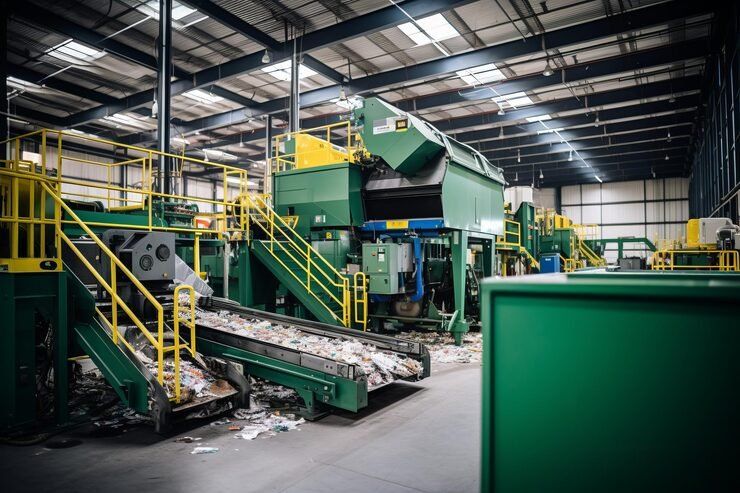
Plastic recycling machines are industrial systems designed to process discarded plastic materials and convert them into reusable flakes, regrind, pellets, or other forms of secondary raw material. Modern recycling lines can combine sorting, shredding, washing, drying, extrusion, filtration, and pelletizing technologies.
The appropriate equipment depends on plastic type, contamination level, material size, required output, and the intended recycled product.
What Are Plastic Recycling Machines?
Plastic recycling machines are specialized industrial equipment used to process plastic waste through multiple mechanical and thermal stages. Different machines perform different functions within a recycling line.
A typical plastic recycling system may include:
Conveyors and feeding systems
Sorting equipment
Plastic shredders
Granulators
Washing systems
Friction washers
Centrifugal dryers
Thermal drying systems
Extruders
Melt filtration systems
Pelletizers
Some facilities use individual machines, while larger plants integrate multiple machines into continuous recycling lines.
Major Plastic Recycling Technologies
Mechanical Recycling
Mechanical recycling processes plastic waste without fundamentally changing its chemical structure. Typical stages include sorting, size reduction, washing, drying, extrusion, filtration, and pelletizing.
It is widely used for suitable streams of thermoplastics such as PET, HDPE, LDPE, PP, and other recyclable materials.
Shredding and Size Reduction
Shredders reduce large plastic items into smaller pieces. Granulators can further reduce material into more uniform flakes suitable for washing or downstream processing.
Plastic Washing
Washing systems remove dirt, labels, oils, adhesives, organic residues, and other contaminants. Depending on the material, systems can include cold washing, hot washing, friction washing, and rinsing stages.
Extrusion
Plastic flakes are melted and homogenized inside an extruder. Melt filtration can remove remaining solid contaminants before the material is formed into recycled pellets.
Pelletizing
Pelletizers convert filtered molten plastic into standardized pellets. These pellets can then be used as feedstock for various plastic manufacturing processes, subject to material quality and application requirements.
Major Types of Plastic Recycling Machines
| Machine Type | Primary Function | Typical Material |
|---|---|---|
| Plastic Shredder | Reduces large plastic items | Mixed plastic waste |
| Plastic Granulator | Produces smaller flakes | Rigid and processed plastics |
| Washing Machine | Removes contaminants | Post-consumer plastics |
| Friction Washer | Intensifies surface cleaning | Plastic flakes |
| Centrifugal Dryer | Removes water | Washed plastic flakes |
| Thermal Dryer | Reduces residual moisture | Clean plastic material |
| Extruder | Melts and homogenizes plastic | Plastic flakes or regrind |
| Melt Filter | Removes melt contaminants | Recycled polymer |
| Pelletizer | Produces plastic pellets | Extruded polymer |
| Sorting System | Separates materials | Mixed plastic streams |
Plastic Recycling Manufacturing Process
A typical recycling line follows several interconnected stages.
1. Collection and Feeding
Plastic waste enters the facility and is transferred to conveyors or feeding systems. Material handling equipment regulates the flow into downstream machines.
2. Sorting
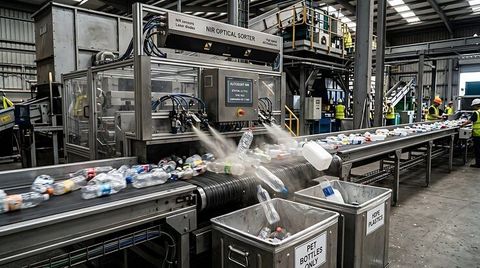
Materials can be separated by polymer type, color, shape, size, or contamination level. Manual sorting and automated technologies may both be used.
3. Shredding
Large plastic items are reduced into smaller pieces. Industrial shredders use rotating knives, shafts, or other cutting mechanisms depending on the material.
4. Granulation
Granulators further reduce the plastic into relatively uniform flakes. Particle size can influence washing performance and downstream processing.
5. Washing
The plastic passes through washing systems designed to remove contaminants. Some applications require multiple cleaning stages.
6. Drying
After washing, mechanical and thermal drying systems remove surface and residual moisture.
7. Extrusion
Clean, dry plastic enters an extruder where controlled heat and mechanical shear melt and homogenize the polymer.
8. Filtration
Melt filtration removes remaining solid contaminants from the molten polymer.
9. Pelletizing
The filtered polymer is converted into pellets using strand, water-ring, underwater, or other pelletizing technologies.
Automation and Process Control
Modern industrial plastic recycling machines increasingly incorporate automation systems to monitor material flow and processing conditions.
Common technologies include:
PLC controls
Variable-frequency drives
Temperature sensors
Pressure sensors
Moisture monitoring
Automated feeding
Optical sorting
Machine vision
Industrial networking
Production monitoring software
Automated controls can help maintain stable operating conditions across shredding, washing, extrusion, and pelletizing stages.
Global Manufacturers and Suppliers
The global plastic recycling equipment sector includes companies specializing in individual machines as well as complete recycling plants. Manufacturers may focus on shredding, washing, extrusion, filtration, pelletizing, sorting, or integrated processing lines.
When evaluating manufacturers and suppliers, consider:
Polymer compatibility
Processing capacity
Feedstock characteristics
Contamination level
Required output quality
Energy consumption
Automation capabilities
Maintenance requirements
Spare-parts availability
Production-line integration
Equipment should be matched to the specific plastic waste stream rather than selected solely according to nominal processing capacity.
Industrial Applications
Plastic recycling machines are used across several recycling and manufacturing environments.
PET Recycling
PET bottles and containers can undergo sorting, shredding, washing, drying, flake processing, and additional purification or pelletizing stages.
HDPE Recycling
HDPE containers, industrial packaging, and other rigid products can be processed through shredding, washing, drying, extrusion, and pelletizing systems.
LDPE Film Recycling
Plastic films require specialized feeding, shredding, washing, drying, and extrusion technologies because lightweight film can be difficult to handle.
PP Recycling
PP products can be processed into regrind or recycled pellets for suitable downstream applications.
Industrial Plastic Waste
Manufacturing facilities can process production scrap, rejected components, runners, trimmings, and other plastic waste using granulators, shredders, extruders, and pelletizers.
How to Select Plastic Recycling Machines
Selecting equipment requires analyzing the entire material stream.
1. Identify the polymer: Determine whether the feedstock consists primarily of PET, HDPE, LDPE, PP, or mixed polymers.
2. Assess contamination: Dirt, metals, labels, adhesives, oils, and organic material can influence washing and filtration requirements.
3. Determine throughput: Establish the required processing capacity in kilograms or tonnes per hour.
4. Define output requirements: Decide whether the desired output is flakes, regrind, or recycled pellets.
5. Evaluate moisture control: Washing and drying systems should be matched to the required final moisture level.
6. Consider automation: Automated feeding, sorting, temperature control, and monitoring can support continuous operation.
7. Review energy requirements: Motors, heaters, dryers, and extruders can represent significant energy consumption.
8. Plan maintenance: Knife replacement, screen changes, filter maintenance, and cleaning should be considered during equipment selection.
Frequently Asked Questions
What machines are used for plastic recycling?
Common equipment includes shredders, granulators, sorting systems, washing machines, friction washers, dryers, extruders, melt filters, and pelletizers.
How does a plastic recycling machine work?
A complete recycling line typically sorts plastic, reduces its size, washes contaminants away, dries the material, melts it through extrusion, filters the melt, and converts it into pellets.
What plastics can be processed using recycling machines?
Equipment can be configured for materials such as PET, HDPE, LDPE, PP, and other thermoplastics. The appropriate system depends on polymer properties and feedstock characteristics.
What is the difference between a plastic shredder and granulator?
A shredder generally handles larger or tougher plastic items and reduces them into smaller pieces. A granulator produces more uniform flakes through finer size reduction.
What factors affect plastic recycling equipment selection?
Polymer type, feedstock contamination, particle size, required throughput, moisture content, desired output, energy consumption, automation, and maintenance requirements all influence equipment selection.
Conclusion
Plastic recycling machines combine size reduction, sorting, washing, drying, extrusion, filtration, and pelletizing technologies to process plastic waste into reusable material. Individual machines can be deployed for specific processing stages, while integrated recycling lines can perform multiple operations continuously.
Understanding recycling technologies, machine types, manufacturing processes, automation, and supplier considerations helps recycling facilities select equipment that matches their feedstock and desired output.