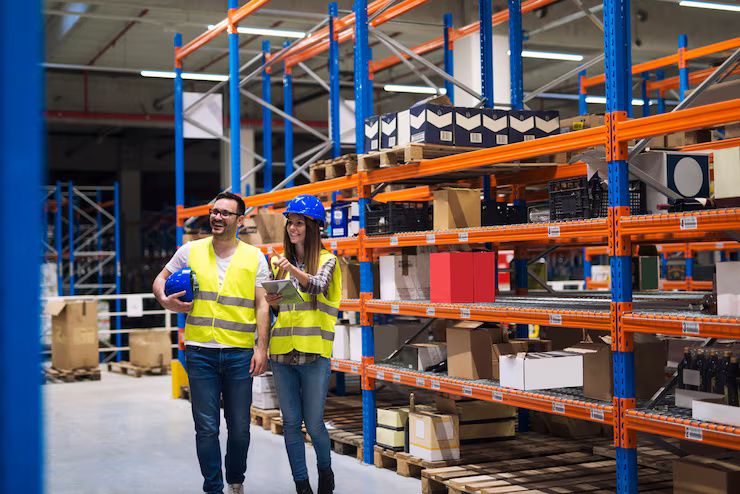
Racking systems are structured frameworks used for storing materials in warehouses, retail environments, offices, and industrial spaces. They exist because organizations need efficient, safe, and space-optimized methods to store goods. As storage needs have grown more complex, racking systems have evolved into various types such as pallet racks, cantilever racks, drive-in racks, and mobile shelving.
Their purpose is simple: to create vertical and horizontal space that improves order, accessibility, and productivity. These systems support the flow of goods in environments ranging from small storerooms to large distribution centers.
Importance
Racking systems matter today because modern industries depend on organized storage to operate smoothly. Several factors make them essential:
-
Space optimization
Racking systems increase usable storage capacity without expanding physical space. -
Improved workflow
Clear organization speeds up picking, packing, and inventory movement. -
Safety enhancement
Properly designed racks help prevent material collapse and workplace injuries. -
Scalability
Businesses can increase storage capacity as demand grows simply by adding or adjusting racks.
These systems impact warehouse managers, logistics staff, retail workers, suppliers, and facility planners. By solving challenges such as clutter, limited space, and inefficient inventory handling, racking systems support stable and organized operations.
Recent Updates
In 2024–2025, the racking industry has seen several notable developments:
-
Increased use of high-density racking (2024):
Demand grew for systems like shuttle racks and automated deep-lane storage to accommodate rising e-commerce volume. -
Integration with warehouse automation (2025):
Many racking designs now support robotics, Automated Storage and Retrieval Systems (ASRS), and smart sensors. -
Sustainability focus (2024):
More systems are built with recyclable steel and modular parts to reduce material waste. -
Digital monitoring tools (2025):
Sensors that detect rack load, temperature, and vibration have become more accessible, improving safety and predictive maintenance. -
Seismic-resistant rack engineering updates (2024):
Regions with earthquake activity introduced improved design standards to reduce collapse risk.
These updates reflect a shift toward smarter, safer, and more flexible storage environments.
Laws or Policies
Racking systems are influenced by safety regulations, engineering standards, and workplace guidelines. These help ensure safe load-bearing capacity and proper installation.
Common regulatory influences include:
-
Occupational safety guidelines:
Agencies such as OSHA (United States), HSE (United Kingdom), and SafeWork (Australia) regulate workplace storage practices and require proper labeling, inspection routines, and load training. -
Engineering and design standards:
Standards such as ISO 15512, EN 15512, and national industrial codes define testing methods, structural guidelines, and performance requirements for racking systems. -
Fire safety regulations:
Codes may require aisles wide enough for emergency access, fire sprinkler compatibility, and proper spacing for airflow. -
Seismic building codes:
Countries in earthquake-prone regions often require enhanced anchoring systems and structural bracing.
These rules help ensure that racking systems remain stable, safe, and compliant in workplaces.
Tools and Resources
Several tools and resources support better planning and use of racking systems:
-
Warehouse layout planners:
Online software tools allow users to visualize storage designs and understand racking placement. -
Load calculators:
Digital calculators help estimate safe load capacities for various rack types. -
Inventory management software:
Programs that track stock levels and optimize how items are stored on different rack levels. -
Rack inspection checklists:
Templates that guide safety checks for structural integrity, damage, and alignment. -
Engineering handbooks:
Guides covering materials, loading behavior, and structural safety.
These resources support informed decision-making and safer storage environments.
Example Table: Common Racking System Types and Their Ideal Use
| Racking Type | Key Feature | Ideal Use |
|---|---|---|
| Selective Pallet Rack | Easy access to every pallet | General warehousing, fast-moving inventory |
| Drive-In Rack | High-density, limited access | Bulk storage of similar items |
| Cantilever Rack | Arms extend without vertical posts | Long items like pipes and lumber |
| Mezzanine Rack | Multi-level storage | Facilities needing vertical space expansion |
| Mobile Shelving | Tracks that move for compactness | Archives, offices, small storerooms |
What are the most common types of racking systems?
The most common types include selective pallet racks, drive-in racks, cantilever racks, push-back racks, and mobile shelving. Each serves different storage needs depending on space, item type, and access requirements.
How often should racking systems be inspected?
Regular inspections should occur at least once per year, with additional checks after heavy use, impact incidents, or environmental changes.
What factors determine the right racking system?
Important considerations include weight capacity, available floor space, item size, forklift access, and the need for high-density storage.
Are automated racking systems replacing traditional racks?
Not entirely. Automation is growing, but many facilities still use traditional racks due to flexibility and adaptability. Both systems often coexist.
Do racking systems require certification?
In many regions, racking must meet engineering standards and workplace safety regulations. Certification requirements vary by country but often apply to installation, load limits, and structural design.
Conclusion
Racking systems play a vital role in creating safe, efficient, and organized storage environments. They exist to solve challenges related to space limitations, inventory control, and workplace safety. As industries evolve, so do the systems used to store materials, with innovations such as smart sensors, high-density designs, and automation integration becoming more common.
Understanding racking system types—and the regulations and tools that support them—helps organizations make informed decisions. With proper planning and awareness, racking systems enable smarter organization, better workflow, and long-lasting structural safety in modern storage and logistics spaces.