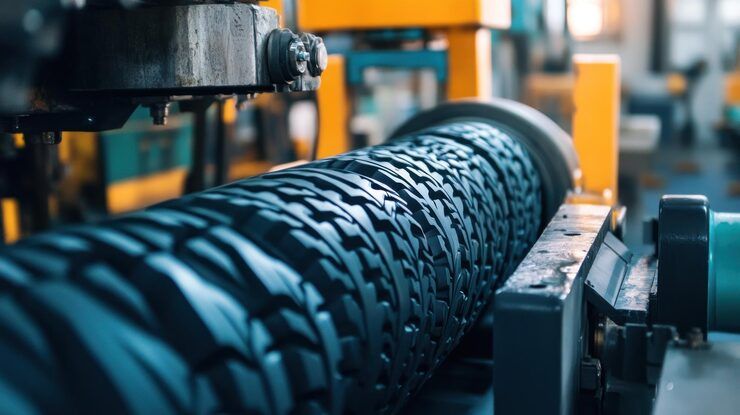
Rubber processing machinery refers to industrial equipment used to transform raw rubber into usable materials for manufacturing. Natural rubber and synthetic rubber begin as flexible, unstructured substances that cannot be used directly in industrial applications. Processing systems exist to refine these raw materials into controlled forms with consistent properties.
These machines operate in stages, such as mixing, shaping, heating, and finishing. Each stage prepares rubber for specific technical requirements like elasticity, strength, and durability. Rubber processing machinery is used across sectors such as automotive components, medical supplies, industrial sealing systems, consumer products, and infrastructure materials.
At its core, rubber processing is about controlling material behavior. Machinery ensures that rubber compounds are mixed evenly, shaped accurately, and stabilized for long-term use. Without these systems, large-scale rubber production would lack uniformity and reliability.
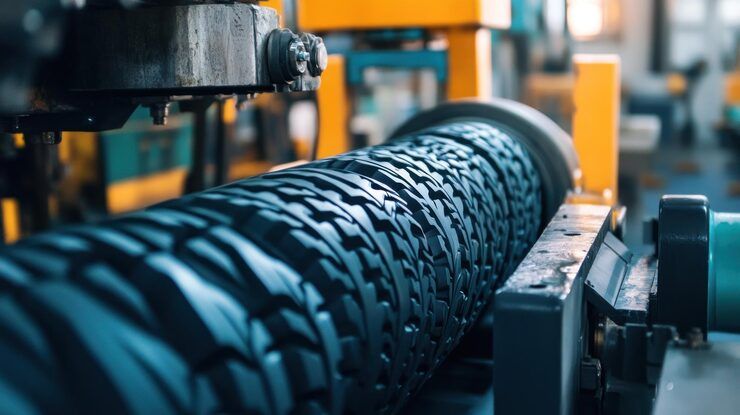
Importance: Why Rubber Processing Machinery Matters Today
Rubber-based products are part of daily life, from vehicle tires to protective equipment and industrial parts. The machinery that processes rubber plays a key role in maintaining material consistency, safety, and performance.
Key reasons this topic matters include:
-
Growing demand for durable and high-performance rubber materials
-
Increasing use of synthetic rubber in technical and industrial applications
-
Need for controlled manufacturing to meet safety and environmental standards
-
Expansion of infrastructure and transportation systems worldwide
Rubber processing machinery affects manufacturers, engineers, quality inspectors, and supply chain planners. It helps solve challenges such as uneven material quality, production inefficiencies, and waste generation. Modern systems also support automation and data-based monitoring, which improves repeatability and reduces processing errors.
As industries aim for higher precision and lower environmental impact, understanding how rubber processing systems work becomes increasingly important.
Explanation of Rubber Processing Systems
Rubber processing machinery typically operates in a sequence. Each system focuses on a specific transformation stage.
Mixing and Compounding Systems
Mixing is the first critical step. Raw rubber is combined with additives such as fillers, stabilizers, and curing agents.
Common mixing machinery includes:
-
Internal mixers for controlled high-shear blending
-
Two-roll mills for open mixing and refining
-
Batch mixers for consistent compound preparation
The goal is uniform dispersion of ingredients. Poor mixing can lead to weak spots, uneven elasticity, or processing defects later.
Forming and Shaping Systems
Once mixed, rubber must be shaped into a usable form. Forming systems convert rubber compounds into sheets, profiles, or preforms.
Typical forming machinery includes:
-
Extrusion systems for continuous shapes like tubes and seals
-
Calendaring machines for flat sheets and coated fabrics
-
Compression and transfer molding units for shaped components
These machines rely on pressure, temperature, and controlled movement to achieve precise dimensions.
Curing and Vulcanization Systems
Curing stabilizes rubber by creating chemical cross-links. This process improves elasticity, strength, and resistance to heat and wear.
Common curing equipment includes:
-
Vulcanization presses
-
Continuous curing tunnels
-
Autoclaves for controlled heat and pressure
Timing and temperature control are essential. Over-curing or under-curing can affect material performance.
Finishing and Inspection Systems
After curing, rubber products undergo trimming, surface treatment, and inspection.
Finishing systems may involve:
-
Cutting and deflashing machines
-
Surface treatment units
-
Automated inspection systems using sensors or vision tools
This stage ensures products meet dimensional and functional requirements.
Importance of Process Control and Automation
Modern rubber processing machinery increasingly integrates automation and monitoring systems. Sensors track variables such as temperature, pressure, and material flow.
Benefits of advanced process control include:
-
Improved consistency across production batches
-
Reduced material waste
-
Better energy efficiency
-
Enhanced traceability for quality management
Digital interfaces and data logging support compliance with manufacturing standards and internal audits.Recent Updates and Industry Trends
In 2024 and early 2025, several trends influenced rubber processing machinery design and operation.
Key developments include:
-
Increased use of energy-efficient motors and drives
-
Wider adoption of automated mixing and feeding systems
-
Improved monitoring software for real-time process visibility
-
Focus on recyclable and low-emission rubber compounds
In mid-2024, manufacturers introduced enhanced temperature control systems to reduce material degradation during mixing. In early 2025, more facilities reported the integration of data analytics to predict maintenance needs and reduce downtime.
Another noticeable trend is modular machinery design. Modular systems allow manufacturers to adapt processing lines without fully replacing equipment, supporting flexibility in production planning.
Laws and Policies Affecting Rubber Processing Machinery
Rubber processing machinery is influenced by industrial safety, environmental, and quality regulations. These rules vary by country but often follow similar principles.
Common regulatory areas include:
-
Workplace safety standards for machinery operation
-
Emission and waste management guidelines
-
Energy efficiency and resource usage reporting
-
Material compliance for specific applications such as medical or automotive use
In many regions, updated industrial safety frameworks introduced between 2023 and 2025 emphasized operator protection, machine guarding, and automated shutdown systems. Environmental policies increasingly encourage reduced emissions and responsible handling of processing byproducts.
Government programs in several countries also support modernization of industrial equipment to align with sustainability and efficiency goals.
Tools and Resources for Learning and Monitoring
Understanding rubber processing machinery is supported by various educational and technical resources.
Helpful tools and resources include:
-
Process simulation software for material flow analysis
-
Machinery monitoring dashboards for performance tracking
-
Industry handbooks on rubber compounding and processing
-
Technical standards published by manufacturing associations
-
Online learning platforms focused on industrial materials
These resources help engineers, students, and quality teams build knowledge without relying solely on hands-on experience.
Example Table: Rubber Processing Stages and Machinery
| Processing Stage | Main Purpose | Typical Machinery |
|---|---|---|
| Mixing | Blend rubber and additives | Internal mixers, roll mills |
| Forming | Shape rubber compounds | Extruders, calendars |
| Curing | Stabilize material properties | Vulcanization presses |
| Finishing | Prepare final form | Trimming and inspection units |
Example Data Table: Key Process Variables
| Variable | Controlled Range | Impact on Material |
|---|---|---|
| Temperature | Medium to high | Affects elasticity |
| Pressure | Controlled | Ensures uniform shape |
| Mixing Time | Defined intervals | Prevents weak zones |
FAQs About Rubber Processing Machinery
What is the main function of rubber processing machinery?
Its main function is to transform raw rubber into stable, usable materials through mixing, shaping, and curing processes.
Why is temperature control important in rubber processing?
Temperature affects chemical reactions within rubber. Proper control ensures consistent elasticity and strength.
How does automation improve rubber processing systems?
Automation improves repeatability, reduces manual errors, and supports real-time monitoring of key process variables.
What types of rubber can be processed using these machines?
Both natural rubber and synthetic rubber compounds can be processed, depending on machinery configuration.
How does curing change rubber properties?
Curing creates chemical bonds that increase durability, heat resistance, and long-term stability.
Conclusion
Rubber processing machinery plays a central role in transforming raw rubber into reliable materials used across many industries. By understanding how mixing, forming, curing, and finishing systems work together, it becomes easier to appreciate the complexity behind everyday rubber products.
Advances in automation, process control, and energy efficiency continue to shape modern rubber processing systems. At the same time, regulations and sustainability goals influence machinery design and operation. Clear knowledge of these systems supports better manufacturing decisions, improved quality control, and responsible industrial development.
This explanation provides a foundational understanding for learners seeking clear, structured information about how rubber processing machinery works in today’s industrial environment.