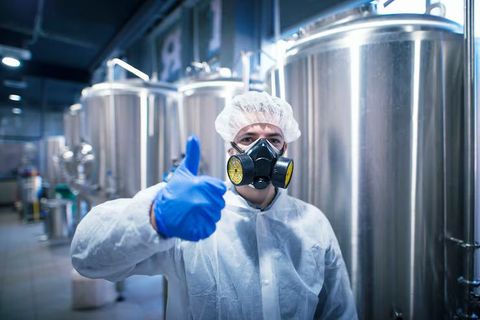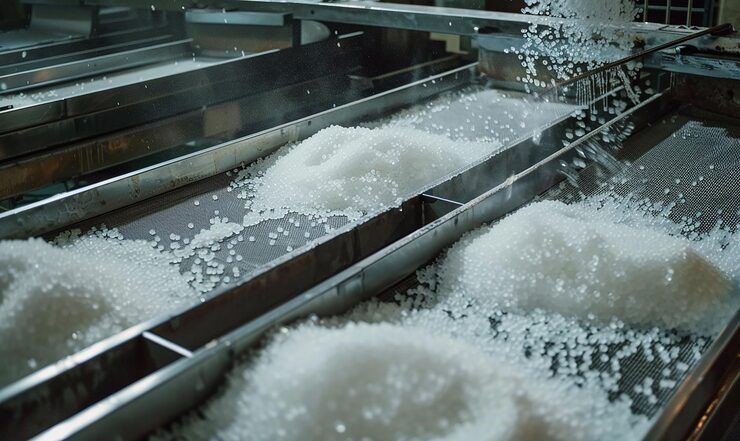
Sugar manufacturing is the large-scale industrial process of extracting and refining sugar from raw agricultural materials such as sugarcane and sugar beet. It exists to convert natural plant sucrose into refined sugar that can be stored, transported, and used across food processing, pharmaceuticals, and bioenergy industries.
Sugar manufacturing is an industrial process that converts agricultural crops such as sugarcane and sugar beet into refined sugar. It involves multiple stages including extraction, purification, evaporation, and crystallization.
In countries like India and Brazil, sugarcane processing is common, while European countries often rely on sugar beet processing. Modern sugar plants use automated systems and high-capacity equipment to ensure efficiency and consistency.
Key Processing Stages
Sugar production typically includes:
- Raw material handling and preparation
- Juice extraction (milling or diffusion)
- Clarification and filtration
- Evaporation and concentration
- Crystallization
- Centrifugation and drying
Importance of Sugar Manufacturing
Sugar production plays a significant role in global agriculture and industry.
Why It Matters Today
- Supports food and beverage supply chains
- Provides income for agricultural communities
- Contributes to renewable energy production
- Supports industrial processing sectors
Key Stakeholders
The industry involves:
- Sugar mills and processing plants
- Farmers and agricultural cooperatives
- Food and beverage manufacturers
- Ethanol and biofuel producers
- Commodity trading networks
By-Product Utilization
Sugar production generates useful by-products:
| By-Product | Industrial Use |
|---|---|
| Bagasse | Biomass energy generation |
| Molasses | Ethanol production and fermentation |
| Press Mud | Soil conditioning and composting |
Sugar Manufacturing Process Explained
Juice Extraction
Crushing or diffusion methods extract juice from sugarcane or beet.
Clarification
Impurities are removed using chemical treatment and filtration.
Evaporation
Water is removed using industrial evaporators to concentrate the sugar solution.
Crystallization
Sugar crystals are formed using vacuum pans and controlled cooling.
Centrifugation and Drying
Centrifuge machines separate crystals from liquid, followed by drying to produce final sugar.
Raw Material Comparison
| Factor | Sugarcane | Sugar Beet |
|---|---|---|
| Climate | Tropical/Subtropical | Temperate |
| Harvest Cycle | 10–18 months | 5–7 months |
| By-Product | Bagasse | Beet pulp |
| Regional Use | India, Brazil | Europe |
Recent Updates (2025–2026)
The sugar industry has seen several important developments.
Energy Efficiency and Decarbonization (2025)
Sugar mills are investing in cogeneration systems using bagasse to produce electricity and reduce emissions.
Ethanol Blending Expansion
Government programs are encouraging ethanol production from molasses, increasing integration with sugar processing plants.
Digital Automation
Automation technologies such as PLC systems and predictive maintenance tools are improving efficiency and reducing downtime.
Global Market Changes
Variations in production levels in major countries like Brazil have influenced global sugar prices.
Laws and Policies
Sugar manufacturing is regulated by food safety and environmental laws.
Key Compliance Areas
- Food safety standards and quality control
- Environmental regulations for emissions and wastewater
- Industrial safety and boiler certification
- Ethanol blending program requirements
Environmental Requirements
- Effluent treatment systems
- Air pollution control measures
- Solid waste management practices
Global Standards
In regions like the European Union, strict traceability and emissions regulations apply to sugar production facilities.
Tools and Resources
Various tools support efficient sugar manufacturing.
Industrial Engineering Tools
- Process simulation software
- SCADA systems for plant monitoring
- Energy management dashboards
Agricultural and Production Tools
- Crop yield forecasting models
- Supply chain tracking systems
- ERP software for inventory management
Financial and Market Tools
- Commodity price tracking platforms
- Investment analysis tools
Compliance and Documentation
- Food safety templates
- Environmental reporting frameworks
- Maintenance scheduling systems
FAQs
What is the difference between raw and refined sugar?
Raw sugar is the initial crystallized product, while refined sugar undergoes further purification.
Is sugar manufacturing energy intensive?
Yes, processes like evaporation and crystallization require significant energy.
What is bagasse used for?
Bagasse is used as biomass fuel to generate steam and electricity in sugar plants.
How is ethanol produced in sugar mills?
Molasses, a by-product, is fermented to produce ethanol.
How is quality maintained?
Through filtration, crystallization control, and food safety systems such as HACCP.
Conclusion
Sugar manufacturing is a complex industrial process that transforms agricultural crops into refined sugar through multiple stages. It plays a vital role in food production, renewable energy, and agricultural economies.
Recent trends emphasize energy efficiency, automation, and integration with ethanol production. Regulatory frameworks ensure safety, environmental protection, and product quality.
Understanding the process, tools, and regulations involved helps provide clarity on how sugar is produced at scale. As demand continues to grow, the industry is evolving with advanced technologies and sustainable practices.