Not sure if you need travel insurance? Learn what it covers, how to compare travel health insurance options, and how to find the best travel insurance for your trip.
Why Travel Insurance Matters More Than Many Travelers Realize
Trip planning tends to focus on flights, hotels, and itineraries — travel insurance often gets left as an afterthought, if it's considered at all. But unexpected events like flight cancellations, lost luggage, medical emergencies, or last-minute trip changes can turn an exciting vacation into a costly problem. Travel insurance exists to reduce that financial risk, and understanding what it actually covers makes it much easier to decide whether — and which type — you need for your next trip.
What Does Travel Insurance Typically Cover?
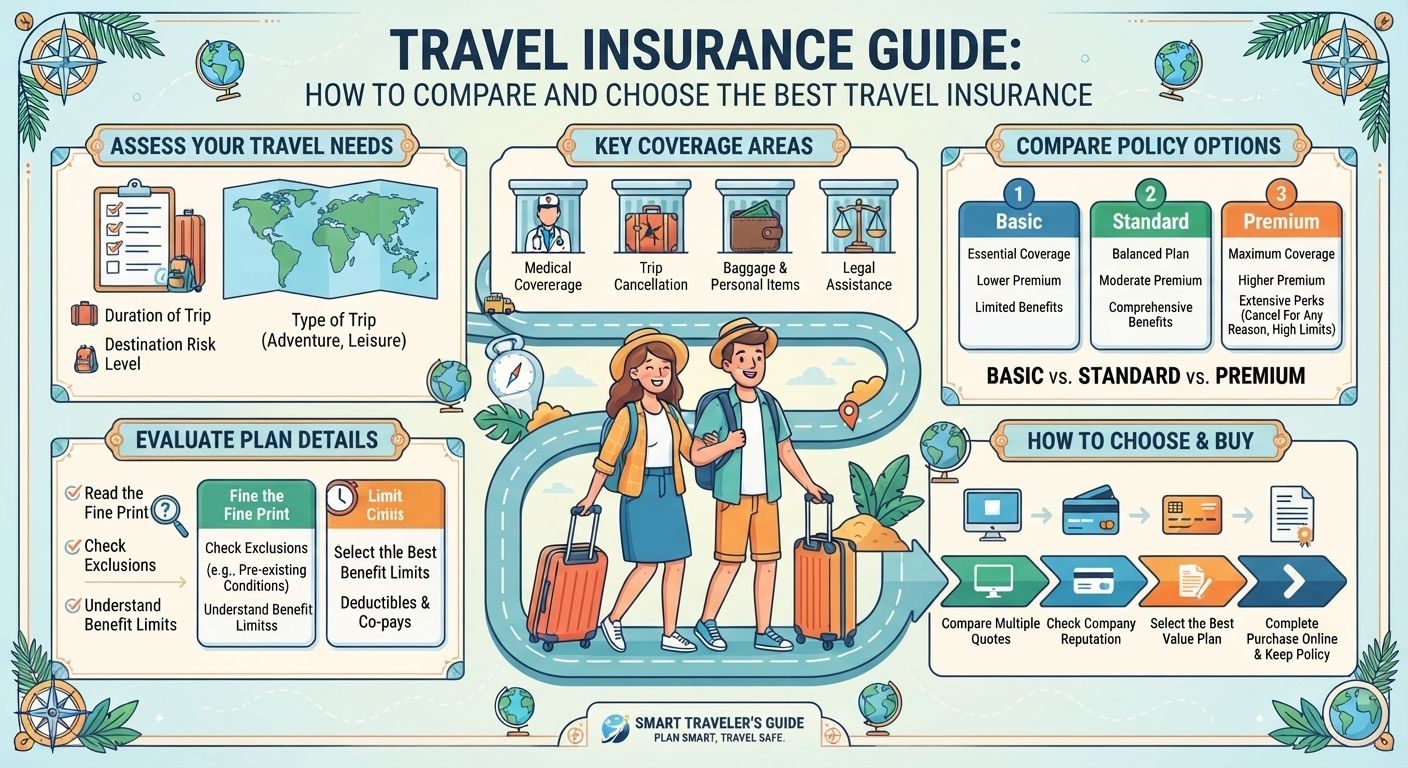
Travel insurance policies vary widely, but most plans include some combination of the following:
Trip Cancellation and Interruption
Reimburses prepaid, non-refundable trip costs if you need to cancel or cut a trip short due to a covered reason, such as illness, injury, or certain unforeseen circumstances.
Travel Health Insurance / Emergency Medical Coverage
Covers medical expenses incurred while traveling, which is especially important for international trips since domestic health insurance plans often provide limited or no coverage abroad.
Emergency Medical Evacuation
Covers the cost of transportation to the nearest adequate medical facility, or back home, in the event of a serious illness or injury — this can be extremely expensive without coverage, particularly in remote destinations.
Baggage Loss or Delay
Reimburses the cost of lost, stolen, or significantly delayed luggage, often including an allowance for essential items purchased during the delay.
Trip Delay Coverage
Provides reimbursement for additional expenses like meals and accommodation if your trip is delayed beyond a certain number of hours due to a covered reason.
Cancel for Any Reason (CFAR) Add-On
An optional upgrade that allows you to cancel a trip for reasons not covered under standard policies, typically reimbursing a percentage (not the full amount) of trip costs.
Do You Actually Need Travel Insurance?
Travel insurance isn't necessary for every trip, but it's worth strongly considering in these situations:
- International travel, especially to destinations where your domestic health insurance provides no coverage
- Trips with significant non-refundable costs, such as prepaid tours, cruises, or all-inclusive packages
- Travel during uncertain weather seasons, like hurricane season in certain regions
- Adventure or high-risk activities, which may not be covered under standard policies without an add-on
- Travel to remote areas with limited access to quality medical care, where emergency evacuation coverage becomes especially important
For low-cost domestic trips with fully refundable bookings, the value of travel insurance may be lower, though trip delay and baggage protection can still offer peace of mind.
How to Compare Travel Insurance Policies
1. Compare coverage limits, not just price
A cheaper policy with low coverage caps for medical expenses or evacuation may leave you significantly underinsured compared to a slightly pricier plan with higher limits.
2. Check pre-existing condition coverage
Some policies exclude pre-existing medical conditions unless purchased within a specific window after your initial trip deposit — this is an important detail to check if you have ongoing health conditions.
3. Review the list of "covered reasons" for cancellation
Standard trip cancellation policies only reimburse for specific covered reasons; if you want broader flexibility, a Cancel for Any Reason add-on may be worth the additional cost.
4. Understand the claims process
Look into how claims are filed, what documentation is required, and typical processing times — this information is often available in customer reviews or the policy's fine print.
5. Confirm destination-specific coverage
Some travel health insurance plans exclude or limit coverage in specific countries, so it's worth confirming your destination is fully covered before purchasing.
Choosing the Best Travel Insurance for Your Trip
There's no single "best" travel insurance — the right choice depends on your specific trip and priorities:
- For international trips, prioritize plans with strong travel health insurance and emergency evacuation coverage.
- For expensive, non-refundable trips, prioritize trip cancellation and interruption coverage with high reimbursement limits.
- For adventure travel, look for policies that specifically cover the activities you're planning, since standard policies often exclude higher-risk activities like scuba diving or skiing without an add-on.
- For frequent travelers, an annual multi-trip policy may be more cost-effective than purchasing individual policies for each trip.
Common Travel Insurance Mistakes to Avoid
- Waiting too long to purchase — Some benefits, like pre-existing condition waivers or Cancel for Any Reason coverage, require purchasing the policy within a limited window after your initial trip deposit.
- Assuming credit card travel benefits are sufficient — While some credit cards offer travel protections, coverage limits are often lower than a dedicated travel insurance policy, and coverage details vary significantly by card.
- Not reading exclusions carefully — Policies often exclude specific situations, such as pandemics, certain pre-existing conditions, or high-risk activities, unless explicitly added.
- Choosing based on price alone — The cheapest plan may have significantly lower coverage limits, leaving you underinsured in an actual emergency.
The Bottom Line
Travel insurance can make a meaningful difference when unexpected events disrupt a trip — whether that's a medical emergency abroad, a cancelled flight, or lost luggage. Taking the time to compare travel insurance policies based on coverage limits, exclusions, and your specific trip needs — rather than price alone — helps ensure you're properly protected. For international travel in particular, pairing solid travel health insurance with emergency evacuation coverage is one of the most valuable investments you can make before departure.