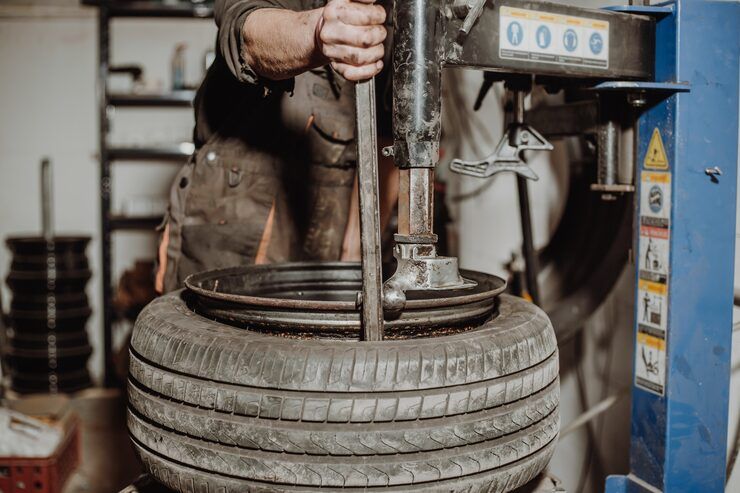
A tyre building machine is a specialized industrial system used to assemble the individual components of a tyre into a complete, uncured structure before it is vulcanized. Tyres are complex products made from multiple layers, including rubber compounds, fabric plies, steel belts, beads, and tread materials. The tyre building machine exists to bring these components together with precision, consistency, and repeatability.
In early tyre manufacturing, assembly relied heavily on manual labor. Workers layered materials by hand, which limited production speed and made uniform quality difficult to achieve. As vehicle use expanded and demand for reliable tyres increased, manufacturers required machines capable of producing tyres with consistent structure and performance characteristics.
Modern tyre building machines emerged to meet these needs. They allow controlled placement of each component according to defined specifications, ensuring that every tyre follows the same construction logic. Today, these machines are a central part of tyre manufacturing systems worldwide, supporting large-scale production and quality assurance.
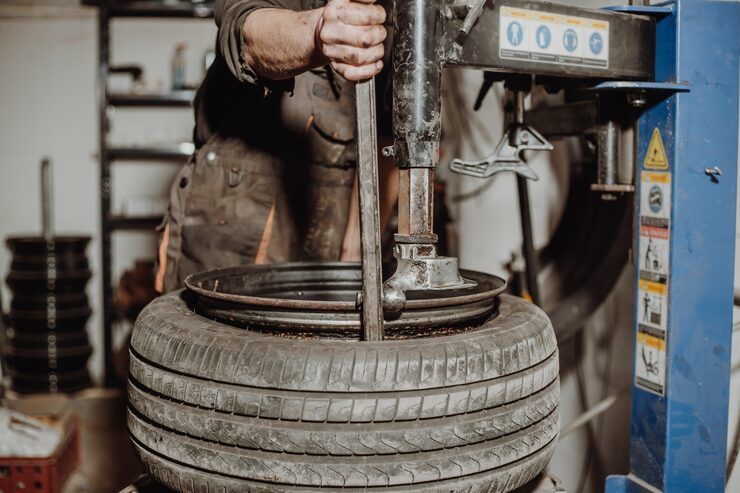
Importance: Why Tyre Building Machines Matter Today
Tyre building machines matter today because tyres play a critical role in vehicle safety, efficiency, and performance. The way a tyre is assembled directly affects its strength, balance, durability, and behavior under load.
This topic matters because tyre building machines:
-
Ensure consistent tyre construction across large volumes
-
Reduce human error during complex assembly steps
-
Support high production efficiency and repeatability
-
Enable modern tyre designs with multiple material layers
These machines affect tyre manufacturers, automotive companies, quality engineers, and transportation systems. For manufacturers, tyre building machines help maintain uniform standards across different tyre models. For end users, consistent tyre construction contributes to predictable handling and long-term reliability.
By solving challenges related to precision and scale, tyre building machines form the backbone of modern tyre manufacturing systems.
Recent Updates: Developments in Tyre Building Machines Over the Past Year
During 2024 and early 2025, tyre building machine development reflected broader trends in automation and digital manufacturing. In early 2024, attention focused on higher levels of automation in component placement. Machines increasingly used advanced control systems to position plies and belts with greater accuracy.
By mid-2024, digital integration became more visible. Tyre building machines were increasingly connected to manufacturing execution systems, allowing real-time monitoring of assembly parameters such as tension, alignment, and layer sequence. This supported better traceability and process control.
In late 2024, flexibility emerged as an important theme. Manufacturers discussed machines capable of switching between different tyre sizes and constructions with minimal downtime. This adaptability supported diversified production without extensive mechanical reconfiguration.
Another notable update involved ergonomics and safety. Even in automated environments, machine layouts were refined to improve operator interaction, inspection access, and maintenance safety.
Laws and Policies: Regulations Affecting Tyre Building Machines
Tyre building machines are influenced by industrial machinery regulations, workplace safety rules, and quality standards related to automotive components. These frameworks aim to ensure that machines operate safely and produce tyres that meet performance requirements.
International manufacturing and safety standards often align with guidance from the International Organization for Standardization, which publishes standards related to machinery safety, quality management, and industrial processes.
In many countries, occupational safety regulations govern machine guarding, emergency stop systems, electrical safety, and operator training. Environmental policies may also influence tyre manufacturing by encouraging efficient material use and controlled waste handling.
While tyre building machines themselves are not consumer products, the tyres produced using them must comply with vehicle and road safety regulations. As a result, machine performance indirectly supports regulatory compliance throughout the tyre lifecycle.
Tools and Resources: Understanding Tyre Building Machines
A range of technical and educational resources help explain how tyre building machines function within manufacturing systems. These tools focus on process understanding and engineering knowledge.
Helpful tools and references include:
-
Tyre construction diagrams and cross-section charts
-
Process flow diagrams for tyre assembly
-
Machine control and sequencing schematics
-
Manufacturing quality and traceability frameworks
-
Industrial safety guidelines for automated machinery
The table below outlines the main stages supported by tyre building machines:
| Tyre Building Stage | Function | Outcome |
|---|---|---|
| Bead placement | Positions tyre beads | Structural foundation |
| Inner liner assembly | Forms airtight layer | Air retention |
| Ply application | Adds strength layers | Load-bearing structure |
| Belt placement | Reinforces tread area | Stability and durability |
| Tread application | Adds outer rubber layer | Traction surface |
Another table highlights types of tyre building machines and their general role:
| Machine Type | Typical Use | Key Feature |
|---|---|---|
| Single-stage machine | Complete tyre assembly | Compact process |
| Two-stage machine | Separate carcass and belt stages | Higher precision |
| Radial tyre machine | Radial tyre construction | Advanced belt control |
| Automated systems | High-volume production | Reduced manual input |
These resources help readers understand how tyre building machines fit into a complete tyre manufacturing line.
Frequently Asked Questions About Tyre Building Machines
What is the main role of a tyre building machine?
It assembles all tyre components into a uniform, uncured tyre structure.
Why is precision important in tyre building?
Accurate placement of layers ensures strength, balance, and consistent performance.
Are tyre building machines fully automated?
Many modern machines are highly automated, though operator supervision remains important.
How does a tyre building machine affect tyre quality?
Consistent assembly reduces defects and variation between tyres.
Do tyre building machines follow standards?
Yes, their design and operation align with industrial safety and quality standards.
Conclusion: Understanding Tyre Building Machines in Manufacturing Systems
Tyre building machines are essential systems within modern tyre manufacturing. By assembling complex layers of materials with precision and consistency, they ensure that tyres meet performance and safety expectations at scale.
Understanding the context, importance, recent developments, regulatory environment, tools, and common questions related to tyre building machines provides a clear picture of their role in industrial production. These machines are not just assembly equipment; they are critical enablers of quality, efficiency, and reliability in the global automotive manufacturing ecosystem.